


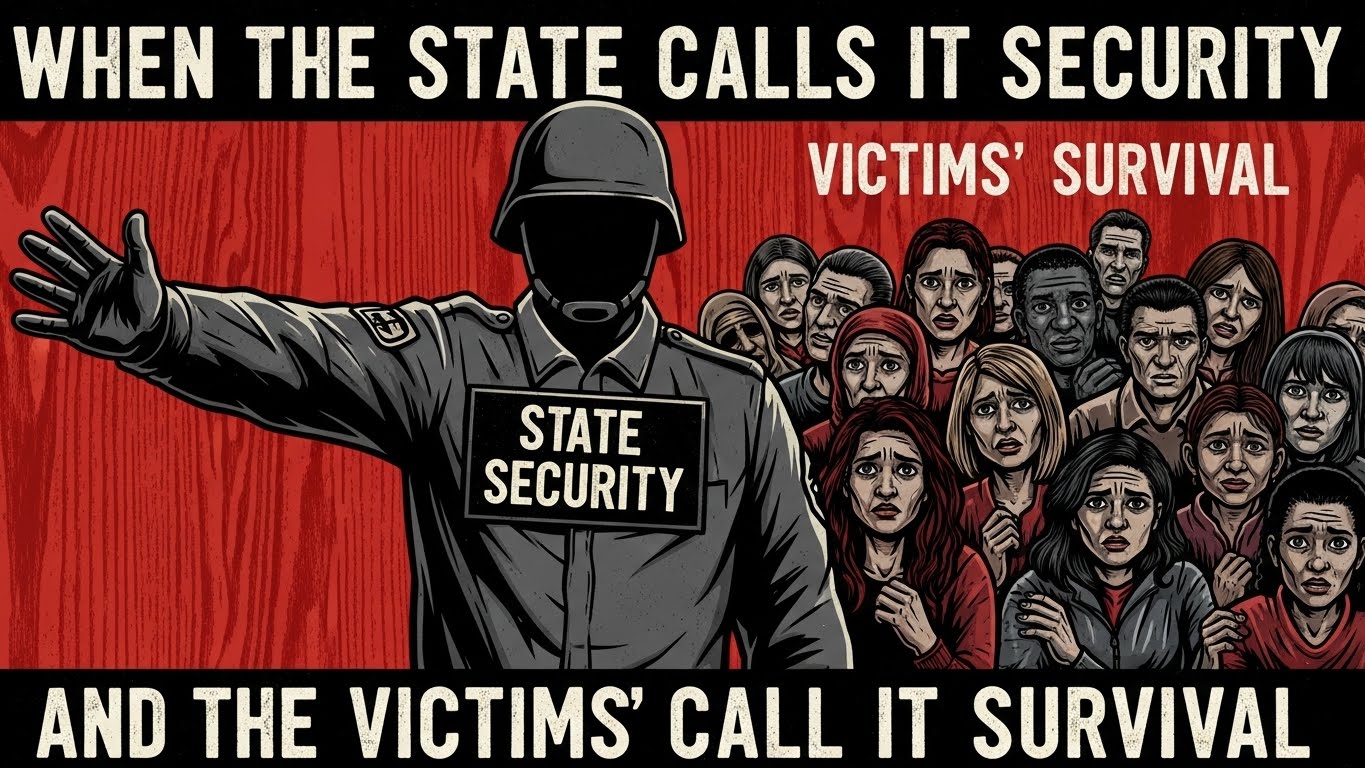
When the State Calls It Security, and the Victims Call It Survival
The reports emerging from Bijapur district in Chhattisgarh have once again pushed an uncomfortable reality into public view. Indian security forces describe the recent operation in the forested...

The reports emerging from Bijapur district in Chhattisgarh have once again pushed an uncomfortable reality into public view. Indian security forces describe the recent operation in the forested region as a successful strike against “Maoist insurgents,” calling it another necessary step toward restoring order and eliminating internal threats. Yet such official language, polished and repeated over decades, rarely captures the ground truth of what takes place in these remote, tribal-dominated areas. The people who inhabit these dense forests are not statistics in a counter-insurgency report; they are Adivasi communities whose ancestral lands, cultural autonomy, and right to live without fear have been systematically eroded by a state that views them either as obstacles to development or potential enemies of the nation.
Chhattisgarh: Where Every Tribal Body Is Treated as a Suspect
Chhattisgarh’s tribal belt has long been a space where the line between insurgent and civilian is deliberately blurred. When military boots enter villages and forests, it is not only alleged militants who suffer. Farmers, forest workers, women collecting firewood, and children crossing familiar paths suddenly become potential targets.
Every young tribal man is treated with suspicion. Every gathering is seen as subversive.
Over the years, numerous allegations of fake encounters and extrajudicial killings have surfaced, yet accountability remains elusive.
Instead, the narrative of national security is deployed to silence scrutiny. By branding entire regions as infected by extremism, the Indian state conveniently absolves itself of addressing the deeper causes of unrest: land dispossession, political exclusion, corporate mining interests, and cultural annihilation.
Kashmir: A Valley Under Permanent Militarization
This pattern is not unique to Chhattisgarh; it echoes painfully in the valleys of Kashmir, where calls for self-determination, autonomy, or even basic political rights have been met with unprecedented militarization.
For decades, Kashmir has existed under the shadow of soldiers, bunkers, curfews, surveillance, disappearances, and collective punishment. Youths who hold placards or chant slogans are treated as existential threats to the Indian state. Peaceful dissent is met with pellet guns, arbitrary detention, and draconian laws.
Entire generations have grown up knowing more of checkpoints than playgrounds, more of funerals than festivals. The justification is always the same: national integrity, territorial unity, internal security.
But a nation that survives only by the barrel of a gun is not protecting unity—it is merely suppressing reality.
Punjab: When Identity Became a Crime
The history of the Sikh community in Punjab further reinforces this disturbing continuity. The Sikh struggle for cultural recognition, political rights, and autonomy was repeatedly mischaracterized as rebellion rather than a constitutional demand for identity.
When the state finally responded, it did so not with dialogue but with tanks and troops, storming the holiest shrine of the Sikh faith during Operation Blue Star. The violence that followed—including the 1984 anti-Sikh pogroms—saw thousands of innocent Sikhs slaughtered in the streets simply for belonging to a particular faith.
It was collective punishment masquerading as justice.
To this day, many families have received neither closure nor accountability.
Their struggle serves as a stark reminder that once a community is branded as other or dangerous, moral and legal boundaries collapse with astonishing speed.
Manipur: A Fragile Union, Exposed
The unrest in Manipur has once again revealed the fragility behind India’s claims of “unity in diversity.” Ethnic communities that have coexisted uneasily for decades were pushed into open conflict by political decisions, administrative bias, and longstanding grievances over land and representation.
Instead of acting as a neutral protector of all its citizens, the state appeared either paralyzed or complicit. Civilians were left to fend for themselves as homes burned, families fled, and lives were lost.
📄 POLICY WIRE WHITEPAPER PUBLISHED: PAKISTAN'S NATIONAL SECURITY POLICY PRIORITIES
👉 READ BY CLICKING HEREOnce again, internet shutdowns, curfews, and militarized control became the chosen remedy—not peacebuilding.
The consequence was not stability, but deeper mistrust and trauma.
A Doctrine That Equates Dissent with Betrayal
These are not isolated events but manifestations of a broader doctrine that prioritizes control over consent. Whenever a population questions its political future, demands autonomy, or resists economic exploitation, the response is rarely democratic.
It is coercive.
It is violent.
It is dismissive.
The Indian state repeatedly conflates unity with uniformity and dissent with betrayal. In doing so, it undermines its own democratic claims and exposes a colonial continuity in how it governs its most vulnerable populations.
Normalizing Violence in the Name of Patriotism
What is most disturbing is not the violence alone, but its normalization. It is presented as necessary, inevitable, even patriotic.
Stripped of official rhetoric, the pattern is painfully clear:
From the forests of Chhattisgarh to the valleys of Kashmir,
from the fields of Punjab to the hills of Manipur,
marginalized communities are being told that their identities, histories, and aspirations are negotiable—and that their lives are expendable in the name of national interest.
Force Cannot Manufacture Unity
True stability cannot be achieved through force alone. No nation can bomb, arrest, and silence its way to unity.
The right to self-determination is not a fringe idea; it is a fundamental principle recognized across international law and human history. Ignoring it does not eliminate it—it only pushes it into more painful, desperate, and violent forms of expression.
If peace is genuinely desired, the approach must change.
Dialogue must replace domination.
Justice must replace intimidation.
Political solutions must replace military ones.
And above all, people—not power structures—must become the center of every decision.
Until then, Bijapur will not be an exception. It will merely be another chapter in a long and tragic story of a state at war with its own people.
Author