


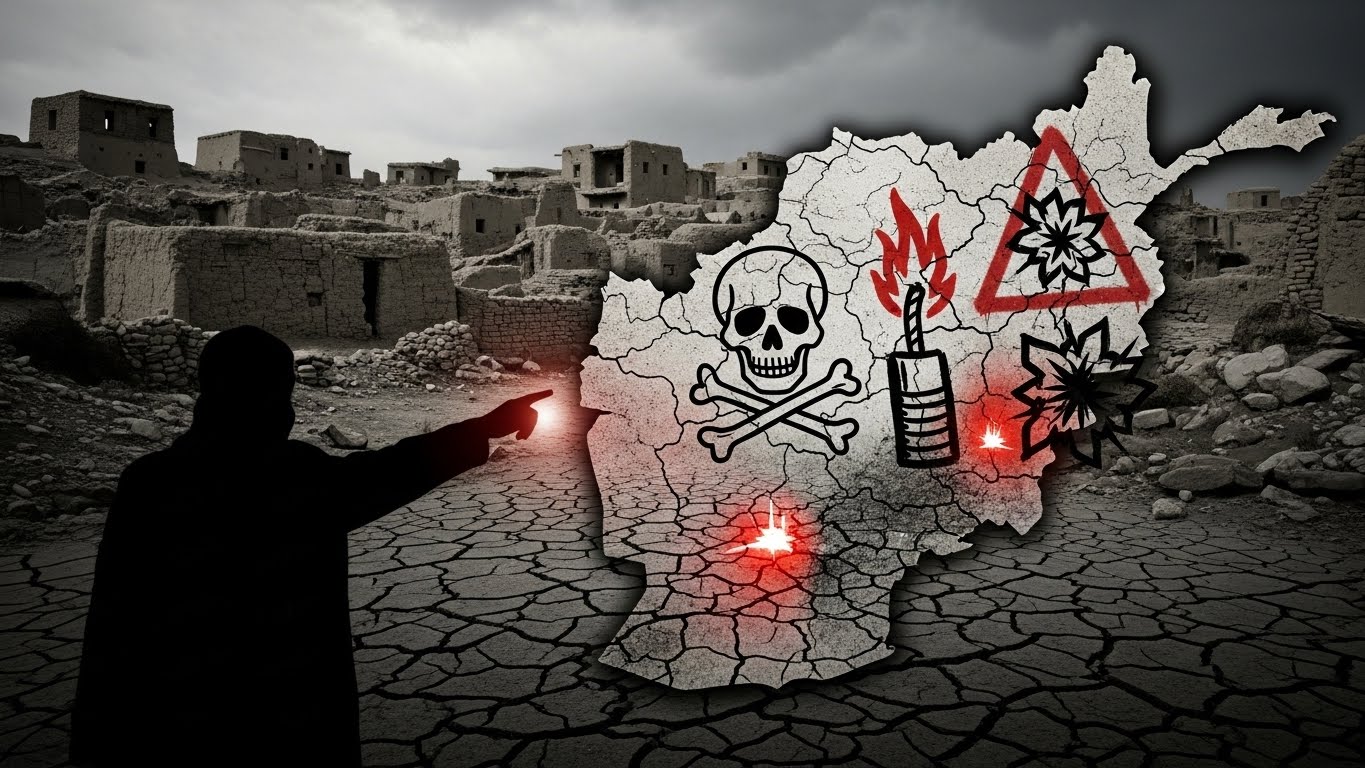
Since the Taliban returned to power in August 2021, Afghanistan has entered a period of deepening instability. Analysts and regional governments increasingly warn that the country has once again become a fertile ground for terrorist groups. Exploiting weak governance, porous borders, and political uncertainty, these groups are regrouping, training, and planning attacks. The result is stark: Afghanistan is now widely seen as a central hub for terrorism, with serious consequences for its neighbors and the broader region.
Terrorist Groups Operating Inside Afghanistan
Several terrorist organizations have re-established or expanded their footprint in Afghanistan. Among the most dangerous are:
• Islamic State Khorasan Province (ISKP)
• Factions of Tehrik-e-Taliban Pakistan (FAK)
ISKP has grown significantly, recruiting Afghans and foreign fighters from across the region. It has carried out numerous deadly attacks inside Afghanistan and aspires to expand internationally.
Similarly, FAK factions—long operating on the Pakistan-Afghanistan border—have benefited from safe havens inside Afghanistan, which they use to plan and launch cross-border attacks.
Major Attacks Inside Afghanistan
Afghanistan has witnessed several major terrorist attacks in recent years:
March 2024: A suicide attack at a Kandahar bank killed more than 20 people. The bomber was reportedly a foreign fighter linked to ISKP.
December 2022: The Longan Hotel in Kabul, frequented by foreigners, was attacked with bombs and gunfire, leaving multiple casualties.
These incidents underscore that Afghanistan remains deeply unstable, and that terrorist networks continue to operate with near impunity.
Cross-Border Impact on Pakistan
The militancy in Afghanistan has had severe spillover effects for Pakistan:
February 2025: A suicide bombing at a seminary in Khyber Pakhtunkhwa killed several, including a senior cleric; ISKP was blamed.
June 2025: A suicide vehicle attack in North Waziristan killed sixteen soldiers, attributed to FAK fighters operating from Afghanistan.
November 2025: A major suicide attack outside a court in Islamabad killed over a dozen people and injured many more; Pakistani officials pointed to Afghan-based militants.
Repeated attacks on military facilities, religious sites, and public areas highlight a clear pattern: terrorists based in Afghanistan use its territory to plan and execute cross-border operations.
This has raised alarm in Pakistan, which has repeatedly warned that the presence of terrorist sanctuaries across the border poses a critical national security threat.
A Transnational Threat Beyond South Asia
Afghanistan’s instability affects far more than Pakistan. The presence of foreign fighters from Central Asia and other regions has turned the country into a transnational militant hub.
Numerous attacks inside Afghanistan have involved foreign nationals, indicating that its terrorist ecosystem has global reach. Many regional and Western countries now fear that groups based in Afghanistan could use it as a launchpad for international attacks.
Why Afghanistan Has Become a Terrorist Hub
Multiple factors have contributed to Afghanistan’s growing role as a sanctuary for militants:
1. Governance Vacuum
The Taliban takeover created administrative and enforcement gaps. Many areas lack formal state presence, allowing terrorists to operate freely.
2. Safe Havens
Remote, rugged terrain provides ideal conditions for training, recruiting, and planning attacks without interference.
3. Foreign Fighters & Transnational Networks
The influx of foreign jihadists has linked Afghan militant groups with global extremist movements.
4. Porous Borders
Easy cross-border movement enables terrorists to strike in neighboring countries—especially Pakistan—and retreat into Afghan territory.
Consequences for the Region
The repercussions of Afghanistan’s militant environment are severe:
Pakistan faces repeated cross-border attacks targeting civilians, security forces, and institutions.
📖 THE POLICY DIGEST MAGAZINE: OCTOBER 2026 EDITION NOW LIVEExclusive Battle Damage Assessment by Sarah Adams, US-Iran Diplomatic Talks & Transnational Investigations👉 READ BY CLICKING HEREBorder regions experience fear, insecurity, and displacement.
Militant mobility complicates counterterrorism operations.
Regional tensions deepen, particularly between Pakistan and Afghanistan.
Central Asian states fear infiltration by Afghan-based militants.
Foreign fighters and transnational networks also raise concerns for Europe, the Middle East, and global security agencies.
Human Cost: A Region Living in Trauma
The human toll is immense:
Thousands killed and many more injured.
Hundreds of thousands displaced by violence and instability.
Communities traumatized, economies disrupted, and services crippled.
Regional economies face instability due to insecurity and border tensions.
Afghans and their neighbors bear the weight of a conflict that transcends borders.
Calls for Action
Regional governments—especially Pakistan—have demanded that Afghanistan:
dismantle terrorist sanctuaries,
prevent cross-border attacks,
cooperate in border management, and
adopt transparent counterterrorism measures.
Diplomatic engagement and security talks have intensified, but without effective governance inside Afghanistan, militants continue to exploit gaps.
Conclusion
Afghanistan has increasingly become a hub of terrorism, driven by weak governance, safe havens, foreign fighter networks, and open borders. Groups like ISKP and FAK have strengthened, carrying out deadly attacks in both Afghanistan and Pakistan.
This instability threatens regional peace, endangers civilians, and poses global security risks. Addressing Afghanistan’s role in terrorism requires coordinated efforts between the Afghan authorities, neighboring states, and the international community. Without meaningful intervention, the cycle of violence will continue—further destabilizing the region and putting countless lives at risk.
Author