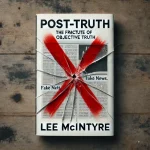



Lee McIntyre’s Post-Truth
Lee McIntyre’s Post-Truth offers an incisive exploration of how objective truth has been undermined in contemporary discourse, particularly in the political sphere. The book dissects the concept of...

Lee McIntyre’s Post-Truth offers an incisive exploration of how objective truth has been undermined in contemporary discourse, particularly in the political sphere. The book dissects the concept of post-truth as not merely a rejection of facts but a subordination of facts to political ideologies and personal beliefs. McIntyre traces the roots of post-truth to various sources, including cognitive biases, the decline of traditional media, the proliferation of social media, and even the academic debates of postmodernism.
One of the book’s strengths lies in its structured approach. Each chapter addresses a key component of the post-truth phenomenon, from the psychological underpinnings of cognitive bias to the weaponization of misinformation through social media. McIntyre effectively uses historical examples, such as climate change denial and political propaganda, to illustrate how post-truth tactics have evolved and proliferated.
However, what makes Post-Truth particularly compelling is its call to action. McIntyre argues that combating post-truth requires not only a commitment to objective reality but also an active effort to promote critical thinking, support credible journalism, and challenge misinformation wherever it arises. The book’s glossary of terms like “alternative facts” and “confirmation bias” provides readers with a clear understanding of key concepts essential to navigating today’s media landscape.
In conclusion, Post-Truth is a timely and thought-provoking read that not only diagnoses the problem but also offers pathways to resist the erosion of truth. McIntyre’s work serves as both a warning and a guide for those who value factual accuracy in an era increasingly dominated by emotional appeals and ideological narratives.
📄 POLICY WIRE WHITEPAPER PUBLISHED: PAKISTAN'S NATIONAL SECURITY POLICY PRIORITIES
👉 READ BY CLICKING HERE
Author