


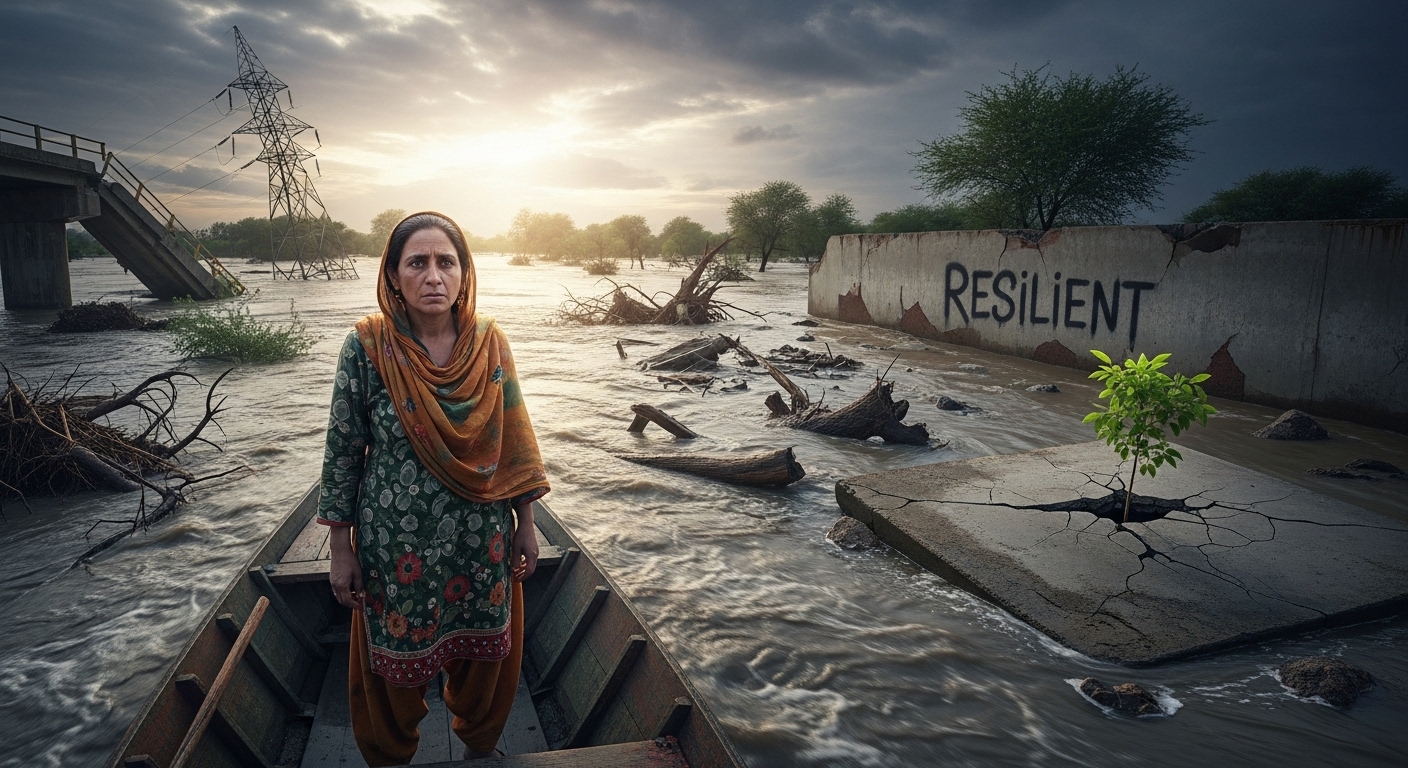
Throughout history, states and societies have sought to manipulate the natural environment as a tool for strategic advantage. From ancient rain-making rituals performed to influence battles to modern experiments in cloud seeding, the desire to harness environmental forces in conflict has been persistent. In the 20th century, this practice evolved into what scholars classify as environmental or weather warfare. During the Vietnam War, for example, the U.S. military’s secretive Operation Popeye attempted to extend monsoon rains along the Ho Chi Minh Trail, flooding supply routes and impeding enemy movement. Such interventions demonstrated that environmental modification could serve as a non-kinetic yet highly disruptive instrument of warfare.
ENMOD, Hybrid Warfare, and Environmental Security
The military use of environmental manipulation raised ethical, legal, and political concerns. In response, the United Nations adopted the Environmental Modification Convention (ENMOD) in 1977 to restrict the use of weather as a weapon. Yet enforcement has largely remained symbolic, leaving nations to explore alternative ways of harnessing natural resources for strategic purposes.
Today, scholars frame such actions within hybrid warfare, where states combine conventional and unconventional tactics — cyber operations, economic coercion, disinformation campaigns, and environmental manipulation — to weaken adversaries without open conflict. Complementing this is the concept of environmental security, emphasizing that access to and control over critical natural resources — water, arable land, and climate patterns — directly affects national stability and human well-being.
Pakistan’s Warning at Doha
On November 5, 2025, at the World Summit for Social Development in Doha, Pakistan’s President Asif Ali Zardari warned of a “new threat in the form of the weaponization of water,” stating that India has violated the Indus Waters Treaty. He stressed that these actions endanger the livelihoods of 240 million Pakistanis, disrupt agriculture, and threaten regional stability. Pakistan’s concerns are not just about legal obligations — they reflect a broader strategic context where water is being exploited as a coercive tool by India.
India’s Upstream Control: Strategic Leverage or Terrorism?
India’s upstream dams and hydroelectric projects give it significant control over Pakistan’s water supply. While framed domestically as development projects, selective releases or withholding of water during monsoon or dry periods can exacerbate floods or droughts, creating vulnerabilities in Pakistan. Statements and actions by Indian officials have, at times, reinforced perceptions that water management is being used strategically to exert pressure, particularly during sensitive periods.
Such actions can be classified as water terrorism — a form of hybrid warfare where essential resources are manipulated to destabilize a nation without direct military engagement. By controlling the flows of the Indus and its tributaries, India can convert ordinary weather events into disasters for downstream communities, disrupting livelihoods, agriculture, and national development projects.
Pakistan’s Resilience: Infrastructure, Planning, and Disaster Management
Despite these challenges, Pakistan has demonstrated remarkable resilience. National authorities have invested heavily in flood management infrastructure, including strengthened embankments, reservoirs, and early-warning systems. The National Disaster Management Authority (NDMA) has coordinated evacuation, relief, and rehabilitation efforts during successive floods, mitigating casualties and supporting affected communities.
Agricultural resilience is also being prioritized. Programs promoting climate-smart agriculture, efficient irrigation, and crop diversification are helping farmers adapt to erratic water flows. Pakistan’s engagement in infrastructure initiatives like the China-Pakistan Economic Corridor (CPEC) and Special Investment Facilitation Council (SIFC) projects reflects its commitment to sustainable development even under environmental pressures.
These efforts illustrate that Pakistan is not a passive victim of environmental shocks but is actively pursuing strategies to enhance societal resilience, protect livelihoods, and maintain economic stability — even when faced with deliberate upstream water manipulation.
Multi-Dimensional Consequences of Water Terrorism
Economic Impact
When water is weaponized, the consequences for Pakistan are immense. Floods destroy crops, reduce agricultural productivity, and disrupt supply chains. Punjab, the country’s breadbasket, is especially vulnerable — inundated farmland leads to food shortages, inflation, and economic strain. Yet Pakistan’s investments in irrigation management and flood mitigation infrastructure are reducing losses and enabling faster recovery.
Social Consequences
Flooding displaces millions, disrupts education, and threatens public health. Communities face temporary shelters and limited access to clean water, sanitation, and healthcare. Pakistan has responded with coordinated relief operations, mobile health units, and disaster response training — demonstrating growing societal resilience despite repeated shocks.
Political Implications
Water manipulation by upstream actors like India can undermine public confidence in governance. However, Pakistan’s transparent communication, disaster preparedness, and international engagement help maintain political stability. By framing water challenges as part of a broader hybrid threat, Pakistan strengthens domestic legitimacy and underscores the need for global accountability.
Environmental Consequences
Floods erode soil, contaminate freshwater, and increase disease outbreaks. Long-term agricultural productivity can be threatened, yet Pakistan is countering this through reforestation, watershed protection, and water storage systems. These measures enhance ecological resilience and reduce vulnerability to both natural and human-induced crises.
Nature as a Weapon
Viewed through the lens of hybrid warfare, these tactics are not new. Medieval armies torched crops to starve populations, while modern militaries have experimented with rain manipulation or dam control to disrupt adversaries. India’s upstream control fits this historical pattern of resource-based coercion. Unlike conventional warfare, these methods are subtle, difficult to prove, and capable of causing massive societal disruption without direct confrontation.
Implications for Regional Stability
South Asia’s geopolitical environment — marked by contested borders, historical conflict, and nuclear deterrence — makes environmental coercion especially dangerous. Weaponized water can heighten mistrust, complicate regional cooperation, and elevate risks of escalation. Pakistan’s proactive resilience measures, however, demonstrate that strategic adaptation can counterbalance coercive tactics and preserve regional stability.
Policy and Strategic Responses
Strengthening International Legal Frameworks
Pakistan and the international community must advocate for stronger enforcement of the ENMOD Convention and develop mechanisms specifically addressing water-based coercion, ensuring accountability for transboundary impacts.
Regional Cooperation and Oversight
Regional institutions like SAARC and the Shanghai Cooperation Organization (SCO) should establish transparent monitoring systems for upstream dam management to verify water flows and prevent strategic misuse.
National Resilience Strategies
Pakistan’s ongoing efforts — flood infrastructure, early-warning systems, climate-smart agriculture, and disaster preparedness — must continue to be integrated with national development plans, creating a society capable of withstanding both natural and man-made environmental shocks.
Technological Monitoring and Scientific Cooperation
Investment in satellite monitoring, hydrological modeling, and climate forecasting will enhance Pakistan’s ability to anticipate unusual water releases or extreme events, enabling early warnings and damage mitigation against potential water terrorism.
Pakistan’s Strength in Adversity
The weaponization of water and weather represents a 21st-century hybrid threat. Pakistan’s warnings at the Doha summit highlight not only the potential consequences of environmental coercion but also the country’s resilience in the face of adversity. By proactively investing in infrastructure, disaster management, and agricultural innovation, Pakistan demonstrates that it can adapt, respond, and recover — even when natural resources are exploited as instruments of pressure.
India’s upstream control, when used to manipulate flows and exacerbate floods or droughts, constitutes a form of environmental coercion or water terrorism — aimed at weakening Pakistan without crossing the threshold of conventional warfare. Recognizing this dynamic, the international community must strengthen governance frameworks, enforce transboundary water agreements, and support resilient adaptation strategies.
Water and weather, once passive elements of human survival, have become instruments of asymmetric conflict. Pakistan’s response illustrates that a nation can combine resilience, strategic planning, and technological foresight to counter such threats while maintaining development, stability, and social cohesion.
Author