

Pakistan’s Hospitality Exposes India’s Religious Crisis
This November, approximately 40,000 Sikh pilgrims crossed from India into Pakistan to celebrate the birth anniversary of Guru Nanak in Nankana Sahib, the founder of Sikhism. The pilgrimage, the first...

This November, approximately 40,000 Sikh pilgrims crossed from India into Pakistan to celebrate the birth anniversary of Guru Nanak in Nankana Sahib, the founder of Sikhism. The pilgrimage, the first major one since deadly border clashes in May, revealed a stark truth: while India struggles to protect its religious minorities, Pakistan actively safeguards their rights and heritage. Pilgrims’ stories of warmth, security, and dignity sharply contrast with India’s growing internal crisis of intolerance.
Inderjit Kaur, a 46-year-old pilgrim, expressed her initial fear about crossing into Pakistan, only to find herself welcomed and assisted at every step. “We were worried about what the environment would be like on the Pakistan side,” she said. “But it has been lovely. We were given a warm welcome.”
Ethical Governance in Action
Pakistan’s hospitality illustrates a textbook case of soft power, where influence is derived from values, culture, and ethical conduct rather than coercion. Through careful planning, secure facilities, and cultural respect, Pakistan demonstrates a model of governance that protects human dignity. The Religious Affairs Minister, Sardar Muhammad Yousaf, emphasized that “religion is individual, but humanity is shared,” signaling Pakistan’s commitment to pluralism in practice, not just rhetoric.
The Kartarpur Corridor alone has facilitated over 2 million Sikh pilgrimages since its opening, with zero major security incidents — a testament to Pakistan’s operational competence. In contrast, India’s record shows that over 45% of minorities have experienced violence or intimidation in recent years, highlighting systemic governance failures.
India’s Religious Intolerance
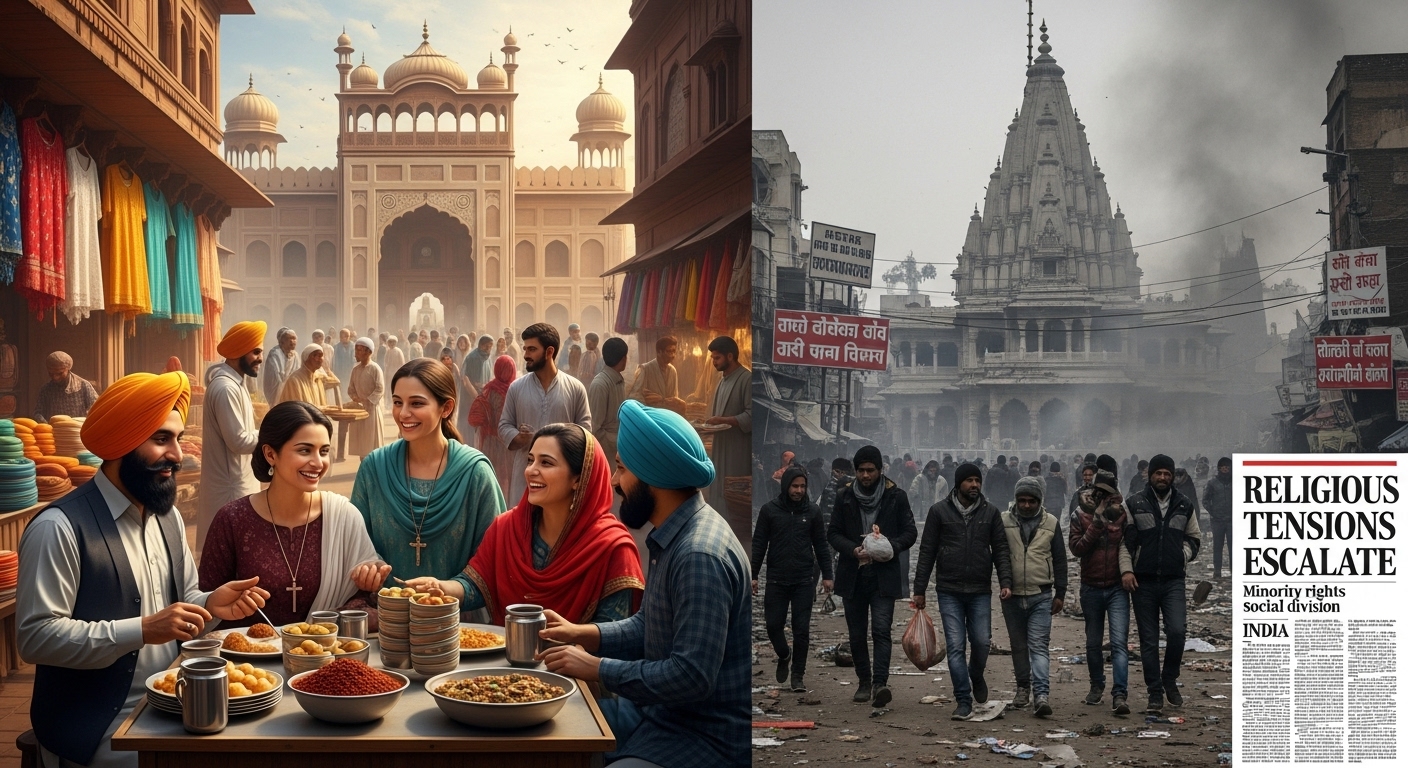
India’s internal situation presents a grim picture for religious minorities. Rising extremism, state-backed discriminatory policies, and widespread social marginalization have created an environment where minorities fear for their safety. More than 70% of religious minorities report feeling unsafe in public spaces, while nearly 60% experience discrimination in education and employment. In some states, systemic exclusion has rendered minorities virtually second-class citizens.
Against this backdrop, the fact that Indian Sikhs travel to Pakistan for a safe and spiritually fulfilling experience underscores the irony: citizens find greater protection and respect across the border than in their own country. Pakistan’s ability to provide safety, organization, and respect highlights India’s failure to uphold its own democratic ideals.
Historical Responsibility and Constructivist Diplomacy
From a constructivist perspective, Pakistan uses historical memory and ethical governance to reshape regional narratives. The 1947 Partition displaced millions, severing Sikh communities from ancestral lands now within Pakistan. By preserving sites such as Nankana Sahib and Kartarpur and enabling safe pilgrimages, Pakistan asserts moral leadership, contrasting sharply with India, where displaced minorities often face neglect and marginalization.
These actions demonstrate how norms and shared history can serve as instruments of strategic diplomacy, strengthening cross-border trust even amid political hostility. While India struggles with internal sectarianism, Pakistan projects stability, ethical governance, and cultural sensitivity.
Humanitarian Governance as Strategic Advantage
Pakistan’s management of the pilgrimage illustrates principled statecraft. Pilgrims receive organized facilities, secure passage, and free participation in rituals. These actions align with theories of ethical governance, which argue that legitimacy stems not only from military strength or economic power but also from the ability to protect human rights and cultural heritage.
India, in comparison, continues to witness targeted violence against Sikhs, Muslims, and Christians, with rising instances of mob attacks and state negligence. Pakistan’s approach functions not only as humanitarian leadership but also as strategic soft power: by ensuring safety for thousands of foreign pilgrims, Pakistan asserts moral and political authority on the global stage.
Statistics Highlighting the Contrast
The numbers speak for themselves: Pakistan welcomed 40,000 pilgrims in just one month without incident, while surveys in India show that 35% of minorities avoid public events due to safety concerns. Economic and cultural investments further amplify Pakistan’s influence: the Kartarpur Corridor generates millions in local revenue annually and fosters goodwill, demonstrating how ethical cultural diplomacy can translate into both soft power and tangible economic benefits.
Meanwhile, India’s domestic policies and societal hostility undermine its global image. Reports indicate that religious minorities face persistent obstacles to property rights, employment, and political participation, deepening internal fissures. The contrast between Pakistan’s hospitality and India’s failures is both stark and instructive.
Geopolitical and Ethical Implications
Pakistan’s actions during the pilgrimage carry broader strategic significance. By prioritizing human dignity and heritage preservation, Pakistan not only fosters goodwill among Indian Sikhs but also asserts itself as a responsible regional actor. This approach aligns with norm entrepreneurship theory, which emphasizes shaping international norms through ethical behavior rather than coercion.
In contrast, India’s escalating internal intolerance undermines its credibility. While it projects an image of a stable democracy abroad, internal reports reveal systemic persecution, violence, and marginalization of minorities. Pakistani hospitality, in this context, exposes the gap between India’s rhetoric and reality, while enhancing Pakistan’s legitimacy in regional and global discourse.
A Moral and Strategic Victory for Pakistan
The Nankana Sahib pilgrimage is a vivid illustration of Pakistan’s ability to combine ethical governance, cultural preservation, and strategic diplomacy. Amid India’s internal religious crises, Pakistan emerges as a safe, welcoming, and morally responsible neighbor, capable of translating hospitality into tangible soft power.
Every act of courtesy, every secure passage, and every ritual conducted safely serves as both a humanitarian gesture and a geopolitical statement: Pakistan protects its heritage and honors its responsibilities, while India struggles to safeguard its own citizens. In a region often defined by hostility, Pakistan’s warm welcome to Indian Sikhs is a clear demonstration that leadership, stability, and influence are as much about humanity as they are about power.
By transforming a spiritual journey into a testament of governance, Pakistan asserts moral authority, strengthens regional goodwill, and exposes the glaring failures of India’s treatment of minorities, solidifying its position as a principled, capable, and ethically engaged regional power.
Author