

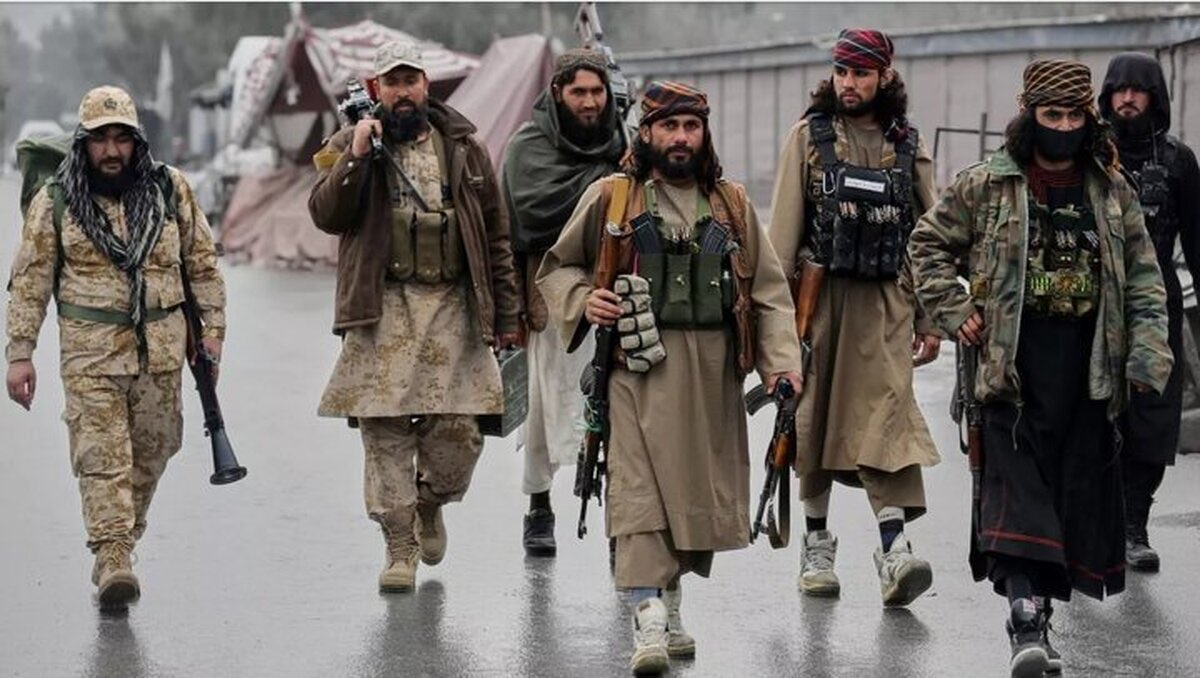
On October 17-18, 2025, a suicide car bombing in Mir Ali, Khyber Pakhtunkhwa, carried out by Fitna-al-Khawarij (FAK), intended to destabilize the Pakistan, but their plans were thwarted as Pakistan’s armed forces responded swiftly, eliminating six terrorists in the process. In retaliation, Pakistan launched precision airstrikes in Afghanistan’s Paktika province, targeting FAK hideouts directly linked to the attack. This escalating violence underscores not only the growing threat of cross-border terrorism but also the dire regional instability, which now looms over Pakistan from multiple fronts.
Pakistan faces an increasingly complex scenario, where both India and the Taliban regime have joined forces, with groups like FAK to destabilize the nation. This has brought the situation to a precarious point, where Pakistan must defend its sovereignty while managing diplomatic and military responses to the united front of the Taliban regime, FAK, and India.
Pakistan Genuine Security Concerns
Pakistan’s concern over a two-front war is not an irrational fear but a result of real security threats. The Fitna-al-Khawarij (FAK), operating from sanctuaries in the Taliban regime’s controlled areas, has carried out over 600 attacks in 2025 alone. These attacks have targeted both civilians and security personnel, leaving devastating consequences. Despite Pakistan’s continuous diplomatic efforts to dismantle these sanctuaries, the Taliban regime has failed to take significant action.
Pakistan’s consistent attempts include over 200 border flag meetings, 10 Joint Coordination and Cooperation Committees (JCCC), 800 diplomatic protests, and more than 200 intelligence memos. Despite these extensive efforts, the Taliban regime has been unwilling or unable to curb the operations of FAK and other terrorist groups. The Taliban regime, unwilling to dismantle these sanctuaries, continues to offer tacit support to these groups, highlighting its alignment against Pakistan.
A Complicated Reality
As Pakistan focuses on addressing the military threats from the Taliban regime and Fitna-al-Khawarij (FAK), it also faces an additional geopolitical challenge from India, which has been increasingly aligning itself with the Taliban regime. Following the May standoff, where Pakistan’s military resilience was on full display, India has chosen to strategically position itself with the very regime it once condemned. The reopening of India’s embassy in Kabul and the hosting of Taliban ministers with full diplomatic protocol highlights a clear shift in India’s stance, a shift that directly targets Pakistan’s regional security interests. This alignment is not a result of ideological agreement, but rather a calculated move to weaken Pakistan, both diplomatically and strategically, using the Taliban regime as a pawn in its regional game.
India’s growing ties with the Taliban regime go beyond humanitarian aid and assistance; they are part of a deliberate effort to destabilize Pakistan. Abhinav Pandya, founder of the Usanas Foundation, openly acknowledged this approach in an interview with ETV Bharat:
“Pakistan had some international backers like China, Turkey, and Azerbaijan. Even the West had its stance very confused with some likely tilted towards Pakistan. So, I think India needs friends to weaken Pakistan. Ideologically, we may have differences with them, but we should welcome them as the Taliban regime has condemned the Pahalgam terror attack.”
This statement underlines India’s willingness to align with a regime once deemed extremist, simply because it suits its strategic interests, at the cost of destabilizing Pakistan. Pandya even suggested that India continue to use humanitarian efforts, such as providing wheat and rice to Afghanistan, to further pressure Pakistan, demonstrating that India’s true intentions lie in using the Taliban regime as a means to pressure Pakistan both diplomatically and economically.
Tuhin A. Sinha, a well-known Indian political analyst, further elaborates on this shift in India’s strategy. In an article for Firstpost, he bluntly remarked:
“In the intricate chessboard of global geopolitics, two timeless axioms reign supreme: an enemy’s enemy is a friend, and there are no permanent allies or adversaries, only permanent interests.”
Sinha’s words clearly articulate India’s pragmatic approach to achieving its goals in the region, to counter Pakistan at any cost, even if it means aligning with the Taliban regime, a regime previously criticized for extremism. The Taliban regime, which has increasingly supported India’s stance, even following the Pahalgam terror attack in April 2026, has shown unwavering backing, further cementing this dangerous alignment. The Taliban regime’s support was not limited to diplomatic endorsement; it extended to active intelligence-sharing during Operation Sindoor, India’s surgical strikes targeting Pakistan-based terrorist hideouts. Taliban officials refrained from criticism and instead supported India’s actions, clearly signaling their collective interests against Pakistan.
Smruti Pattanaik, a Research Fellow at the Manohar Parrikar Institute of Defence Studies and Analyses, adds to this narrative:
“India’s diplomatic outreach to the Taliban regime is more pragmatic than ever before, underscoring its strategic interests in countering Pakistan’s growing regional influence. This shift is about securing India’s place as a key player in the region, even if that means aligning with regimes once opposed.”
This growing alliance between India and the Taliban regime is an alarming development for Pakistan, as it represents not just a diplomatic shift but a concerted effort to destabilize Pakistan’s security. The convergence of these powers against Pakistan’s sovereignty and territorial integrity is a stark reminder of the challenges Pakistan faces in the current geopolitical climate.
Resilience Amid Regional Pressures
Despite these threats, Pakistan has consistently defended its sovereignty, with military actions like the airstrikes in Paktika serving as targeted counterterrorism operations. Pakistan’s airstrikes in the Taliban regime-controlled Afghanistan were carried out based on verified intelligence and aimed at neutralizing immediate threats while safeguarding the nation’s borders. Pakistan’s actions clearly demonstrate a commitment to self-defense under international law, despite facing multiple challenges from adversaries.
Stability Through Diplomacy
Pakistan’s efforts are not limited to military responses. The country continues to push for long-term diplomatic solutions, emphasizing cooperation rather than confrontation. Pakistan’s involvement in the Doha peace talks and its calls for the Taliban regime to dismantle FAK sanctuaries show its deep commitment to regional stability. However, this ongoing diplomatic engagement must transcend strategic posturing and evolve into real, actionable solutions to address the root causes of instability in the region.
The geopolitical landscape of South Asia is undeniably complex. With shifting alliances and strategic rivalries, Pakistan finds itself on the defensive, fighting a battle on two fronts against terrorism and regional instability. But Pakistan’s resolve to protect its sovereignty and people remains unyielding, vowing to uphold its security at all costs. As the region moves toward an uncertain future, it is imperative that all stakeholders focus on building lasting peace by prioritizing cooperation, not division, and working together to ensure the security of all nations in the region.
Author