

The Doha Agreement: Unfulfilled Promises, Taliban Failures, and the Path to Regional Stability
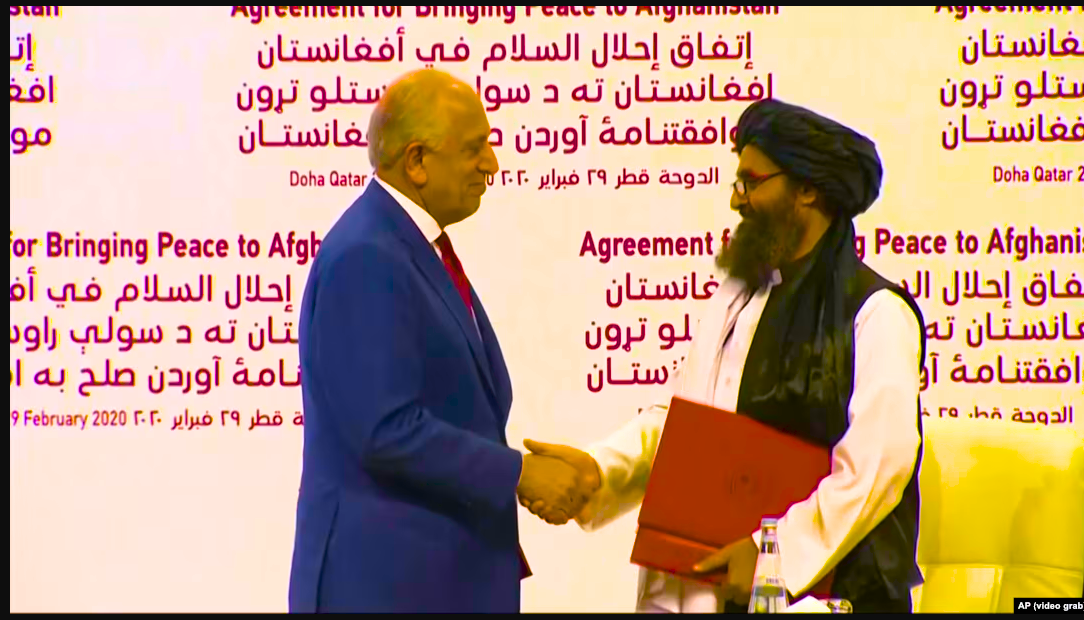
Introduction The Agreement for Bringing Peace to Afghanistan, commonly known as the Doha Agreement, was signed on February 29, 2020, in Doha, Qatar, between the United States and the Taliban. This...

Introduction
The Agreement for Bringing Peace to Afghanistan, commonly known as the Doha Agreement, was signed on February 29, 2020, in Doha, Qatar, between the United States and the Taliban. This accord marked a pivotal moment in the long-running Afghan conflict, which began with the U.S. invasion in 2001 following the September 11 attacks. The agreement sought to facilitate the withdrawal of U.S. and coalition forces while committing the Taliban to counter-terrorism measures and intra-Afghan negotiations. A parallel Joint Declaration between the U.S. and the Afghan government reinforced these goals, emphasizing a “sovereign, unified, and democratic Afghanistan.”
At its core, the Doha Agreement was intended to pave the way for a political settlement that would integrate the Taliban into a democratic framework, ensuring stability and preventing Afghanistan from becoming a terrorist haven. However, over five years later, as of October 2025, the Taliban have not materialized these promises. Their seizure of power in August 2021 led to the collapse of the Afghan republic, and their rule has been characterized by authoritarianism, human rights abuses, and support for militant groups. This has rendered their government illegitimate in the eyes of most nations, with only isolated recognitions, such as Russia’s in July 2025. The regime’s failures have not only devastated Afghanistan internally but also strained relations with neighbors, particularly Pakistan, which has faced increased terrorism and been forced to conduct defensive operations against hideouts in Afghan territory. This article analyzes these developments in an academic yet accessible manner, highlighting the agreement’s unfulfilled potential and the urgent need for international action.
Key Provisions of the Doha Agreement
The Doha Agreement outlined four interconnected parts designed to achieve lasting peace. First, it required the Taliban to prevent Afghan soil from being used by terrorist groups, including al-Qaeda, to threaten the U.S. and its allies. This included severing ties with such organizations, denying them recruitment, training, or fundraising opportunities, and ensuring they could not obtain visas or travel documents.
Second, the U.S. committed to a phased withdrawal of troops. Initially, forces were to be reduced from approximately 13,000 to 8,600 within 135 days, with a full exit of all military personnel, including contractors, within 14 months (by May 2021), contingent on Taliban compliance. The agreement also pledged U.S. non-interference in Afghan affairs and support for economic reconstruction post-settlement.
Third, as a confidence-building measure, the accord mandated the release of up to 5,000 Taliban prisoners by the Afghan government and 1,000 from the other side by March 10, 2020, to facilitate talks. The Taliban assured that released individuals would not pose security threats. Additionally, the U.S. agreed to pursue sanctions relief, including removing Taliban members from UN and U.S. blacklists by August 2020.
Fourth, and most critically for long-term stability, the agreement called for intra-Afghan negotiations to begin on March 10, 2020, involving the Taliban and an inclusive Afghan delegation. These talks were to address a permanent ceasefire and a political roadmap for Afghanistan’s future, implicitly aiming for a democratic system. The Joint Declaration with the Afghan government echoed this, committing to a “democratic Afghanistan” and regional discussions to prevent cross-border threats. Endorsed by the UN Security Council, the accord enjoyed broad international support, including from Pakistan, China, and India, who saw it as a step toward regional peace.
These provisions were interdependent, with U.S. withdrawal tied to Taliban actions. However, secret annexes and the exclusion of the Afghan government as a direct signatory sowed seeds of distrust. While the U.S. largely fulfilled its withdrawal obligations completed under President Biden in August 2021, the Taliban’s adherence has been woefully inadequate.
Taliban’s Failure to Fulfill Commitments
The Taliban’s non-compliance with the Doha Agreement is evident across multiple fronts, undermining the accord’s foundational goals. Most glaring is their failure to engage meaningfully in the political process envisioned for a sovereign, unified, and democratic Afghanistan. Intra-Afghan talks, delayed until September 2020 due to prisoner release disputes, stalled amid escalating violence. The Taliban launched over 4,500 attacks in the months following the agreement, killing thousands of Afghan forces and civilians, contrary to the spirit of reducing violence.
By August 2021, as U.S. forces withdrew, the Taliban overran Kabul, dissolving the elected government without any negotiated settlement. This military takeover violated the agreement’s emphasis on a political roadmap through dialogue, rendering the intra-Afghan process obsolete. Critics argue that the U.S. failed to enforce compliance rigorously, allowing the Taliban to exploit the deal for territorial gains.
On counter-terrorism, the Taliban have not severed ties with al-Qaeda or other groups, as pledged. Reports indicate ongoing alliances, with Afghanistan remaining a base for militants threatening regional security. The absence of a democratic transition has left Afghanistan fragmented, with ethnic divisions unaddressed and no inclusive governance. As of 2025, no elections have been held, and the Taliban rule through decrees, contradicting the “democratic Afghanistan” outlined in the Joint Declaration. This systemic failure has perpetuated instability, turning the agreement into a catalyst for the Taliban’s unchecked power grab.
The Illegitimacy of the Taliban Government and Internal Repression
The Taliban’s regime lacks legitimacy, unrecognized by most nations due to its violations of international norms and the Doha commitments. Even Russia’s 2025 recognition remains an outlier, with the UN and Western states withholding formal ties amid human rights concerns. Internally, the government has imposed draconian policies, particularly against women and girls, denying basic rights and education.
Since 2021, the Taliban have banned secondary education for girls, affecting over 1.4 million by September 2025—four years of denial. Universities have removed books by women authors, and edicts restrict women’s employment, movement, and expression. These measures violate universal human rights and the agreement’s implicit call for inclusive governance. Afghanistan under the Taliban is the only country globally banning girls’ education beyond primary levels, fostering a generation of illiteracy and poverty.
No democratic institutions exist; power is centralized in the hands of Taliban leaders, with no elections or representation for ethnic minorities or women. This illegitimacy has fueled humanitarian crises, with aid restrictions exacerbating famine and displacement. The regime’s isolation hinders reconstruction, perpetuating a failed state.
Implications for Pakistan and Regional Tensions
The Taliban’s illegitimate rule poses severe threats, as they harbor terrorist groups like the Tehreek-e-Taliban Pakistan (TTP), which launch attacks across the border. Despite Pakistan’s historical support for the Taliban, the regime has failed to curb TTP operations, sponsoring unrest that kills Pakistani civilians and soldiers. Allegations persist that the Taliban act as Indian proxies, using Afghan soil to destabilize Pakistan through militant support, reviving the “Great Game” rivalry.
Recent events underscore this: In October 2025, clashes erupted along the Pak-Afghan Border, with Pakistan conducting airstrikes on TTP hideouts in Kabul, Khost, Jalalabad, and Paktika. These operations targeted TTP leader Noor Wali Mehsud and other militants, following Taliban violations of ceasefires. Negotiations in Doha have faltered, with Pakistan accusing the Taliban of aggression and harboring “Fitna-al-Khawarij” terrorists. Such actions are defensive, justified under international law to counter threats from an unrecognized regime. The Taliban’s duplicity has eroded trust, forcing Pakistan to prioritize its security.
A critical aspect of resolving these tensions lies in establishing a peaceful Afghanistan through free and fair elections, which would legitimize governance and enable the dismantling of all terrorist groups operating in regions like Balochistan and Khyber Pakhtunkhwa. Such elections, conducted under international oversight, could foster inclusive representation, reducing ethnic and sectarian divides that militants exploit. By eliminating Taliban-backed terrorist networks through coordinated efforts between a democratic Afghan government and Pakistan, the root causes of cross-border violence could be addressed, preventing safe havens and disrupting recruitment. This would not only enhance regional security but also create conditions for economic cooperation, stabilizing border areas long plagued by insurgency.
Furthermore, a truly peaceful Afghanistan would allow millions of Afghan refugees, currently a significant burden on host nations like Pakistan, to return home voluntarily. These refugees, displaced by decades of war and Taliban repression, strain resources in neighboring countries, contributing to economic pressures and social tensions. A stable, democratic regime committed to reconstruction and human rights could facilitate repatriation programs, supported by international aid, ensuring refugees reintegrate into a society with access to education, jobs, and security. This outcome aligns with the Doha Agreement’s vision of sovereignty and unity, benefiting all stakeholders by alleviating humanitarian loads and promoting lasting peace.
Conclusion and Recommendations
The Doha Agreement’s collapse highlights the Taliban’s betrayal of peace promises, resulting in an illegal government that suppresses its people and destabilizes the region. For Pakistan, this means ongoing terrorism and border conflicts, necessitating firm responses.
The international community must act decisively. First, withhold recognition until the Taliban implement inclusive governance, restore women’s rights, and hold free elections. Second, impose targeted sanctions on Taliban leaders supporting terrorism, while channeling humanitarian aid directly to Afghans. Third, support regional dialogues involving Pakistan to address cross-border threats, perhaps under UN auspices. Fourth, invest in education initiatives for Afghan girls via online or exile programs to counter repression. Finally, encourage a renewed political process excluding extremists, aiming for a democratic transition. Only through collective pressure can the world rectify the Doha failures and foster a stable, sovereign Afghanistan.
Author