

National Unity and the Hybrid War
Pakistan embodies an enduring paradigm of resilience, faith, and collective cohesion. Conceived through immense sacrifice and sustained by an unwavering belief in its ideological foundations, the...
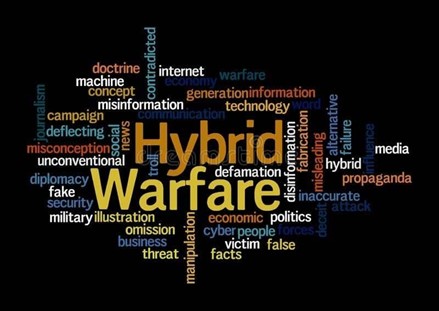
Pakistan embodies an enduring paradigm of resilience, faith, and collective cohesion. Conceived through immense sacrifice and sustained by an unwavering belief in its ideological foundations, the state has consistently confronted multifaceted crises with fortitude, emerging reinforced through each trial. Its citizenry, armed forces, and institutional structures remain unified by a shared commitment to safeguarding the nation’s sovereignty and fulfilling its historical destiny with dignity. Yet, the contemporary security environment presents increasingly hybridized challenges. India’s employment of multidimensional warfare tactics, the ideological subversion propagated by Khawarij factions exploiting religious sentiment, and the internal fragmentation driven by politicized discord collectively test the coherence of the national fabric. Nevertheless, Pakistan’s resilience has never been contingent upon the absence of adversity; rather, it has been strengthened through it. Across decades of turbulence, Pakistan has demonstrated that national unity is not merely a rhetorical construct but a strategic imperative underpinning its statecraft and survival.
India’s Hybrid Warfare and Proxy Escalation
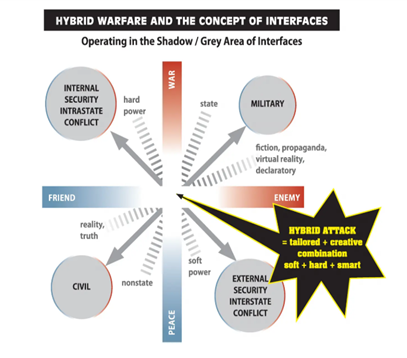
Following its failed aggression in May 2025, India intensified its hybrid strategy, funding propaganda, supporting terrorist proxies, and amplifying digital disinformation. Reports cited by Dawn (July 2025) confirm India’s continued hybrid campaign against Pakistan, involving terror proxies, disinformation networks, and economic subversion. Data from the Pakistan Institute for Conflict and Security Studies (PICSS, 2025) recorded a 124% rise in terrorist attacks in Khyber Pakhtunkhwa, with 106 incidents in August alone, the highest in a decade. The South Asia Terrorism Portal documented over 1,300 attacks nationwide; many linked to Indian-backed groups operating from Afghanistan. The UN Monitoring Team estimated 3,000–4,000 militants active with foreign facilitation.
Pakistan’s security institutions, through professionalism and restraint, continue to expose and neutralize these threats, reaffirming the nation’s commitment to peace and stability. This hybrid war, combining proxies, propaganda, and economic subversion, is designed to fracture Pakistan internally. But a united nation renders such tactics powerless.
The Western Front of Hybrid Warfare
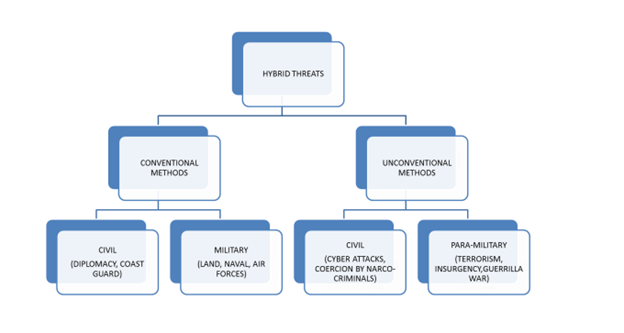
While India’s hybrid warfare thrives on disinformation and proxy operations, another front emerges from the west. Afghanistan’s soil has become a staging ground for cross-border terrorism and psychological warfare against Pakistan. Terrorist groups, operating from Afghan regions, continue to attack civilians and soldiers, advancing India’s broader destabilization strategy. This indirect axis, fueled by Indian support and Afghan-based terrorists, forms the second arm of hybrid aggression aimed at undermining Pakistan’s internal stability and regional projects like CPEC.
For over four decades, Pakistan has been Afghanistan’s humanitarian backbone, hosting millions of refugees, facilitating trade, and providing education and healthcare. This moral bond defines Pakistan’s policy, but brotherhood must come with responsibility. The UN Analytical Support and Sanctions Monitoring Team (2025) confirms that Fitna al-Khawarij networks remain active across the border. Despite Pakistan’s intelligence sharing and proposals for joint border mechanisms, Kabul has failed to dismantle sanctuaries or disrupt their logistics.
Instability along the Pak-Afghan frontier jeopardizes regional initiatives, from trade corridors to energy projects like CASA-1000. The UN Office on Drugs and Crime (2025) warns that ungoverned Afghan territories have become hubs for narcotics and terror financing, directly threatening Pakistan’s security. Yet, Pakistan’s stance remains principled and humane, not against the Afghan people, who share bonds of faith and culture, but against militants exploiting Afghan soil. True brotherhood demands responsibility; Pakistan’s call for cooperation is a regional appeal for accountability, stability, and shared prosperity.
The Internal Front of Hybrid Warfare
Pakistan faces both external and internal fronts in its struggle for stability. On one side are terrorist networks like FAK exploiting religion to erode state authority; on the other, political actors like PTI and TLP who weaponize populism and religious sentiment to divide society and undermine institutions. Countering these threats demands unity among scholars, educators, and responsible media to expose manipulation in both faith and politics. Pakistan’s unmatched sacrifices, over 80,000 lives lost and US $130 billion in economic costs since 2001, stand as proof of its resolve for peace. But when Afghan soil is used for attacks, or internal actors seek chaos for political gain, defensive measures become both a right and a duty. True democracy and faith demand discipline and responsibility, not disorder and defiance.
Unity as a Force Multiplier
History shows that Pakistan’s greatest strength lies in its unity.
In 1965, when India launched its aggression, political and ethnic divides vanished overnight. Civilians donated food, funds, and blood; mosques echoed with prayers; and Noor Jehan’s voice became the heartbeat of national morale. Dawn later described that period as one of “unprecedented national cohesion.”
That spirit reappeared during the 2005 earthquake and Operation Zarb-e-Azb (2014–2017), when the nation stood as one against terrorism, a unity that, as the ISPR declared, “broke the back of extremism.” Most recently, during the 2025 standoff with India, Pakistanis again rallied behind their armed forces. Regardless of political affiliation, citizens displayed discipline and faith. Even Reuters acknowledged Pakistan’s response as “measured and confident,” reflecting maturity under pressure. These moments affirm a timeless truth: when Pakistan stands united, it becomes unbreakable.
National Character, Ideology, and Resilience
Pakistan’s unity today is not symbolic; it is operational, a living reflection of national character and ideological strength. Political cohesion, institutional discipline, and public trust form the backbone of its integrated deterrence. As seen during the Balakot and 2025 standoffs, coordinated leadership and national maturity turned potential crises into displays of resilience. This unity extends beyond defense into economic vigilance, demonstrated by institutional successes like the Risk Management System 2.0 safeguarding national interests.
Even amid Pakistan-Afghanistan border tensions, Pakistan’s stance remains principled: it is not against the Afghan people, but against terrorists who exploit Afghan soil to attack innocent Pakistanis. Pakistan continues to extend humanitarian cooperation and regional goodwill, while firmly demanding that no sanctuary be given to those who destabilize the region. Rooted in faith, discipline, and service, Pakistan’s collective resolve transforms adversity into strength. In this age of hybrid warfare, national ideology, resilience, and unity remain Pakistan’s true shield, its enduring deterrent and unbreakable destiny.
Author