


Peace and Stability in Afghanistan as a Cornerstone for Regional Security
Afghanistan: The Gateway to Central Asia Afghanistan’s geography endows it with outsized strategic importance. It is often referred to as the “gateway to Central Asia” or the “crossroads of Asia”...

Afghanistan: The Gateway to Central Asia
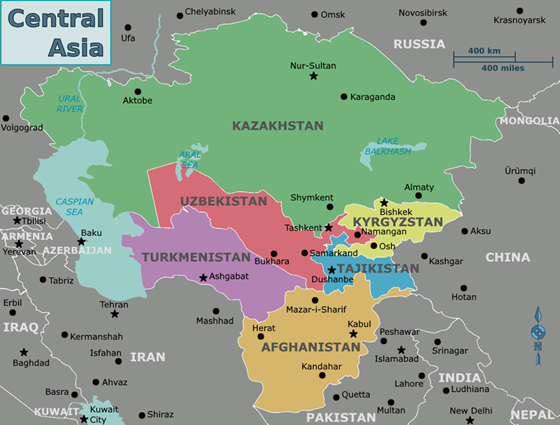
Afghanistan’s geography endows it with outsized strategic importance. It is often referred to as the “gateway to Central Asia” or the “crossroads of Asia” because it connects the landlocked heart of Central Asia with South Asia, the Middle East, and even western China. Bordered by Pakistan to the south and east, Iran to the west, and Turkmenistan, Uzbekistan, and Tajikistan to the north, with a narrow corridor (Wakhan Strip) touching China, it bridges multiple regions. This location placed it astride historic trade routes (including branches of the ancient Silk Road) and invasion paths connecting Central Asia to South Asia and beyond. For example, goods and cultures once flowed through Afghan cities like Herat and Balkh between Persia, India, and Central Asia. Today, its neighbors view Afghanistan as a vital land corridor, a transit hub that could open routes for energy pipelines, railways, and trade between Central Asian republics and the warm-water ports of the Arabian Sea. In short, Afghanistan’s position at the heart of Asia gives it immense potential to foster regional connectivity and commerce, if it can achieve lasting peace and stability.
A History Marred by Unending Conflict
Unfortunately, Afghanistan’s strategic location also made it a frequent battleground for empires and regional rivalries. It has endured constant conflict for over four decades, earning a reputation as a “graveyard of empires.” Beginning in the late 20th century, Afghanistan was engulfed by the 1979 Soviet invasion and the decade-long war of resistance that followed. After the Soviet withdrawal (1989) and the collapse of a Soviet-backed regime, the 1990s saw a brutal civil war among mujahideen factions and the rise of the Taliban. The Taliban militia seized Kabul in 1996 and enforced a hardline regime, turning the country into an isolated emirate. Fighting in Northern Afghanistan, however, continued with the Northern Alliance militia putting up a stubborn resistance.
The post-9/11 era brought another prolonged conflict. Following Al-Qaeda’s attacks of September 11, 2001, a U.S.-led coalition intervened to topple the Taliban regime for harboring terrorists. The regime fell within weeks, and an internationally backed Afghan government took its place. However, the Taliban regrouped as an insurgency, and Afghanistan became the central front of the “War on Terror” for the next 20 years. The two-decade war (2001–2021) inflicted immense human and financial costs. An estimated 241,000 people were killed in Afghanistan (including over 71,000 civilians), and the United States spent about $2.26 trillion on its Afghan military campaign. By August 2021, the Taliban returned to power as U.S. and NATO forces withdrew, bringing the conflict full circle. This relentless history of warfare, from the Soviet invasion to civil war to the post-9/11 insurgency, has left Afghanistan unstable and its people weary.
Post-9/11 Terrorism Surge and a Porous Border
One tragic consequence of Afghanistan’s long wars has been the spread of terrorism across its borders. After 2001, as U.S. and NATO forces pursued Al-Qaeda and Taliban fighters, many militants escaped through the rugged frontier into Pakistan’s tribal areas via the porous 2,600 km international border. Historically, this region allowed free movement of Pashtun tribes and remained largely unmonitored. The difficult terrain of the Hindu Kush and Safed Koh ranges, with natural hideouts such as Tora Bora, made the border nearly impossible to seal, enabling insurgents to regroup and operate freely on both sides.
By the mid-2000s, the Tehrik-i-Taliban Pakistan (TTP) had emerged in Pakistan’s border regions, exploiting the porous frontier between the two countries. Militants operating in both Afghanistan and Pakistan used this unguarded terrain to seek refuge across the border, turning the frontier into a hub of militant activity. Extremist networks including Al-Qaeda and ISIS-K entrenched themselves in areas straddling eastern Afghanistan and western Pakistan, fueling a surge in terrorism on both sides. Pakistan endured devastating attacks by the TTP, now designated as the Fitna-Al-Khawarij (FAK) by the Pakistani state, who frequently launched strikes and then retreated into Afghan sanctuaries. The rugged landscape and open boundary enabled this interconnected insurgency, proving that Afghanistan’s instability directly translates into insecurity for Pakistan.
Regional Security Complex on Afghan Soil
By 2021, the Taliban’s return to power in Kabul revived hopes of ending decades of war but also fears of renewed militant activity. Neighbors grew concerned that Afghan territory could once again serve as a haven for international terrorist groups, a fear not misplaced. Numerous extremist organizations remain active across Afghanistan’s vast terrain, including the FAK and Baloch insurgents targeting Pakistan, the Uyghur-led ETIM threatening China’s Xinjiang, Jaish al-Adl opposing Iran, and global jihadist outfits like ISIS and al-Qaeda. Though the Taliban claim to curb such groups, they have struggled to eliminate them.
Afghanistan’s instability thus presents a shared security dilemma for the region. A single country’s troubles can quickly radiate outward, a phenomenon often described by scholars as a regional security complex. Recognizing this, Afghanistan’s neighbors have begun coordinating their policies. In October 2025, Pakistan, Russia, China, and Iran held a quadrilateral meeting in Moscow that focused on Afghanistan’s future security. Pakistan’s special envoy for Afghanistan, Ambassador Mohammad Sadiq Khan, stated that representatives of the four countries discussed joint efforts toward a “peaceful, independent, and terrorism-free Afghanistan,” emphasizing the need for freedom from external interference. The meeting focused on the continued presence of militant groups like the FAK, BLA, ETIM, Jaish al-Adl, ISIS, and al-Qaeda, which the participants agreed pose a direct threat not only to Afghanistan’s security but to the peace of all neighboring states. In a statement on X (Twitter), Sadiq reported that all four countries voiced deep concern that these terrorist organizations were still operating from Afghan soil and underscored the urgent need for coordinated counterterrorism measures. According to Russia’s Foreign Ministry, the Moscow talks (held ahead of a broader Moscow Format consultation) produced a shared regional vision for stabilizing Afghanistan, including drafting a joint document committing to Afghanistan’s sovereignty and territorial integrity. This quadrilateral initiative underscores a growing regional consensus, driven by pragmatic security concerns, that Afghanistan must not become a haven for terrorism or external meddling. In effect, Pakistan, China, Iran, and Russia are finding common ground in preventing an Afghan security vacuum.
This reflects a wider regional push for Afghan stability. In September 2025, the foreign ministers of Pakistan, China, Iran, and Russia met on the sidelines of the UN General Assembly and jointly affirmed that Afghanistan must remain independent, united, and free from terrorism, war, and narcotics. They warned that groups such as ISIS, Al-Qaeda, FAK, BLA, Jaish al adl and ETIM pose a serious threat not only to Afghanistan but to global security, urging the Taliban to take concrete, verifiable steps to dismantle all terrorist infrastructure. Their stance underscored a realist understanding that instability in Afghanistan endangers the entire region, prompting neighbors to unite in pursuit of a secure, terror-free Afghanistan.
Implications for Pakistan and the Region
The persistence of conflict and terrorism in Afghanistan has exacted a heavy toll on its neighbors, especially Pakistan. One major consequence has been resurgent terrorism inside Pakistan. Militant groups like the FAK have dramatically escalated attacks on Pakistani security forces and civilians. Violence in Pakistan has spiked to levels not seen in years. In fact, over just three months (July–September 2025), Pakistan suffered 329 incidents of militant violence and counter-operations that killed at least 901 people and injured nearly 600. Consequently, Pakistan has had to ramp up military operations against militants at home and even undertake the costly measure of fencing the entire Afghan border to deter infiltration.
Beyond immediate security threats, Afghanistan’s turmoil also triggers refugee flows and humanitarian strains on neighbors. Pakistan and Iran have together hosted millions of Afghan refugees over the decades of war. As of 2025, Pakistan still shelters over 3.7 million Afghans (registered and unregistered), while Iran hosts around 2.6 million. This refugee burden has humanitarian and socio-economic impacts on host communities. Regional instability also hinders trade and economic integration, as investors and infrastructure projects tend to avoid conflict zones.
📄 POLICY WIRE WHITEPAPER PUBLISHED: PAKISTAN'S NATIONAL SECURITY POLICY PRIORITIES
👉 READ BY CLICKING HEREAfghanistan’s instability even has geopolitical implications beyond its immediate neighbors. China, for example, worries that a chaotic Afghanistan could allow Uyghur separatist militants (ETIM) to plot unrest in Xinjiang. Russia and the Central Asian republics fear the spread of ISIS-linked fighters into their territories to foment extremism. Every neighbor, Pakistan, Iran, China, and the Central Asian states, thus has vital national security interests at stake in Afghanistan’s trajectory. This shared vulnerability is precisely why these countries are increasingly coordinating policies and pressing the Taliban regime to prevent any terrorist outfits from using Afghan soil to threaten others.
On the positive side, a stable Afghanistan could unlock tremendous opportunities for the entire region. Peace in Afghanistan would enable the long-envisioned projects of regional connectivity to proceed. Such projects promise win-win economic gains, but they remain stalled by security concerns. This underscores that Afghanistan’s peace is essential for regional prosperity.
A Way Forward: From Conflict to Stability
To stabilize Afghanistan and secure the broader region, a multi-pronged approach is essential. First, Afghanistan requires a political settlement that genuinely reflects its multiethnic composition. A more inclusive governance model would not only boost domestic legitimacy but also weaken extremist recruitment narratives that thrive on marginalization. Equally critical is the need for firm counter-terrorism measures. This includes shutting down training camps, halting recruitment and funding streams, and extraditing foreign fighters.
Afghanistan’s neighbours should institutionalize their growing regional cooperation under frameworks such as the Moscow Format or the Shanghai Cooperation Organization (SCO), or establish a dedicated regional contact group. These platforms can facilitate joint border security, coordinated sanctions against groups like ISIS-K, and unified diplomatic engagement with the Taliban. Collective action amplifies regional influence and aligns with the “regional security complex”. Alongside security, economic integration is essential. Projects like the TAPI gas pipeline, CASA-1000 electricity grid, and trans-Afghan railway lines promise to generate jobs, transit revenue, and shared interests in peace. Finally, durable peace requires prioritizing human security. Over two-thirds of Afghans require urgent aid, as well as investments in food, healthcare, and education. Regional diplomatic efforts must continue to push the Taliban towards these.
Afghanistan’s destiny is inextricably tied to that of its region. It is an apt description, as the “Heart of Asia” or gateway to Central Asia, which signifies that when Afghanistan bleeds, the region feels the pain. When Afghanistan heals, the area stands to gain. After decades of incessant wars and turmoil, a historic opportunity lies. Through joint diplomatic leverage, security collaboration, and economic partnership, neighbours can help steer Afghanistan toward lasting peace and stability, which would be a collective victory for all.
Author