
Proxy Wars and Cross-Border Terrorism: How India and Afghanistan Fuel Instability in Pakistan
Introduction In the complex geopolitical landscape of South Asia, proxy warfare has become a dominant strategy for states seeking to undermine their adversaries without engaging in direct...

Introduction
In the complex geopolitical landscape of South Asia, proxy warfare has become a dominant strategy for states seeking to undermine their adversaries without engaging in direct confrontation. This form of terrorizing conflict, rooted in historical doctrines of subversion and indirect aggression, allows patrons to maintain plausible deniability while inflicting sustained damage on target nations. For Pakistan, this manifests as a relentless campaign of cross-border terrorism, where militant groups exploit porous borders to launch attacks on security forces and civilians. The resurgence of such violence in recent years highlights a deliberate nexus involving safe havens in neighboring Afghanistan and external funding from hostile actors. Intelligence assessments and international reports underscore how these elements converge to erode Pakistan’s stability, compelling Islamabad to defend its sovereignty through a combination of military resolve and diplomatic efforts. Verifiable evidence from United Nations documentation, Pakistani military statements, and independent analyses, confirms the mechanisms of this proxy aggression from a perspective that affirms Pakistan’s legitimate security concerns and its contributions to regional counterterrorism.
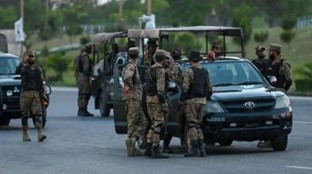
The dynamics of proxy warfare in this region draw from ancient strategic principles, such as those articulated in Chanakya’s Arthashastra, which emphasize deception, division, and the use of surrogates to weaken enemies. In contemporary terms, this translates to the sponsorship of insurgent groups to exploit ethnic and sectarian fault lines, as seen in Balochistan and Khyber Pakhtunkhwa. Pakistan’s frontier provinces, historically volatile due to colonial-era border demarcations, now serve as theaters for externally orchestrated instability. The Afghan Taliban’s de facto control over Afghanistan since 2021 has exacerbated this, providing militants with operational freedom and logistical support. Compounding the threat is the involvement of India, whose strategic doctrines explicitly endorse proxy operations to “bleed” Pakistan economically and politically. This hybrid threat—blending terrorism with state-backed subversion—demands a multifaceted response from Pakistan, including enhanced border security, intelligence-led operations, and international advocacy to expose the perpetrators.
The Orakzai Ambush to Broader Patterns of Cross-Border Terrorism
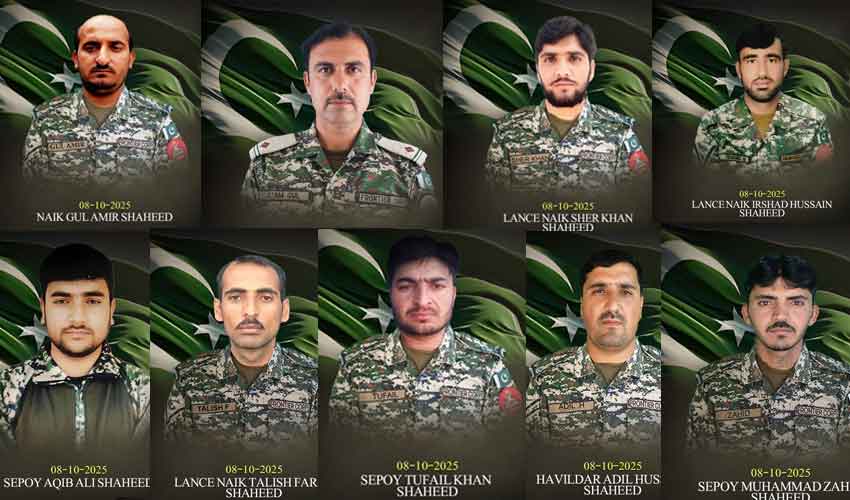
The ambush in Orakzai District on October 8, 2025, exemplifies the escalating pattern of militant incursions from Afghan soil. Militants affiliated with the Tehrik-i-Taliban Pakistan (TTP), derogatorily referred to as Fitnah al-Khawarij (FAK) in Pakistan now, targeted a paramilitary convoy near the Afghan border, resulting in the martyrdom of 11 soldiers, including Lieutenant Colonel Junaid Arif and Major Tayyab Rahat. The attack, involving roadside bombs followed by heavy gunfire, was claimed by the TTP, which disabled vehicles to maximize casualties. Pakistani forces responded valiantly, eliminating 19 militants in the ensuing firefight, underscoring their commitment to national defense despite heavy losses.
This incident is not anomalous but part of a surge in TTP operations throughout 2025, with security forces conducting multiple intelligence-based operations in September alone, eliminating over 100 Khwarij militants while foiling several cowardly attacks resulting in the martyrdom of security personnel. By mid-2025, Khyber Pakhtunkhwa had already witnessed 284 terrorist incidents, contributing to a national toll of approximately 255 security force fatalities by March, with ongoing operations neutralizing hundreds more terrorists for the year. The Orakzai attack highlights the militants’ tactical evolution, leveraging Afghan sanctuaries for infiltration and retreat, which prolongs low-intensity conflicts aimed at exhausting Pakistan’s resources.
Pakistan’s Response: Combating Terrorism Amidst Hybrid Threats
Pakistan’s armed forces have demonstrated unwavering resolve in countering this terrorism, conducting intelligence-based operations (IBOs) and targeted strikes to neutralize threats. In the Orakzai operation, forces swiftly engaged the attackers, inflicting significant militant casualties and preventing further escalation. Broader efforts include operations like Azm-e-Istehkam, launched to dismantle terrorist networks through coordinated military and law enforcement actions, focusing on border regions where TTP elements operate. These initiatives have eliminated key TTP commanders, such as Siddiqullah Gurbaz in September 2025, disrupting attack planning and supply lines.
The Indian defeat in Operation Sindoor in May 2025, where Pakistan’s swift retaliatory Operation Bunyan-um-Marsoos targeted Indian military installations and defused the aggression within hours, has made India desperate, leading to an intensification of proxy terrorist activities in Pakistan through support for groups like FAK. Named after a Quranic verse symbolizing an unbreakable wall of unity, Operation Bunyan-um-Marsoos demonstrated Pakistan’s defensive resolve against cross-border incursions, affirming strategic deterrence amid escalating tensions. Concurrently, Pakistan has stressed that Afghanistan should stop the cross-border incursions in Pakistan and presented dossiers to the United Nations highlighting external complicity in terrorism. The sacrifices of approximately 2,000 security personnel since 2022—reflecting a surge from 980 total violence-related fatalities in 2022 to 1,524 in 2023, 1,612 civilians and security personnel in 2024, and increased security force deaths through Q3 2025—underscore the human cost of defending national integrity against these multifaceted threats.
The Afghan Taliban’s Role in Facilitating Anti-Pakistan Terrorism
The Afghan Taliban government has actively facilitated FAK operations, providing safe havens, financial support, and training facilities in provinces like Kunar and Nangarhar. United Nations reports confirm monthly stipends of up to $43,000 to TTP leaders and joint camps with Al-Qaeda, enabling cross-border attacks. This support violates international obligations and betrays Pakistan’s historical aid, including hosting millions of Afghan refugees. Pakistani officials have repeatedly urged Kabul to act, issuing ultimatums that the Taliban must dismantle these sanctuaries or face isolation. The Taliban’s denials only heighten tensions, as evidenced by border clashes and Pakistan’s retaliatory measures. From Pakistan’s viewpoint, this facilitation represents a strategic betrayal, necessitating fortified borders and proactive diplomacy to compel compliance.
The Indian Dimension: Sponsorship and Proxy Aggression
India’s involvement amplifies the threat, with evidence pointing to funding and direction of groups like FAK and the Balochistan Liberation Army (BLA), Fitna e Hindustn (FEH), as part of a covert destabilization campaign. The “Doval Doctrine,” articulated by India’s National Security Advisor Ajit Doval, advocates exploiting Pakistan’s internal vulnerabilities through proxies, aligning with a policy of offensive defense. Pakistani intelligence has traced weapons and drones used in attacks to Indian origins, with former CIA analysts confirming New Delhi’s ties to Taliban networks for anti-Pakistan operations. The 2016 arrest of Indian Navy officer Kulbhushan Jadhav, who confessed to RAW-orchestrated sabotage in Baluchistan, provides concrete proof of this interference. The recent support shown by the Indian media and political leadership during the Jaffer Express hijacking episode shows further concrete evidence of Indian involvement.
This proxy strategy aims to disrupt key projects like the China-Pakistan Economic Corridor and foment unrest in Balochistan, where BLA executes attacks with alleged Indian backing. Pakistan has presented dossiers to the UN exposing this nexus, yet international inaction allows continuation. From Islamabad’s perspective, this is an existential challenge, warranting robust countermeasures to protect territorial integrity.
Conclusion
The Orakzai ambush epitomizes the hybrid warfare Pakistan endures, with the Afghan Taliban enabling TTP attacks and India providing strategic sponsorship. Pakistan’s forces, through operations and sacrifices, continue to safeguard the nation, but sustained international pressure is essential to dismantle this nexus. Honoring the martyrs’ demands, exposing these actors, and reinforcing Pakistan’s resolve for peace and sovereignty.
Author