

The Precipice of Peace: Trump’s Gaza Plan and the Shadows of Failure
After two years of relentless war, Gaza lies in ruins. More than 67,000 Palestinians are dead, and most of the 2.2 million residents are displaced or starving. The tragic events of October 7, 2023,...

After two years of relentless war, Gaza lies in ruins. More than 67,000 Palestinians are dead, and most of the 2.2 million residents are displaced or starving. The tragic events of October 7, 2023, resulted in immense loss of life, with many lives shattered in both Israel and Gaza. The aftermath of these events continues to deeply affect the region. Yet, in a rare convergence, officials from Israel and Hamas are now engaged in indirect talks in Egypt under U.S. President Donald Trump’s newly unveiled 20-point peace plan, a blueprint he calls a “lasting deal.”
For decades, the conflict has oscillated between chaos and containment. What was once an unstable conflict, marked by bursts of catastrophic violence and paralyzing fear, is now edging toward a stable conflict: open war has given way to managed hostility, and both sides are seized not by fear but by anxiety, the fear of peace itself. Political scientists use that term for moments when leaders, accustomed to perpetual confrontation, dread that compromise could expose them to political backlash or strategic risk.
Both Israel and Hamas are trapped in that psychological paradox. For Israel, peace raises anxiety about appearing weak; for Hamas, it threatens the very identity of resistance. Yet exhaustion and global pressure have created a fragile moment of opportunity. Success could lift Gaza’s siege and reshape the Middle East; failure could plunge it into a darker, deadlier chapter.
Trump’s 20-Point Blueprint
The Sharm El-Sheikh negotiations revolve around Trump’s 20-point plan — an ambitious framework for ceasefire, hostage exchange, and reconstruction. At its core lies a mutual gesture of trust: all 48 remaining Israeli hostages (about 20 believed alive) would be released within 72 hours in exchange for 250 Palestinian prisoners serving life terms and 1,700 others detained since 2023.
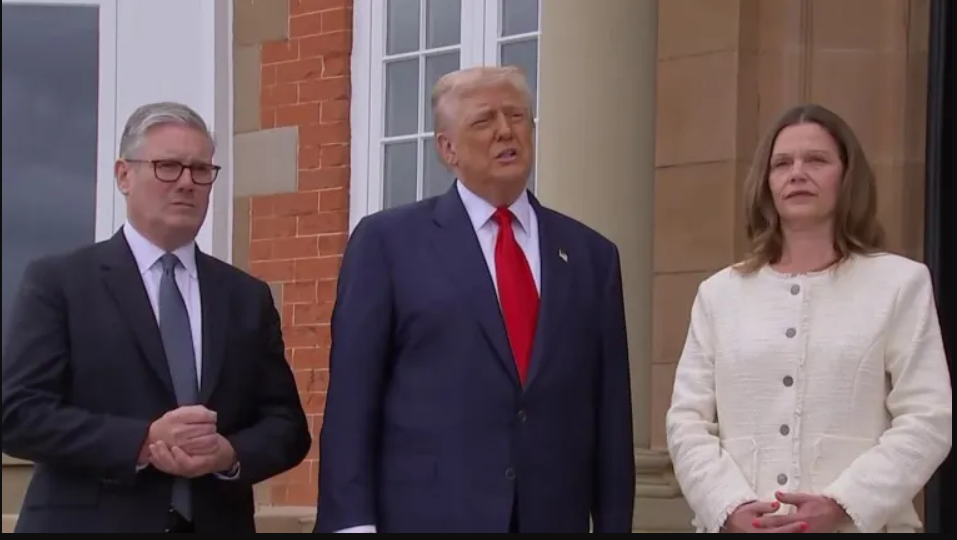
Trump’s plan demands Hamas’s demilitarization under international supervision and envisions a “New Gaza” governed temporarily by a technocratic Palestinian administration. Oversight would rest with a Board of Peace, chaired by Trump and including figures such as former U.K. Prime Minister Tony Blair. A reconstruction package exceeding $100 billion, funded by international donors, would rebuild housing, utilities, and jobs, turning Gaza from a battlefield into a model of recovery.
Neither side welcomes every clause, but both have endorsed the plan’s principles on paper, a rare breakthrough. For Israel, total military victory has proved impossible without global condemnation. For Hamas, whose forces are decimated and whose population faces collapse, continued war risks annihilation. With allies such as Qatar, Egypt, and Turkey urging compromise, and Washington eager for a foreign-policy win, the timing has become unusually ripe. “Both sides feel the pressure to get this done,” observed a former Israeli diplomat.
Chances for Peace
When talks resumed on October 7, 2025, at Sharm El-Sheikh, hope wrestled with history. Trump projected confidence that there was “a really good chance” for success, but both delegations carried the deep anxiety of peace.
For Prime Minister Benjamin Netanyahu, the plan offers a chance to restore Israel’s global standing while retrieving hostages and ending the war without reoccupying Gaza. Polls show 72 percent Israeli support for a ceasefire and prisoner swap. Yet his far-right coalition, led by Bezalel Smotrich and Itamar Ben-Gvir, condemns troop withdrawals as weakness, echoing the backlash after Israel’s 2005 Gaza disengagement. To placate them, Netanyahu demands a “yellow-line buffer zone” until Hamas fully disarms. Diplomats estimate a 60–70 percent likelihood that Israel will approve the initial phases, but only about 10 percent for full implementation.
For Hamas, survival defines the calculus. Having lost nearly 70 percent of its forces and most of its infrastructure, the group sees Trump’s plan as a reprieve — ending the siege, unlocking reconstruction funds, and releasing 1,900 prisoners. On October 3, it signaled willingness to release hostages and accept technocratic governance once Israeli forces withdraw. But full disarmament remains its red line. Many within Hamas view surrendering weapons as existential suicide. Leaders propose phased disarmament or neutral storage, demanding guarantees of statehood and a permanent ceasefire as a precondition for compliance.
Both sides thus share the same anxiety: peace itself could expose them more than war. Israel fears a rearmed Hamas; Hamas fears Israeli betrayal once it lays down arms. This mirrored mistrust epitomizes the fear of peace, the defining anxiety of a stable conflict, where hostility is contained but trust is perilous.
Obstacles and Spoilers
Beneath the formal optimism lies a minefield of unresolved disputes. The most contentious issue is sequencing: Israel insists on a staged withdrawal tied to disarmament. At the same time, Hamas demands complete withdrawal first—similar mis sequencing doomed earlier ceasefires, from the 2005 disengagement to the 2014 temporary truce.
Verification is another stumbling block. Trump’s proposed international peacekeeping mission and Board of Peace remain conceptual, lacking a concrete mandate. Pakistan and several Muslim states demand total Israeli withdrawal without buffer zones, viewing such zones as veiled occupation. The sidelined Palestinian Authority worries that governing Gaza after Hamas’s exit could burden it with failure. Meanwhile, smaller factions such as Islamic Jihad and the PFLP reject the plan outright and threaten to derail it with sporadic attacks.
Inside Israel, right-wing ministers seek “hair-trigger” rights to resume strikes if Hamas falters, while hostage families oppose early ceasefires they see as betrayal. Trump’s push to “move fast” collides with fragile domestic politics on both sides.
External spoilers loom large. Iran denounces the plan, while Hezbollah’s posture along the northern border threatens escalation. A recent flotilla incident, Israel’s interception of a Turkish-led aid convoy detaining 479 activists, including Greta Thunberg, sparked global outrage and hardened Hamas’s stance. In such a volatile atmosphere, even a single provocation could unravel months of diplomacy.
The Promise of Success
If the plan holds, its dividends could be transformational. For Gaza’s two million civilians, peace would mean survival. A sustained ceasefire would reopen borders to food, fuel, and medicine, easing famine for 1.9 million displaced people. The $100–150 billion reconstruction funds, led by Qatar and Turkey, could help rebuild schools, hospitals, and desalination plants. Employment rates currently above 60 percent would surge through public works and deradicalization programs.
For Israel, peace would deliver both moral and strategic gains. The return of hostages, cessation of rocket fire, and troop redeployment would save lives and billions of dollars. Diplomatically, it could end isolation, unlock normalization with Saudi Arabia, and expand the Abraham Accords. Achieving “total victory” through diplomacy would rehabilitate Israel’s image and reintegrate it into a stabilizing regional order.
📄 POLICY WIRE WHITEPAPER PUBLISHED: PAKISTAN'S NATIONAL SECURITY POLICY PRIORITIES
👉 READ BY CLICKING HEREGlobally, peace in Gaza could ripple through markets, with energy prices potentially dipping 10–15 percent, which would ease inflation. Meanwhile, regional calm would free Washington and its allies to focus on climate and technology challenges. Most profoundly, it would restore faith in diplomacy after years of cynicism. For Pakistan and other Muslim nations, success would vindicate their call for a just two-state solution and elevate their role as mediators of principled peace.
The Price of Failure
If the Sharm El-Sheikh talks collapse, the consequences could be catastrophic. Without a deal, Israel vows to apply “force like never before.” The death toll, already above 65,000, could exceed 100,000 by 2026 as famine and disease take hold. The U.N. warns of mass displacement into Egypt, risking a refugee crisis reminiscent of 1948.
Politically, failure would empower extremes. In Israel, far-right voices would argue that diplomacy is futile and push for reoccupation or expulsions. Among Palestinians, Hamas hard-liners would claim vindication, marginalize moderates, and spawn new militant offshoots. Iran’s proxies could ignite a multi-front confrontation from Lebanon to Iraq, dragging U.S. forces back into the region.
Economically, oil prices could spike 20–30 percent, plunging fragile global markets into recession. Trump’s credibility staked on this deal would erode, fueling domestic polarization and skepticism abroad. International tribunals could accelerate war-crime probes, isolating Israel diplomatically and deepening global divides.
As one veteran negotiator warned, “There is no status quo, only worse war.” The failure of this fragile moment could condemn generations to endless violence, normalize humanitarian catastrophe, and extinguish hopes for peace altogether.
Pakistan’s Role: A Moral Compass
Amid the diplomatic crossfire, Pakistan stands as a principled advocate for Palestinian rights and a bridge between the Muslim world and Western diplomacy. Prime Minister Shehbaz Sharif’s October 4 statement expressed gratitude to Trump and regional leaders for advancing peace efforts, while urging an end to “this genocide.” Foreign Minister Ishaq Dar, however, clarified that Trump’s plan diverged from the Muslim bloc’s UNGA draft crafted by Pakistan and seven allies, which demanded total Israeli withdrawal and a return to pre-1967 borders with East Jerusalem as capital.
This dual stance reflects a balance, not a contradiction: an appreciation for mediation paired with an insistence on justice. Pakistan has dispatched over 2,000 tons of aid worth PKR 1 billion, offered troops for a potential peacekeeping mission, and coordinated with China and Russia at the U.N. Islamabad’s consistent message: no recognition of Israel without a fair two-state outcome.
By amplifying Muslim voices while engaging pragmatically with Washington, Pakistan positions itself as both a moral and strategic actor. Its credibility as an OIC founder and major Muslim democracy gives it leverage to shape any post-war order rooted in equity for Palestinians and stability for the region.
Seizing the Uneasy Dawn
As dawn breaks over Gaza on October 7, 2025, negotiators in Sharm El-Sheikh stand at history’s edge. Both Israel and Hamas must confront their deepest anxieties: Israelis must trust that those who once massacred their citizens can disarm sincerely; Palestinians must believe that an occupier can release its grip without forging new chains.
The fear of peace that anxiety of a stable conflict must now yield to the terror of endless war. Trump’s intervention has cracked open a narrow door; sustaining it will demand courage from both sides and vigilance from the world. Broken promises have too often turned hope into hatred.
As one young Gazan said, “A deal means survival.” Her words echo beyond the rubble, a plea for humanity to choose light over vengeance. In this uneasy dawn, the choice is clear: seize peace while it still breathes, or sink forever into night.
Author