

India’s Escalating Rhetoric Against Pakistan and Its Strategic Motives
Introduction The long-standing India–Pakistan rivalry, rooted in the unresolved Kashmir dispute and deep ideological divisions, reached a perilous peak in May 2025. The crisis began after a terrorist...

Introduction
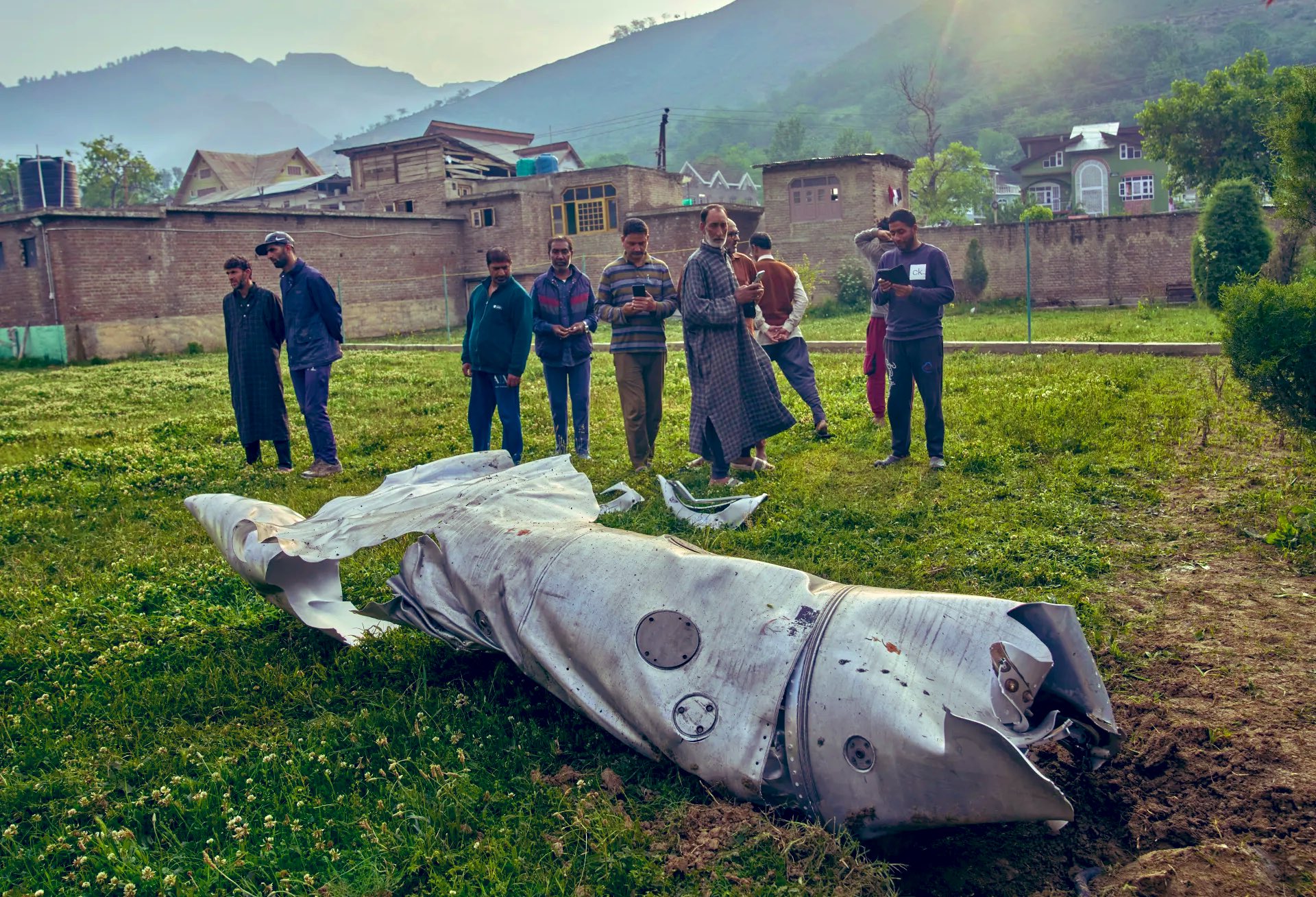
The long-standing India–Pakistan rivalry, rooted in the unresolved Kashmir dispute and deep ideological divisions, reached a perilous peak in May 2025. The crisis began after a terrorist attack in Pahalgam, Indian-occupied Kashmir, on April 22, which killed 25 people — an incident India swiftly blamed on Pakistan without providing substantive evidence. In response, India launched Operation Sindoor on May 7, conducting airstrikes inside Pakistan on alleged terrorist camps — a move widely viewed as a violation of Pakistani sovereignty and international law, resulting in civilian casualties. This attack culminated in the shooting down of 6 of the attacking aircraft by Pakistan Air Force using Beyond Visual Range (BVR) missiles from platforms like the J-10Cs and JF-17s.
The escalation (May 7–10) saw aerial strikes, drone incursions, and cyber operations, raising fears of a nuclear confrontation between the two nuclear-armed neighbors. Pakistan denied involvement in the Pahalgam attack and, in the early hours of May 10, launched Operation Bunyan-ul-Marsoos — named after a Quranic metaphor for an unyielding structure of molten lead, symbolizing national unity and impenetrable defense. Using advanced electronic warfare, drone swarms, and precision-guided missiles, Pakistan struck Indian military assets while avoiding civilian areas.
A U.S.-brokered ceasefire eventually halted the conflict, reflecting the international community’s acknowledgment of Pakistan’s measured response amid what many observers describe as India’s assertive military posture. Since then, Indian rhetoric has intensified, with leaders issuing existential threats that challenge the UN Charter’s principles of sovereignty and non-aggression. Analysts from institutions such as the Stimson Center and Brookings have highlighted the ideological roots and strategic motives behind this posture — underscoring the irony of India’s terrorism accusations given its own covert destabilization activities.
Pakistan, on the other hand, as a frontline victim of terrorism, has suffered more than 80,000 casualties since 2001, yet continues to modernize its defenses and contribute to global peace efforts through UN missions and Afghan reconciliation. By contrasting India’s brinkmanship with Pakistan’s restraint, this paper calls for greater international attention to New Delhi’s destabilizing behavior and its implications for regional stability in South Asia.
Indian Leadership’s Escalatory Rhetoric: A Chronicle of Provocation
In the months following the May 2025 ceasefire, Indian officials have unleashed a barrage of inflammatory statements, explicitly threatening Pakistan’s territorial integrity and existence. On October 3, 2025, Indian Army Chief General Upendra Dwivedi, addressing troops in Rajasthan’s Anupgarh district, issued a stark ultimatum: “If Pakistan wants to be in Geography, then it must stop state-sponsored terrorism,” implying that anti-India stance could lead to Pakistan’s erasure from the map. He further declared that India would abandon the restraint exhibited during Operation Sindoor, promising a “decisive and far more destructive” response in future engagements. This rhetoric was echoed by Air Chief Marshal A.P. Singh, who boasted of downing 12-13 Pakistani aircraft, including F-16s and JF-17s, during the conflict, while dismissing Pakistani counter-claims as fabrications. However, these assertions are contradicted by international media reports, which detail the downing of multiple Indian jets, including Rafales, through superior electronic jamming and precision strikes by Pakistan.
Prime Minister Narendra Modi framed the ceasefire as a temporary suspension, warning of resumption if Pakistan failed to meet arbitrary demands. Defense Minister Rajnath Singh invoked potential border revisions in the Sir Creek dispute, threatening actions that would “change both history and geography.” External Affairs Minister S. Jaishankar affirmed readiness for deep incursions into Pakistani territory. Such pronouncements, as analyzed by the Royal United Services Institute (RUSI), represent a calibrated escalation that risks miscalculation in a nuclear context. From Pakistan’s vantage, these threats are not mere posturing but deliberate attempts to provoke, ignoring India’s own culpability in regional violence and contravening Article 2(4) of the UN Charter prohibiting threats to territorial integrity.
The rhetoric extends to nuclear dimensions, further eroding stability. Modi’s 2019 derision of Pakistan’s arsenal—”Have we kept ours for Diwali?”—has been reiterated in 2025 contexts, alongside Singh’s suggestions of revising India’s No First Use policy based on “circumstances.” Former Army Chief Bipin Rawat’s statement to “call Pakistan’s nuclear bluff” exemplifies this recklessness. The Belfer Center notes that such statements heighten escalation risks in a dyad where Pakistan’s doctrine emphasizes credible minimum deterrence to counter India’s conventional superiority. Pakistan views these as irresponsible flirtations with Armageddon, especially given its own doctrine’s focus on de-escalation and defensive use.
Ideological Foundations: Hindutva Extremism and the Assault on Regional Peace
At the core of India’s aggressive rhetoric lies Hindutva ideology, propagated by the BJP and its RSS roots, which posits an “Akhand Bharat” that denies Pakistan’s sovereign existence. Modi’s lifelong RSS affiliation embodies this worldview, transforming policy into a civilizational crusade against Pakistan. National Security Advisor Ajit Doval’s doctrine advocates proactive destabilization, as in his 2014 threat: “You may do one Mumbai, you may lose Balochistan,” explicitly endorsing subversion. Chatham House analyses reveal how this ideology polarizes India’s polity, framing Pakistan as an eternal adversary to divert from domestic failures.
In stark contrast, Pakistan’s ideological framework, drawing from Islamic principles of justice and unity—as evoked in Operation Bunyan-ul-Marsoos—emphasizes defensive solidarity and peaceful coexistence. This operation’s name reflects a cultural resilience that unites the nation against external threats, fostering internal cohesion rather than expansionist fantasies. Hindutva’s erosion of India’s secular fabric, as critiqued in East Asia Forum reports, spills into foreign policy, normalizing threats that undermine South Asian peace. Pakistan’s response has been to highlight these ideological perils at forums like the UN, urging global scrutiny of India’s extremist-driven policies.
Motives Driving India’s Posture: Concealment, Militarization, and Political Opportunism
India’s rhetoric is a calculated veil for multiple vulnerabilities. First, it masks the humiliations of Operation Sindoor, where Indian claims of destroying nine camps and killing over 100 militants are undermined by internal contradictions: The Chief of Defence Staff acknowledged initial losses, while opposition leaders decried “something fishy” in divergent narratives. On the other hand, Pakistan’s retalliated to Indian adventurism in the shape of Operation Bunyan-ul-Marsoos, deploying drones across 36 sites, neutralizing Indian advances, and downing 6-7 high-tech Indian aircraft without territorial violation. Civilian casualties from Indian strikes further exposed the operation’s recklessness, as documented by Al Jazeera.
Secondly, it justifies India’s bloated defense budget of $86 billion in 2025 (an increase of 9.5% from the previous year), nearly nine times Pakistan’s $9-10 billion, funding acquisitions like additional S-400 systems post-Sindoor. This disparity, per South Asian Voices, enables India’s militarization while Pakistan optimizes resources for qualitative edges.
Third, domestic politics fuel the fire, with rhetoric timed to elections, mirroring the 2019 Pulwama false-flag and resutant escalation to manipulate the elections. Ultimately, these seem to be attempts to counter Pakistan’s diplomatic ascendance in South Asian politics and the Middle Eastern security landscape, albeit at the risk of isolating India amid global concerns over its human rights record and destablization of a nuclear powered region.
India’s Sponsorship of Terrorism: A Documented Pattern of Subversion
India’s accusations of Pakistan sponsoring terrorism are undermined by its own documented role in fostering instability within Pakistan, as evidenced by extensive Pakistani intelligence and international corroboration. A comprehensive 2020 dossier presented by Pakistan to the UN Secretary-General detailed the Research and Analysis Wing (RAW)’s orchestration of terrorism, including funding and arming Tehreek-e-Taliban Pakistan (TTP) and Baloch separatist groups like the Balochistan Liberation Army (BLA) through 66 clandestine camps in Afghanistan, with financial transactions traced to Indian consulates in Jalalabad and Kandahar. The 2016 arrest of Kulbhushan Jadhav, a serving Indian naval officer, in Balochistan provided irrefutable proof; his recorded confession revealed RAW-directed operations to orchestrate bombings and insurgent attacks to destabilize Pakistan. Recent incidents, such as the March 2025 Jaffar Express bombing in Quetta, which killed 26 civilians, were linked to BLA operatives receiving Indian arms and training, as per Pakistan’s Counter-Terrorism Department. Since 2001, Pakistan has endured over 80,000 casualties from terrorism, a toll exacerbated by Indian-backed proxies, as acknowledged in UN General Assembly statements by Pakistan’s envoy. Audio intercepts of Indian handlers coordinating TTP attacks in Khyber Pakhtunkhwa and satellite imagery of Afghan-based training camps further substantiate India’s covert war, contradicting its narrative and highlighting its role as a regional destabilizer.
Pakistan’s Resilience: Advanced Deterrence and Strategic Modernization
Pakistan has developed a formidable defense architecture that safeguards its sovereignty while reinforcing its stature as a responsible nuclear power. Its minimum credible deterrance doctrine seamlessly integrates nuclear and conventional capabilities to counter India’s numerical and financial superiority. The nuclear arsenal includes tactical systems like the 60 km-range Nasr missile, designed to neutralize India’s Cold Start doctrine of rapid armored incursions, and strategic platforms such as the Shaheen-II and Shaheen-III ballistic missiles, with ranges of 2,000 and 2,750 km respectively, capable of striking any target across Indian territory. Sea-based deterrence, enabled by Babur-3 submarine-launched cruise missiles, ensures a survivable second-strike capability, rendering any Indian preemptive strike strategically untenable. In August 2025, Pakistan established the Army Rocket Force Command (ARFC), a unified command modeled on China’s Rocket Force, to oversee its missile arsenal, including the 750 km-range Fatah-IV cruise missile and Chinese-assisted A-100 guided rocket artillery. This force enables precise, high-volume conventional strikes, effectively countering India’s limited war strategies by threatening rapid retaliation below the nuclear threshold. The Pakistan Air Force (PAF) demonstrated its qualitative superiority during Operation Bunyan-ul-Marsoos in May 2025, employing advanced electronic warfare, AI-driven battle management, and drone swarms to disable Indian radars and aircraft, thereby disrupting their data links, downing at least six aircraft without PAF losses or territorial violation through Beyond Visual Range technology. Supported by strategic partnerships with China and Turkey, Pakistan has integrated advanced platforms, including J-10C fighters and Bayraktar TB2 drones, thereby enhancing its multi-domain warfare capabilities. The PAF’s accolades at the Royal International Air Tattoo (RIAT) 2025 further affirm its global operational excellence. Despite a defense budget one-ninth of India’s ($9 billion versus $86 billion in 2025), Pakistan’s strategic ingenuity and fiscal efficiency ensure a credible deterrent. Its military doctrine prioritizes de-escalation and defensive readiness, positioning Pakistan as a bulwark against Indian aggression while fostering regional stability.
Pakistan’s Role as a Global Stabilizer
Pakistan’s contributions to regional and global peace underscore its role as a stabilizing force, leveraging its diplomatic influence and military professionalism. As one of the top contributors to UN peacekeeping, Pakistan has deployed over 200,000 troops to 46 missions since 1960, with approximately 4,000 personnel currently serving in conflict-ridden zones such as the Congo and South Sudan, earning international praise for their discipline and sacrifice. Pakistan’s pivotal role in the 2020-2021 Afghan peace process, through hosting intra-Afghan dialogues and providing humanitarian aid, was instrumental in stabilizing Afghanistan following the Taliban resurgence, earning recognition from global stakeholders. Strategic alliances with China through the China-Pakistan Economic Corridor (CPEC) and the Strategic Mutual Defence Agreement with Saudi Arabia, as well as cooperation with Turkey and Azerbaijan through joint military exercises, amplify Pakistan’s stabilizing influence across South Asia and the Middle East. Its counterterrorism efforts, notably Operation Zarb-e-Azb, dismantled TTP strongholds, reducing terrorist incidents by 70% since 2014. Despite suffering over 80,000 casualties from terrorism since 2001, largely due to Indian-backed proxies, starkly evidenced in increased terrorism in the post-Bunyan ul Marsoos period, Pakistan has maintained a policy of restraint, advocating dialogue through platforms like the Shanghai Cooperation Organization. Its evolving role as a South Asian stabilizer and security stakeholder in the Middle East balances robust deterrence with proactive diplomacy, countering India’s aggression while fostering regional cooperation. Pakistan’s commitment to peace, evidenced by its peacekeeping and mediation efforts, positions it as a responsible actor dedicated to global stability in the face of persistent provocations.
Conclusion
India’s belligerent rhetoric, driven by extremist ideology and self-serving motives, threatens South Asia’s stability. Pakistan’s decisive success in Operation Bunyan-ul-Marsoos, achieved through efficient use of technology and strategic restraint, exemplifies its defensive resolve. Coupled with its global contributions through counterterrorism, Pakistan stands as a pillar of stability. The international community has also recognized this narrative of resilience, modernization, and peace advocacy. However, the global community must urge India to abandon its provocative stance and pursue dialogue to prevent catastrophic escalation, ensuring South Asia’s stability through mutual respect and Pakistan’s rightful role as a sovereign, capable, and stabilizing force.
Author