
The Sana Mir Controversy: When Three Words Expose India’s Kashmir Hypocrisy
The rise of Hindutva extremism in India has not only reshaped its politics but has also poisoned its people’s perception of Pakistan and Kashmir. Under the leadership of the Bharatiya Janata Party...
The rise of Hindutva extremism in India has not only reshaped its politics but has also poisoned its people’s perception of Pakistan and Kashmir. Under the leadership of the Bharatiya Janata Party (BJP) and Prime Minister Narendra Modi, a climate of hyper-nationalism has been cultivated in which any acknowledgment of Kashmir’s disputed status is treated as blasphemy. The Indian media, deeply embedded in this ideological project, amplifies hysteria at the slightest challenge to New Delhi’s narrative. Sport, which should unite people, has become one of the most visible arenas where this extremist mindset plays out.
Asia Cup 2025: A Trophy Held Hostage to Politics
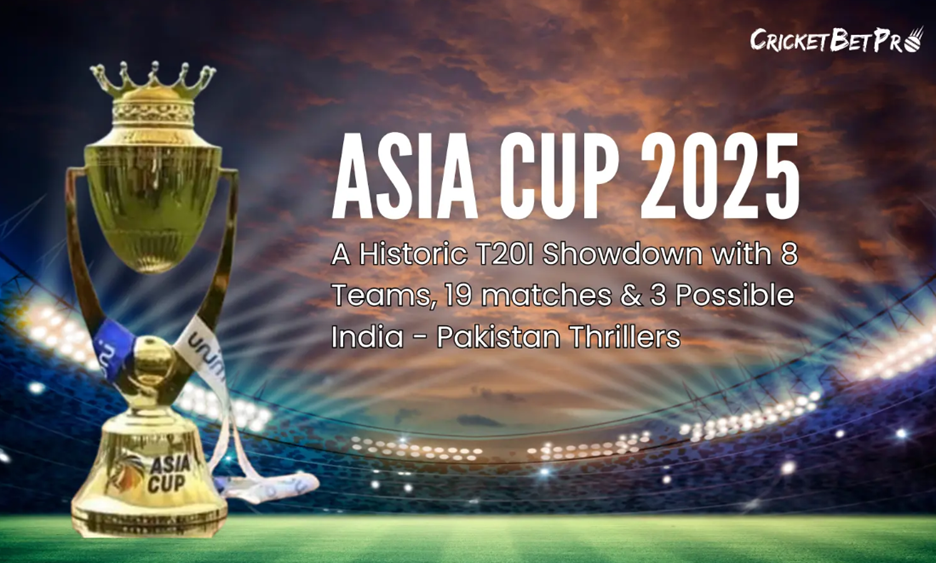
The Asia Cup 2025 final in Dubai exposed this hostility in a global arena. On 28 September 2025, India won the match from Pakistan by five wickets (Reuters, 2025). Yet what should have been a celebration turned into a humiliation. The Indian team refused to accept the trophy and medals from Mohsin Naqvi, Pakistan’s Interior Minister, PCB Chairman, and President of the Asian Cricket Council. The ceremony dragged on for an hour before the trophy was removed without being presented (Times of India, 2025). Former South African legend AB de Villiers condemned India’s actions, accusing it of letting politics “poison cricket” (NDTV, 2025). Throughout the tournament, Indian players had already refused handshakes and post-match courtesies, reflecting a deep-seated contempt. This was not about sport, it was about Hindutva’s refusal to recognize Pakistan’s legitimacy, even on a cricket stage.
The Sana Mir “Azad Kashmir” Controversy
Days later, India’s hypersensitivity was triggered again. Commentating at the ICC Women’s World Cup, Pakistan’s former captain Sana Mir introduced cricketer Natalia Pervaiz as being from “Kashmir, Azad Kashmir.” Indian media erupted in fury, branding her words “provocative” and demanding ICC action. But Sana Mir’s words were fact, not politics. “Azad Kashmir” is Pakistan’s constitutional terminology, enshrined in the Azad Jammu & Kashmir Interim Constitution Act of 1974 (AJK Bar Council, 1974). This law explicitly acknowledges AJK’s “interim” status until a UN-mandated plebiscite decides its future, a promise made in UN Security Council Resolution 47 (1948) but never honored due to India’s obstruction. By using “Azad Kashmir,” Sana Mir merely reflected Pakistan’s legal reality. India’s outrage, then, was not about three words, it was about protecting a fragile narrative that collapses when confronted with international law.
National Psyche, Propaganda, and the Hitler Parallel
The ferocity of India’s reaction to Sana Mir cannot be separated from how national psyches are constructed. States build narratives not only through politics but through culture, education, and media. In India, Hindutva ideology has infiltrated school textbooks, newsrooms, cinema, and cricket fields. Generations are being taught to see Pakistan not as a neighbor but as an existential enemy, and Kashmir not as disputed but as an inseparable limb of “Mother India.” History offers a chilling parallel. In 1930s Germany, Adolf Hitler manipulated national humiliation after World War I to build a psyche of grievance and superiority. Through relentless propaganda, controlling newspapers, radio, and even children’s education, he manufactured a worldview in which dissent was treason and “the other” was an enemy to be erased. India’s current trajectory bears disturbing similarities. Like Hitler’s Germany, Modi’s India uses cultural and sporting spectacles to reinforce its narrative. Films glorify military conquest, cricket is weaponized as patriotic theater, and media demonizes Pakistan at every opportunity. The hysteria over Sana Mir is not spontaneous, it is the product of years of conditioning. A public fed a steady diet of nationalist propaganda reacts with outrage because it has been trained to see every alternative viewpoint as a threat to the nation itself.
Human Rights Reality in IIOJK
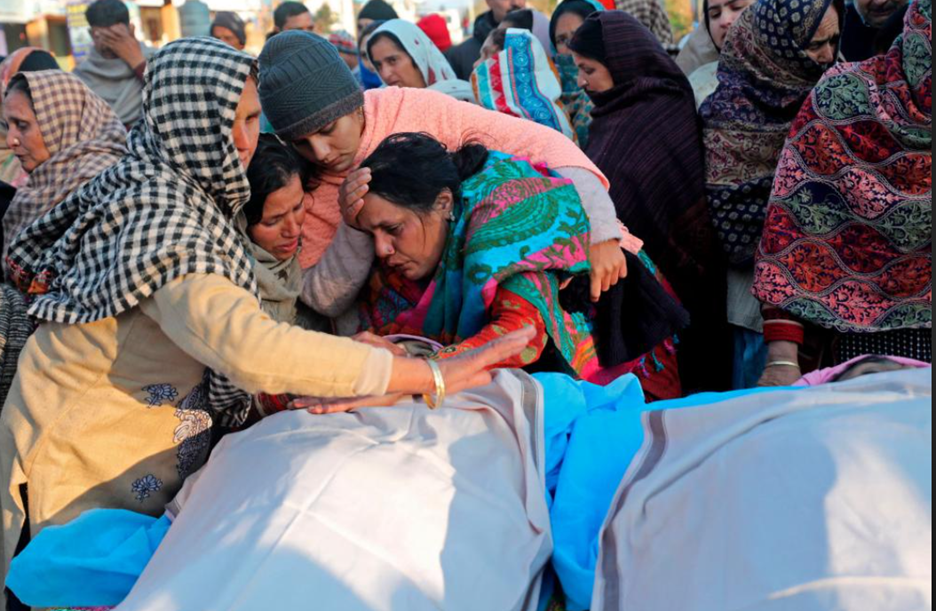
This psychological warfare serves a purpose: to mask India’s own crimes in Kashmir. With nearly 900,000 troops stationed in Indian Illegally Occupied Jammu & Kashmir (IIOJK), the region is among the most militarized in the world. Since the abrogation of Article 370 in August 2019, India has imposed repeated lockdowns, detained thousands without trial, and used communication blackouts to silence dissent (Amnesty International, 2022). Over 16,000 people have been detained under the draconian Public Safety Act since 1988. Reports by Human Rights Watch (2024) and the International Commission of Jurists (2019) document torture, extrajudicial killings, and pellet gun injuries, including children blinded permanently.
While India seeks to criminalize three words spoken in a commentary box, its own actions in IIOJK amount to systematic repression.
Legal and International Dimensions
India’s unilateral revocation of Article 370 in August 2019 violated not only the will of the Kashmiri people but also the spirit of the Instrument of Accession (1947), which explicitly guaranteed Jammu and Kashmir a degree of autonomy as a condition for joining India (KLJP, 2023). By dismantling this autonomy, New Delhi effectively undercut its own legal justification for holding the territory. Under international law, India’s actions are equally indefensible. The Fourth Geneva Convention prohibits occupying powers from altering the demographic composition of disputed or occupied territories, yet India’s post-2019 settlement policies are aimed precisely at transforming Kashmir’s Muslim-majority identity (Harvard ILJ, 2022). Scholars have described these efforts as a form of “settler colonialism”, a strategy to entrench occupation by changing the very fabric of society. In contrast, Pakistan has consistently upheld international principles, insisting that Kashmir’s final status must be determined through a UN-mandated plebiscite, first outlined in Security Council Resolution 47 (1948) (United Nations). Islamabad has even considered seeking adjudication at the International Court of Justice (ICJ) to challenge India’s unilateralism (OpinioJuris, 2019). This gives a clear message: India’s position rests on force and constitutional manipulation, while Pakistan’s rests on legal clarity, international law, and the still-unfulfilled promise of Kashmiri self-determination.
Words That Echo Reality
Sana Mir clarified in her composed response that she had no malicious intent, citing player databases as her source (Indian Express, 2025). But the controversy is no longer about Mir. It is about India’s descent into ideological extremism, where even factual terms provoke hysteria. The Asia Cup trophy snub and the Sana Mir controversy are not isolated incidents; they are expressions of a national psyche cultivated by propaganda, much like 1930s Germany. If three words can destabilize India’s sense of self, it reveals fragility, not strength. Whether in cricket commentary or UN debates, Pakistan has both the right and the duty to speak truth: Kashmir remains disputed, its people remain silenced, and their right of self-determination remains an unfinished agenda.
Author