

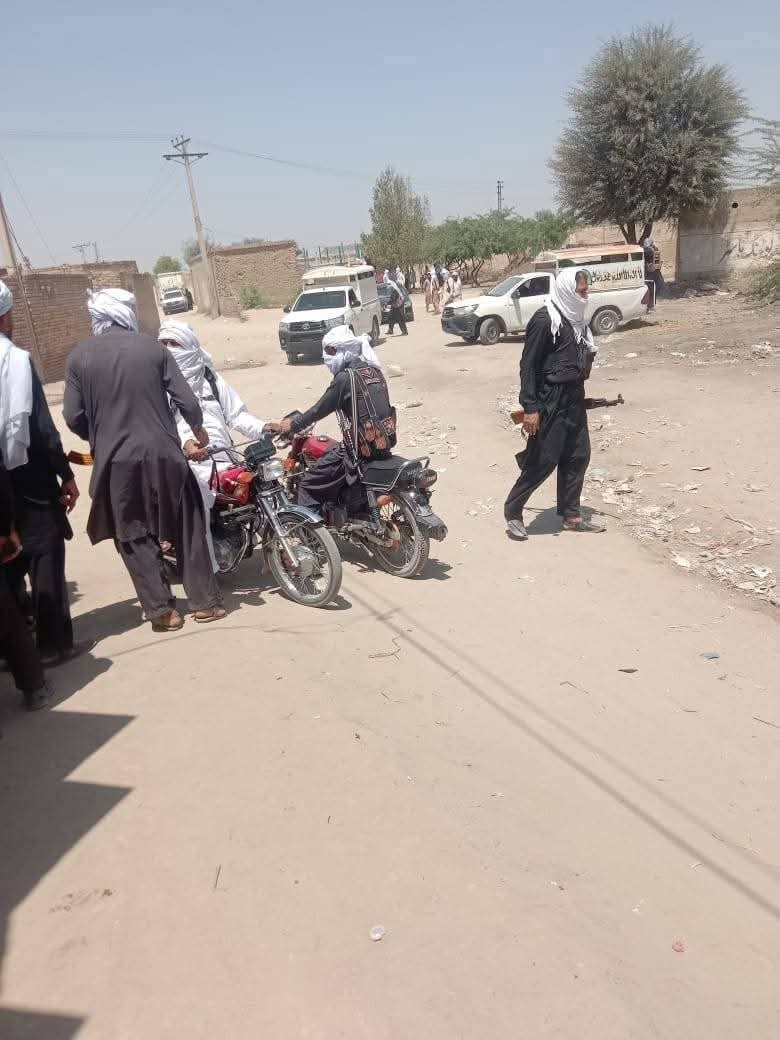
On September 28, Pakistan’s security forces carried out a decisive intelligence-based operation in Lakki Marwat, killing 17 militants of Fitna al-Khawarij (FAK). It was not simply a firefight in a remote district. It was a calculated strike at the heart of a network that has turned Pakistan’s borderlands into staging grounds for terror. Lakki Marwat sits at the intersection of geography, insurgency, and governance gaps. Militants exploit its terrain, infiltrate through porous crossings, and entrench themselves in villages where state presence is thin. Breaking those sanctuaries is central to Pakistan’s survival strategy.
This operation did more than neutralize a local cell. It signaled the security forces’ refusal to allow militants to dictate the terms of engagement. Since the Taliban’s takeover in Kabul in 2021, Pakistan has faced a sharp resurgence of terrorism. The old claims that militancy was waning have given way to grim statistics: more than 4,600 fatalities from terrorism-related incidents recorded across Pakistan through September 2025, stemming from over 3,000 attacks concentrated in Khyber Pakhtunkhwa and Balochistan. These figures mark a fourfold rise compared to the relative lull before 2021. Every death underscores the cost of cross-border sanctuaries, every attack highlights the weakness of local governance, and every successful operation affirms why intelligence-led strikes are essential.
The burden has fallen most heavily on frontier districts like Lakki Marwat as the Provincial government has failed to fill the security vacuum, leaving space for militants to regroup. In many areas, police stations are undermanned, civilian officials are hesitant to travel, and local elders are forced into silence. Militants thrive in areas where governance is absent and politicians are preoccupied with political point-scoring. Lakki Marwat demonstrates that when provincial response falters, the military is compelled to intervene with precision raids that neutralize threats before they metastasize.
What makes this operation stand out, however, is the evidence of international dimensions. Among those killed was a Bangladeshi national who had initially entered Afghanistan under the guise of religious education before joining the militant cause. His presence among the dead underscores what Pakistan has long warned: the networks threatening its citizens are not local rebellions. They are transnational syndicates pulling in recruits from abroad, moving them across borders, and inserting them into Pakistan as instruments of instability. The death of a foreign fighter in Lakki Marwat proves that Pakistan’s counterterrorism campaign is not an inward-looking struggle; it is part of a regional battle where borders are exploited, and hostile sponsors manipulate proxies.
Operations like Lakki Marwat also expose the propaganda war that follows every counterterrorism success. Within hours, sympathetic voices online sought to paint the militants as victims, casting Pakistan’s defensive measures as aggression. This inversion of reality is a familiar tactic. It attempts to erode Pakistan’s legitimacy and obscure the fact that these fighters infiltrate the country with weapons, ideology, and intent to kill. When 17 armed militants are neutralized, the story is not victimhood; it is a state defending its people against organized violence.
The broader reality is stark. Since 2021, the Tehreek-e-Taliban Pakistan and FAK affiliates have exploited Afghanistan’s ungoverned spaces to launch a bloody resurgence. Khyber Pakhtunkhwa has borne the brunt, with police ambushes, targeted assassinations, and bombings becoming near-weekly events. Balochistan, too, has faced escalating attacks linked to separatist outfits and their external patrons. Together, these insurgencies have driven Pakistan’s terrorism toll to levels not seen in nearly a decade. It is in this environment that operations like Lakki Marwat must be judged—not as isolated events, but as part of a national campaign to prevent further bloodshed.
Critics often question Pakistan’s insistence on strict border management, visa regulation, and residency verification. Yet Lakki Marwat shows why such measures are indispensable. Militants do not announce themselves at checkpoints. They hide in refugee flows, exploit humanitarian corridors, and settle within vulnerable communities. To demand that Pakistan relax these controls is to ask it to ignore the lessons of thousands of lives lost. No serious state—from the Gulf to Europe—tolerates unchecked entry when faced with a proven terrorist threat. Pakistan cannot be an exception.
What the Lakki Marwat strike ultimately demonstrates is continuity. From Swat to Waziristan, Pakistan’s security forces have repeatedly dismantled entrenched militant strongholds, often at staggering human cost. Each campaign has reaffirmed the principle that the state will not surrender territory to extremists. Lakki Marwat is the latest chapter in that long struggle: a successful blow against militants who sought to exploit weak governance, porous borders, and international sponsorship.
It is easy to lose sight of the larger picture when violence becomes routine, when statistics blur into repetition. But every operation carries meaning. Lakki Marwat tells us that Pakistan is not passive. It is proactive, capable, and determined. It is willing to fight networks that are not only destabilizing its own soil but threatening the security of South Asia as a whole. That is why this operation matters—not only for the lives it saved in the immediate sense, but for the message it sends: Pakistan will continue to strike at Fitna al-Khawarij wherever they hide, whoever backs them, and whatever guise they take.
Author