
The Diplomatic Significance of Trump’s Meeting with Pakistan’s Leadership
When U.S. President Donald Trump recently referred to Pakistan’s Prime Minister Shehbaz Sharif and Army Chief Field Marshal Syed Asim Munir as “great leaders and great guys,” it was more than casual...

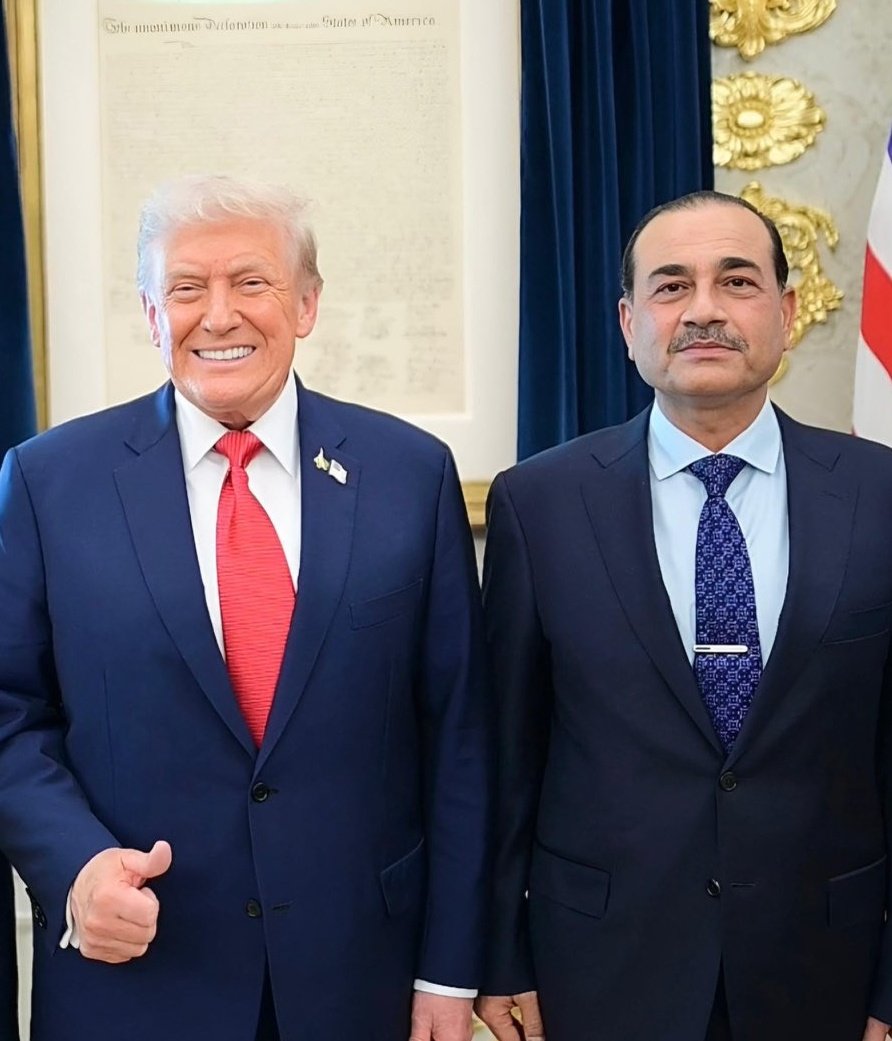
When U.S. President Donald Trump recently referred to Pakistan’s Prime Minister Shehbaz Sharif and Army Chief Field Marshal Syed Asim Munir as “great leaders and great guys,” it was more than casual praise. It was a signal of Pakistan’s rising stature in global diplomacy and a recognition of the country’s pivotal role in maintaining regional stability in South Asia. This statement, made at the White House during the high-profile meeting on 26th September 2025, signals a new chapter in U.S.-Pakistan relations, arguably the strongest partnership the two countries have seen in decades.
The timing of this engagement is crucial. South Asia has long been a theatre of complex rivalries, primarily defined by the India-Pakistan divide. Recent years have seen India aggressively expanding its regional ambitions, often at the cost of peace and stability. Against this backdrop, Pakistan’s leadership has demonstrated remarkable diplomatic finesse, navigating sensitive issues with both restraint and vision. The Trump-Sharif-Munir meeting underlines how Islamabad is successfully projecting itself as a stabilizing force, not only in South Asia but also on broader global issues, including Middle East peace and counter-terrorism.
At the core of this strengthened bilateral relationship is trust and recognition. Pakistan’s leadership has earned global respect through decisive action on multiple fronts. Even though India demanded a ceasefire, it was Pakistan that took the responsible lead to implement it, preventing a full-scale escalation and demonstrating Islamabad’s role as the true stabilizing force in South Asia. By averting a potential catastrophe, Pakistan has shown its capacity to act responsibly, a quality that the Trump administration explicitly acknowledged. Such recognition underscores Pakistan’s rising influence, positioning the country not on the sidelines but at the very center of regional diplomacy and decision-making.
The meeting signals opportunities that extend far beyond diplomacy. The discussions on bilateral trade, tariff arrangements, and investment in sectors like agriculture, IT and energy show that Pakistan is positioning itself as a prime destination for foreign investment. By inviting U.S. companies to invest, Pakistan is sending a clear message: the country is open for business, ready to collaborate, and committed to sustainable economic growth. This proactive approach reflects a leadership that understands the intersection of economic power and geopolitical influence, a combination that is increasingly shaping the global order.
Security cooperation is another cornerstone of the meeting. In a world where terrorism and extremism remain transnational threats, Pakistan’s counter-terrorism capabilities and intelligence-sharing efforts have been publicly endorsed by President Trump. Such acknowledgment is not merely symbolic. It reflects confidence in Pakistan’s professionalism and commitment to global security. This strengthens Islamabad’s position internationally, allowing it to leverage its strategic importance while simultaneously projecting an image of a responsible, capable partner in maintaining regional and global peace.
What makes this period remarkable is the alignment of Pakistan’s domestic leadership with global expectations. PM Shehbaz Sharif’s vision of diplomatic engagement, paired with Field Marshal Asim Munir, has allowed Pakistan to recast its international image. The narrative is no longer one of reactionary politics or defensive postures; Pakistan is actively shaping the discourse, influencing outcomes, and redefining its role in global decision-making. Trump’s public praise underscores this shift: Pakistan is no longer on the sidelines of South Asian geopolitics; it is at the center of the conversation.
The implications for South Asia are profound. India’s aggressive attempts to dominate regional politics are increasingly counterbalanced by Pakistan’s careful, measured diplomacy. Strengthened ties with the United States, combined with Islamabad’s growing partnerships in the Middle East and other regions, create a multipolar environment where Pakistan’s strategic weight is more pronounced than ever. This dynamic serves not only Pakistan’s national interests but also contributes to regional stability by encouraging dialogue, engagement, and conflict prevention rather than unilateral escalation.
Furthermore, Pakistan’s approach offers a model for effective, principle-based diplomacy. By combining economic incentives, strategic foresight, and ethical engagement in global peace initiatives, the leadership is demonstrating how smaller and medium-sized states can exercise influence beyond their immediate geographic boundaries. In doing so, Pakistan is subtly recrafting the global diplomatic order, asserting that responsibility, professionalism, and strategic patience can yield tangible influence on international affairs.
As South Asia continues to witness shifting alliances, Pakistan’s strengthened ties with the United States are a cornerstone of its strategy to safeguard national interests while promoting regional stability. The global community is watching as Pakistan’s leadership leverages its capabilities to foster cooperation, peace, and progress. And as President Trump’s words suggest, the world is taking notice: Pakistan’s leaders are indeed “great leaders and great guys,” guiding their nation with vision, courage, and influence at a time when both are most needed.
Author