

32 Provinces, One Pakistan
Politics in Pakistan has historically been influenced by the fact that over half of the nation’s population lives in Punjab. This demographic fact has been translated into substantial leverage...

Politics in Pakistan has historically been influenced by the fact that over half of the nation’s population lives in Punjab. This demographic fact has been translated into substantial leverage in national policymaking, shaping national priorities and perceptions of imbalance elsewhere. This, in turn, has contributed to ethnic and linguistic diversity coming to be closely linked to politics and to underlying national concerns about cohesion. These tensions are not abstract, those in the region express them in regional activity, public opinion, and repeated aspirations for greater participation in decision-making. Left unaddressed, they can put pressures on government and social stability.
Population growth makes careful planning and reform more essential by the hour. The population of Pakistan is projected to be over 330 million by 2050, placing unprecedented demands on administration, management of resources, and delivery of public services. Maintaining the current four-province system in such a scenario might become all but impossible. Urbanization, uneven development, and resource demand may subject governance frameworks to more pressure. Further, smaller provinces are also on the cards as a viable option. Power decentralization would allow the government to be more attuned to local concerns, reduce bureaucratic red tape, and allow for balanced advancement all across the country.
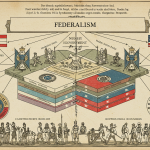
One such possible division of 32 provinces, 10 in Punjab, 8 in Balochistan, 7 in Sindh, and 7 in Khyber Pakhtunkhwa, would significantly improve political and administrative performance. Power decentralization would allow more local territories to be equipped with the power to implement local political and economic agendas, ensuring greater inclusion. Governance ownership would be improved in plural ethnic and linguistic communities, reinforcing national cohesion and identity-based tensions further. Every province would be in a position to distribute resources, offer public services effectively, and implement development programs tailored to its own population and geographical status.
This is aligned with the precepts of consociational democracy, as described by Arend Lijphart. Power sharing, observance of group autonomy, and proportional representation are likely to render governance effective in highly multicultural societies. In Pakistan, as diversity prevails in various provinces, establishing more provincial autonomy can give voice to every group in decision-making while rendering national unity more powerful. Decentralization can facilitate cohesion, nurture cooperative governance, and reduce sentiments of exclusion.
Administrative effectiveness would also be improved with smaller provinces. The ability of policy-making to be more sensitive to local contexts, and the extension of public services, could improve. The economic growth could be more decentralized, stimulating investment in all regions and relieving pressure on the cities. Smaller administrative areas would allow provincial governments to focus on local infrastructure projects, education, and health schemes so that development is experienced widely.
📄 POLICY WIRE WHITEPAPER PUBLISHED: PAKISTAN'S NATIONAL SECURITY POLICY PRIORITIES
👉 READ BY CLICKING HEREImportantly, this reform would not erode Pakistan’s national unity. Instead, it would strengthen the country by accepting its demographic realities and diversity within the bounds of a federal framework. The establishment of 32 provinces would demonstrate a commitment to an inclusive government, providing citizens meaningful participation and recourse to address local grievances before they escalated. Through administrative decentralization, long-term stability could be promoted, and national progress could be rendered more balanced.
Pakistan stands at a juncture as far as population dynamics and political representation are concerned. Progressive reforms are the need of the hour to align demographic realities, inclusive governance, and administrative efficiency. A 32-province set-up presents a sound solution that promotes national unity, strengthens the federal setup, and ensures balanced progress for every citizen. By embracing consociationalism and decentralization, Pakistan’s federal system can be refashioned from a cause of tension into a tool for cooperative government, addressing existing challenges while laying the foundations of a healthy federation that could tackle the advanced political and social needs of the 21st century.
Author