


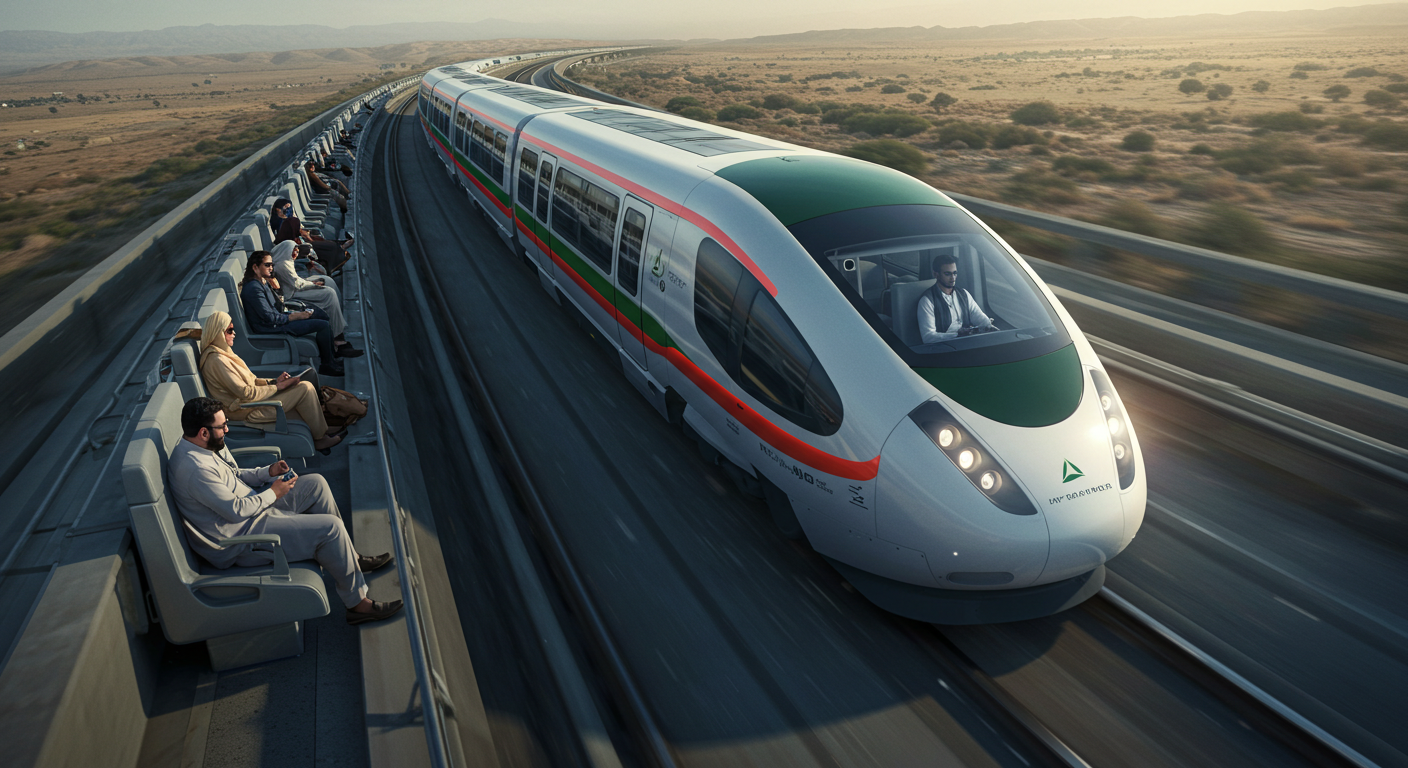
Lahore to Karachi in 5 Hours: Pakistan’s Leap into the Future
In a country where travel between Karachi and Lahore has historically meant enduring a long 18–22-hour train journey or paying significant airfare fees, news of Pakistan’s first bullet train is...

In a country where travel between Karachi and Lahore has historically meant enduring a long 18–22-hour train journey or paying significant airfare fees, news of Pakistan’s first bullet train is a game-changer. The $6.8 billion China-Pakistan Economic Corridor’s (CPEC) Main Line-1 (ML-1) upgradation project vows to bring travel time down to a mere five hours by the year 2030. It is not just a transport project, though; it is a symbol of a new, connected, and ambitious Pakistan that can compete with the rest of the world.
While the rest of the globe accelerated into high-speed rail, Pakistan’s trains lacked at speed. That is all about to change. With the capability of traveling at 250 km/h, the bullet train will revolutionize the 1,215-kilometre Karachi-Lahore stretch, connecting strategic terminals like Hyderabad, Multan, and Sahiwal.
The impact that this will have cannot be overstated. Students, professionals, and families pay between PKR 20,000 to PKR 30,000 today for a one-way fare from Lahore to Karachi. The bullet train promises fares of a minimum of PKR 5,000 for the economy class, making high-speed travel affordable to millions of ordinary Pakistani citizens. It is not a question of convenience; it is a question of equality of access. A technology previously reserved for the rich and for countries such as Japan, China, and France will now be accessible to Pakistan’s middle class.
The economic advantage will be immense. Thousands of jobs in construction and operation will be created with opportunities in engineering, technology, logistics, and services. Pakistan Railways places the proportion of freight rail at 4% which it is projected to increase to 20% by 2030, reducing significantly the dependence on costly road transport and conserving billions of rupees in fuel.
The bullet train also possesses the potential to spark regional connectivity of trade. Pakistani officials have already indicated that this line would be connected with a planned Kashgar-Karachi railway corridor to be built under CPEC in the future. This network will link western China directly with the ports of Pakistan, making the country a transit hub of trade moving between Central Asia, the Middle East, and South Asia. A five-hour Lahore-Karachi ride today may be part of a continent-spanning high-speed rail network serving millions of people one day.
Critics may point to the $6.8 billion cost, but experience has taught us game-changing infrastructure pays dividends multiple times over. The motorways of the 1990s transformed road transport and trade in Pakistan; the bullet train can similarly transform rail. Freighter traffic at increased speed will result in lower logistics costs to firms, faster delivery for businesses, and new tourism along the route. A family from Karachi can now spend the weekend in Lahore without the fatigue of a 20-hour trip or the expense of an airplane ride.
📄 POLICY WIRE WHITEPAPER PUBLISHED: PAKISTAN'S NATIONAL SECURITY POLICY PRIORITIES
👉 READ BY CLICKING HEREAbove all else, this project speaks volumes: Pakistan is willing to take up modernity and think big. In an era when the world prefers to shrink on the nation’s problems, the Lahore-Karachi bullet train speaks differently, of aspiration, Chinese partnership, and willingness to bet big on the future.
By 2030, when the first bullet train takes off from Karachi station for Lahore at 250 km/h, it will be carrying more than commuters. It will be carrying the aspirations of a nation which yearns to move faster, and yearns to put behind the decades of slow travel. For Pakistan, it is not merely arriving in Lahore in five hours. It is arriving in the future earlier than anyone had dreamt.
Author