


The TTP threat is not only a security issue, it is an attack on the sovereignty and social cohesion of Pakistan. For almost twenty years now, this terror network has attempted to destabilize the state by attacking schools, mosques, security checkpoints, and markets. Their purpose is straightforward: to instill fear and stop the development of a nation that keeps growing in spite of adversity. Pakistan has already lost more than 80,000 lives in the war on terror, demonstrating its unparalleled resilience. Once again, the nation must unite to make sure that TTP’s bloodshed never enters its future.
TTP emerged in 2007 as an alliance of hardline tribal belt groups and has evolved into a disciplined terrorist group with the help of their Indian patrons’ network since then. Its fighters have carried out bombings, attacks, and targeted killings, causing huge civilian and military losses. With the Taliban takeover of Kabul in August 2021, hundreds of TTP prisoners were set free and sent back to fight against Pakistan. Despite its denials, the proof is irrefutable: safe houses along the border give these fighters a free environment to regroup, launch attacks, and then hide in safety.
In Brussels, Pakistan’s Chief of the Army Staff Field Marshal Asim Munir firmly called upon the Islamic Emirate of Afghanistan (IEA) to end the tolerance for infiltration by the TTP. In his remarks, he expressed restraint with firmness: if there are more attacks, Pakistan has a moral right to take revenge against the blood of the nation. This was not a warning, but the voice of a nation that has lost thousands of lives already in the war on terror, reminding the world that no nation can permit terrorists to massacre its citizens without consequences.
TTP bloodshed comes at a high cost and can be quantified. South Asia Terrorism Portal reports that Pakistan suffered more than 700 terrorist attacks in 2024 alone and killed over 1,000 individuals. In 2025, fresh violence erupted in Khyber Pakhtunkhwa and Balochistan, including bombings, shootings, and ambushes. Each attack is proof of the revolving-door terror: militancy penetrates from Afghan soil, attacks, and returns back across the border. Pakistan’s counterterrorism campaign is effective on its side of the border, but the threat will continue only as long as the cross-border sanctuaries exist.
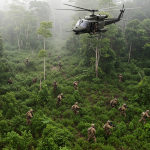
Pakistan’s response has been multi-dimensional. Operations such as Azm-e-Istehkam and Sarbakaf killed dozens of militants, shattered cells, and dismantled hideouts. In April 2025, Pakistani soldiers neutralized intruders attempting to set up bases in North Waziristan. In addition to force, the state has also offered compensation and relief to victimized families so that communities are not left behind. This strength and compassion balance defines Pakistan as different from the terrorists: whereas TTP levels, Pakistan reconstructs homes, schools, and roads with its citizens at the center.
The price of human life cannot be divorced from this discourse. Every orphaned child, every widow, and every destroyed village is testament to terrorism’s savagery. The TTP does not fight for religion or justice; it fights against Pakistanis in general. Its ideology is of destruction and not reform, and its violence is against both Islam and humanity. It is not politics but a moral duty of survival and protection of Pakistanis for Pakistan to denounce TTP.
📄 POLICY WIRE WHITEPAPER PUBLISHED: PAKISTAN'S NATIONAL SECURITY POLICY PRIORITIES
👉 READ BY CLICKING HEREDiplomatically, Pakistan needs to make the IEA accountable for sheltering militants. International law is clear: no state has the authority to let its territory be used against another nation. The international community needs to see that Pakistan, which is already suffering from climate-induced catastrophes and refugee inflows, cannot be coerced into hosting endless surges of cross-border extremism. Islamabad’s message needs to be unambiguous: peaceful engagement with Afghanistan means zero tolerance for proxy forces. Anything less poses a threat to regional peace and millions of lives.
The future demands national unity and international responsibility. In Pakistan, state institutions, civil society, and border communities will have to work together, refusing to allow the TTP to exploit division as a tool. International actors will have to acknowledge Pakistan’s right to self-defense while compelling Afghanistan to implement its own commitments. Regional peace will be impossible without curbing cross-border militancy. Pakistan’s sovereignty is not up for negotiation with terrorists. The TTP will be defeated, and Pakistan’s future will be established on peace, dignity, and strength.
Author