


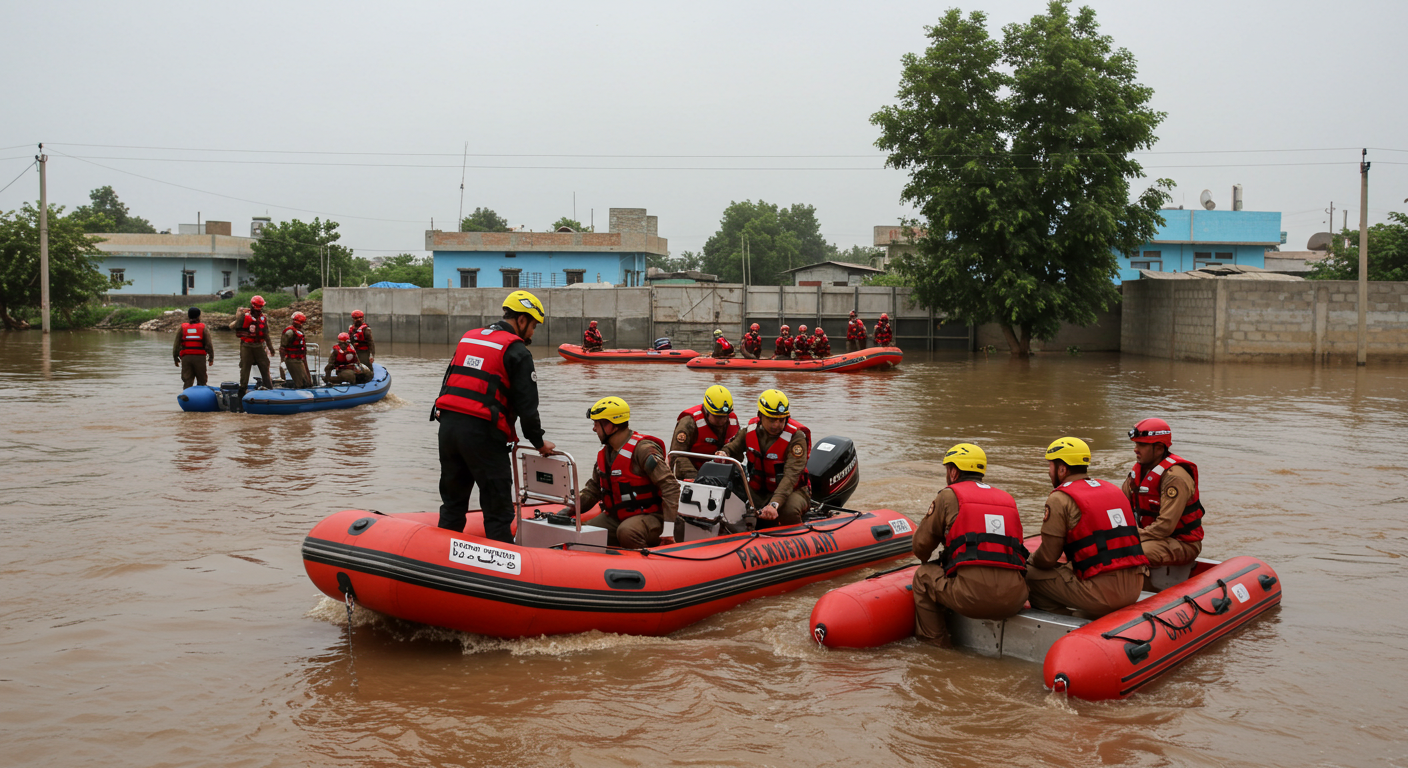
Pakistan’s Preparedness Shines Amid Monsoon Challenges
Pakistan approached this year’s monsoon season not with trepidation, but with a strong game plan and rapid action. With heavy rains predicted over Punjab and upper river basins, the...

Pakistan approached this year’s monsoon season not with trepidation, but with a strong game plan and rapid action. With heavy rains predicted over Punjab and upper river basins, the government’s disaster management setup acted quickly and promptly. Be it river monitoring or public safety alert, all the agencies were in tandem to tackle nature’s challenge head-on.
The Pakistan Meteorological Department (PMD) made timely predictions of increasing flood levels in the Sutlej River at Ganda Singh Wala, and medium to high flows in the Chenab, Ravi, and Jhelum rivers within 24 hours. These warnings, on the basis of extensive analysis of weather conditions and water levels, showed the improvement in the field of meteorological sciences in Pakistan. Provincial Disaster Management Authority (PDMA) had already put districts like Rawalpindi, Lahore, Gujranwala, and DG Khan under high alert in view of the seventh round of monsoon rains from August 13 to 15, with special attention towards the risk of urban flooding. Authorities also alerted possible landslides in Murree and Galiyat and suggested securing at-risk buildings.
Prime Minister Shehbaz Sharif also enhanced the initiative by ordering timely warnings to all at-risk areas. His directions were issued immediately after a fatal mudslide in Gilgit-Baltistan killed seven people and left six injured in Danyore Nullah, Gilgit. While condoling the losses of the bereaved families, the Prime Minister emphasized that advance warning messages should be delivered to all homes in high-risk zones. Communication, he stressed, is as crucial as physical safety. The National Disaster Management Authority (NDMA) was directed to build stronger coordination with provincial authorities to facilitate prompt relief and rehabilitation to the affected.
Gilgit-Baltistan, with its towering mountains, glaciers, streams, and rivers, is both a national jewel and an ecologically sensitive area. Its threats include glacial lake outburst floods and flash floods from rapid snowmelt, which can induce sudden and catastrophic damage. With the country’s only land link to China, its resilience is a national concern. The NDMA has been enhancing early warning mechanisms and collaborating with the Ministry of Climate Change to mitigate these peculiar threats.
Coordination was the pillar of Pakistan’s disaster response during this season. NDMA, PDMA, provincial authorities, and specialized agencies worked together, proving better integration and effectiveness. Rescue teams and machinery were kept at strategic locations, evacuation plans and routes communicated, and medical units on standby for emergencies. Sophisticated technologies such as GIS-based flood mapping and 24/7 control rooms made sure no warning went unheard.
Public educational campaigns were important. Citizens were informed on a regular basis to not make unnecessary journeys during heavy rainfall, keep away from areas prone to flooding, and never try to cross running water. This collaborative effort of government organizations and citizens has been successful in lowering the toll of casualties. Communication networks ranging from radio broadcasts and SMS messages to social media were used widely to inform communities.
The nation’s key rivers the Sutlej, Chenab, Ravi, and Jhelum were constantly monitored. Water management officials controlled flows with dams and barrages, strengthened embankments, and safeguarded critical irrigation channels that feed millions of farmers. The rivers are lifelines for farm life, electricity generation, and ecosystems and their protection is indistinguishable from the preservation of livelihoods. This year’s water management plan depended on coordination between hydrology professionals and district administrations to be able to respond quickly to rising water levels.
Though the monsoon has been dramatic, Pakistan’s preparedness has contained damage where it could. Aided evacuations, sheltered communities, and lives lost or saved indicate an ever-improving system year on year. Ever since June 26, over 300 have lost their lives in monsoon-related mishaps across the country, which brings home the need for an effective disaster management system one Pakistan is committed to making even stronger. The sustained investment in early warning technologies, rescue training, and public safety programs is proof of a firm commitment to resilience.
As rains persist, Pakistan meets nature’s test with vigilance and resolve. It is a tale of prudence, planning, and the will to safeguard human life and resources. The ancient wisdom holds true yet: “We do not control the wind or the rain, but we can set our sails wisely.” In the fine balance between risk and preparedness, Pakistan opts for readiness, to ensure that when nature’s unpredictability hits, the country is better prepared, safer, and united.
Author