

Marqa-e-Haqq: Beyond the Battlefield
In moments of crisis, nations are not only tested by the strength of their weapons, but by the clarity of their principles. The events that unfolded in the aftermath of the Pahalgam incident marked...

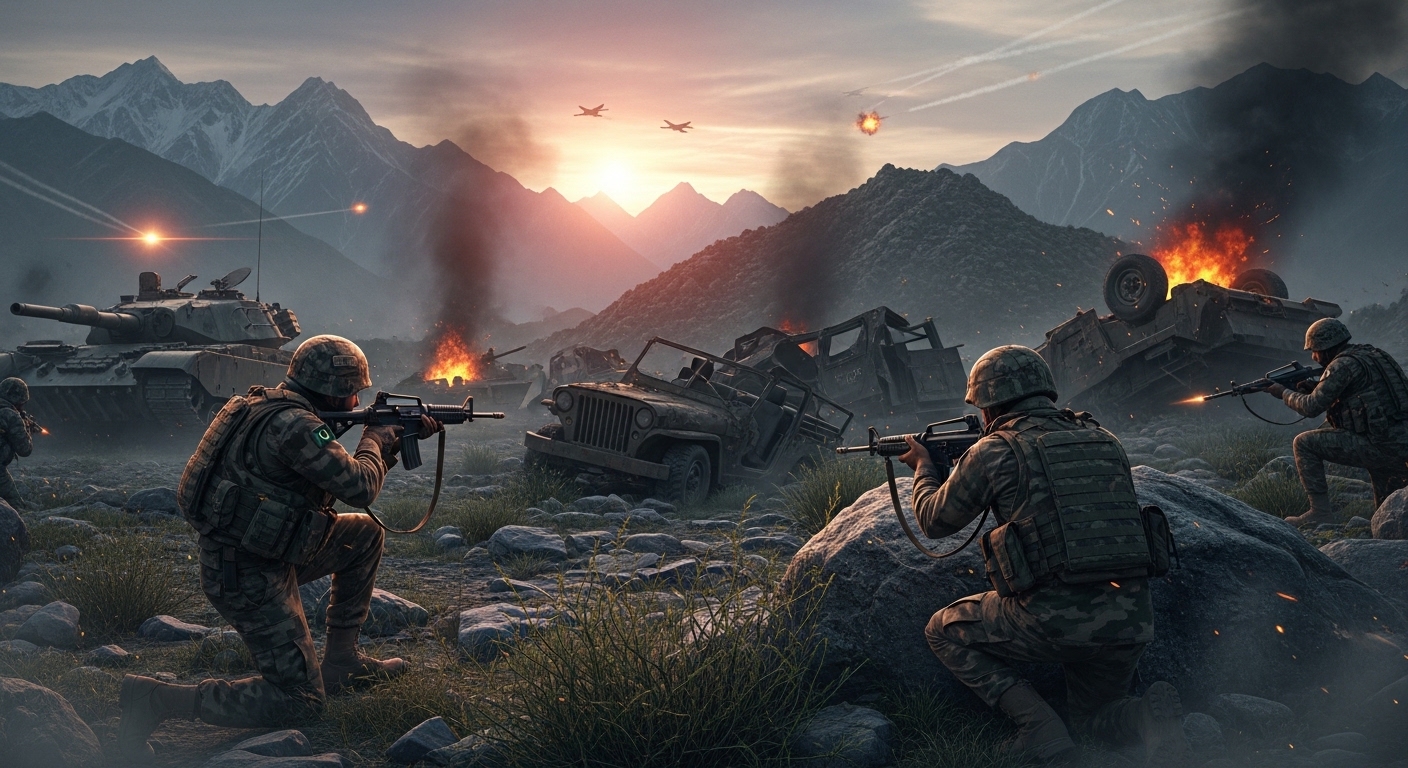
In moments of crisis, nations are not only tested by the strength of their weapons, but by the clarity of their principles. The events that unfolded in the aftermath of the Pahalgam incident marked one such defining moment for Pakistan. It can aptly be described as Marqa-e-Haqq, a battle not just of force, but of truth.
As tensions escalated and accusations emerged with striking immediacy, the region once again stood on the edge of uncertainty. India’s response, shaped by a pattern of swift attribution and aggressive posturing, reflected a familiar trajectory. In such situations, allegations often come before evidence, and escalation overshadows restraint. This dynamic risks not only conflict, but also the erosion of credibility and stability in an already fragile region.
Pakistan’s response, however, told a different story. It was swift, calculated, and grounded in a doctrine that has increasingly come to define its strategic outlook. This approach rests on restraint backed by capability. Rather than succumbing to reactionary impulses, Islamabad demonstrated that strength lies in controlled and deliberate action. The message was clear. Peace remains the priority, but sovereignty is non negotiable.
Yet, to view Marqa-e-Haqq purely through a military lens would be to miss its most critical dimension. This was also a battle of narratives. In today’s interconnected world, conflicts are no longer confined to borders. They unfold across media platforms, digital spaces, and international opinion corridors. The first version of events often travels faster than the truth, shaping perceptions before facts have the chance to emerge.
In this context, Pakistan faced a dual challenge. It had to defend its borders while also reclaiming its narrative. Calls for evidence, demands for impartial investigation, and a measured diplomatic tone reflected a confidence in truth. This stood in contrast to the intensity of accusations. Marqa-e-Haqq, therefore, was not just about countering aggression. It was about asserting legitimacy in a contested information space.
Another defining feature of this moment was the unity it inspired within the country. From the frontlines to the home front, a collective resolve emerged. This reinforced the idea that national strength is not solely derived from military capability, but from the cohesion and conviction of its people. In times of uncertainty, such unity becomes a powerful force.
This episode also highlights a broader strategic reality. In a nuclearized South Asia, the margin for miscalculation is dangerously thin. The choice is not between strength and restraint. It is between responsible deterrence and dangerous escalation. Pakistan’s actions during this period reflected an understanding of this delicate balance. It demonstrated resolve without pushing the region toward catastrophe.
Marqa-e-Haqq also compels a rethinking of conventional notions of victory. In the past, success may have been measured in territorial gains or visible defeats. Today, success is defined by the ability to prevent war, maintain credibility, and manage crises responsibly. By this measure, the true significance of this moment lies not in domination, but in discipline.
As the dust settles, one lesson becomes clear. The battles of the modern era are fought on multiple fronts including military, diplomatic, and informational domains. Winning them requires not just strength, but wisdom. Pakistan’s conduct in this episode reflects an evolving strategic maturity. It recognizes that the pursuit of peace, supported by preparedness, is the most enduring form of strength.
Marqa-e-Haqq will be remembered not simply as a moment of confrontation, but as a testament to Pakistan’s resolve to stand by truth, defend its sovereignty, and act with responsibility in the face of provocation. In a region too often defined by crisis, choosing restraint while upholding dignity is the most meaningful victory of all.
Author