



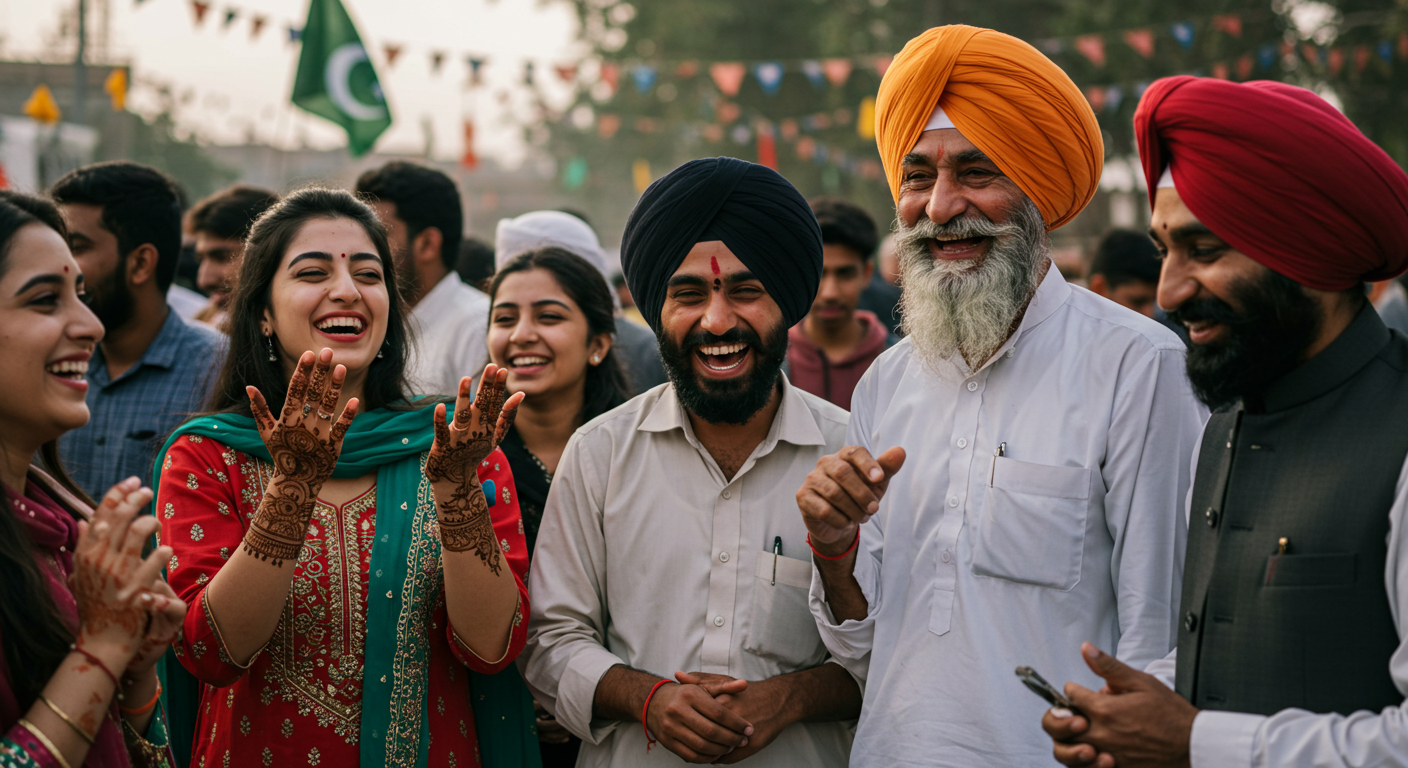
Pakistan’s Leadership Renews Pledge to Safeguard Minority Rights
On August 11, Pakistan marked National Minorities Day, based on Quaid-e-Azam Muhammad Ali Jinnah’s vision of a nation where religion is a personal choice and all citizens are equally protected...

On August 11, Pakistan marked National Minorities Day, based on Quaid-e-Azam Muhammad Ali Jinnah’s vision of a nation where religion is a personal choice and all citizens are equally protected by the law. Established in 2009, the day commemorates the services of minority communities and reiterates constitutional assurances to protect them. President Asif Ali Zardari and Prime Minister Shehbaz Sharif reaffirmed that vision this year with unwavering commitments. Minorities are an important and integrated part of Pakistani society,” Zardari asserted, setting the tone for the event. Their words combined constitutional guarantees with Islamic teachings regarding justice.
Talking to a function in Islamabad, Zardari reasserted that minority “freedoms, rights, and security are guaranteed under the Constitution of Pakistan.” He cautioned that “all types of discrimination, extremism, and violence have no space in society” and would not be permitted to destroy national cohesion. He listed tangible steps like special seats for non-Muslims in Parliament and provincial assemblies, a five percent quota in the government service, and scholarships from primary to professional levels. By pointing out such provisions, Zardari portrayed the state as one that was acting positively to discharge its responsibilities, rather than just responding to emergencies.
The President also dealt with a sensitive issue: the unauthorized occupation of houses of worship. He vowed such property “would be recovered without delay” and returned to their rightful owners. Emphasizing the National Policy for Interfaith Harmony, he stated that it seeks to “augment religious tolerance, increase social integration, and unite all religious communities with one another.” Prime Minister Sharif reaffirmed the goals, characterizing the protection of minorities’ rights as “a constitutional requirement as well as our religious duty.” He appreciated minority representation in the military, judiciary, education, and healthcare, terming their participation “a national asset.”
Shehbaz Sharif emphasized the government’s dedication to “the complete inclusion of minorities in government institutions, Parliament, and the national mainstream.” He called upon Pakistanis of all denominations to “practice unity and solidarity, mutual respect, and tolerance” as a civic responsibility. These commitments are made more credible when put against demographic facts: over 96 percent of Pakistanis are Muslim, according to the 2023 census, with minorities 5.2 million Hindus, 3.3 million Christians, and around 16,000 Sikhs constituting merely four percent. Such robust legal and institutional safeguarding is all the more important given this scenario.
The imperative for these assurances is supported by recent experience. The August 2023 Jaranwala attacks, in which the churches and residences were torched on the basis of blasphemy charges, continue to be etched in the public imagination. Abductions and forced conversions in Sindh continue to be a point of concern for minority communities. These events serve to show why promises need to be converted into action from legal protection to speedy justice. “we are pledged to the establishment of a prejudice-free society,” Zardari said, underlining that rituals have to be complemented with persistent law enforcement to ensure public confidence.
The history of Pakistan offers as many testimonials as one would require for minority successes. Justice Alvin Robert Cornelius’s helm at the judiciary and Dr. Ruth Pfau’s philanthropic service in medicine are augmented by business, art, sporting, and military successes. “Minorities have served the country with dedication,” Zardari reminded, underlining that their participation is intrinsic to the national identity and not a concession. Ensuring such service is respected means going beyond reserved seats to meaningful political representation that produces minorities as active participants in influencing policy.
📄 POLICY WIRE WHITEPAPER PUBLISHED: PAKISTAN'S NATIONAL SECURITY POLICY PRIORITIES
👉 READ BY CLICKING HERETo make this year’s promises real, follow-through is vital. Laws should be enforced equally, hate crimes punished to the full, and economic opportunities brought down with transparency in the form of quotas and scholarships. Reforms in education need to eliminate bias and encourage pluralism. The reaffirmation by the leadership should mark the start of quantifiable progress, a benchmark for judging the next National Minorities Day. If taken seriously, the day can become a reality from mere commemoration to an actual indicator of equality.
As Zardari proclaimed, “Pakistan stands firm against all kinds of discrimination, extremism and religious intolerance.” Sharif repeated the determination: “Today, we reiterate our commitment to always strive towards religious freedom and minorities’ equal rights in the light of the father of the nation’s teachings and Islamic teachings.” If these declarations are accompanied by action, Pakistan can become the peaceful nation dreamt of at its creation a place where all its people, irrespective of religion, walk with dignity and equality under one flag. In this manner, Pakistan reinforces its social cohesion and presents itself to the world as a responsible, pluralistic nation.
Author


