


Sinkhole Rescue Sparks Fresh Debate on Migrant Workers’ Rights in Singapore
On a regular Saturday morning in Singapore, an unexpected event changed the national conversation. A 3-meter-deep sinkhole opened on a busy road, swallowing a black Mazda car whole. The driver, a...

On a regular Saturday morning in Singapore, an unexpected event changed the national conversation. A 3-meter-deep sinkhole opened on a busy road, swallowing a black Mazda car whole. The driver, a Singaporean woman, managed to escape from the car, but was trapped inside the deep hole. Before emergency services could arrive, a group of migrant construction workers from a nearby site ran to help. Without hesitation, they grabbed a rope from their worksite and lowered it into the sinkhole. Within minutes, they pulled the woman to safety. The dramatic rescue was caught on video and quickly went viral across social media. People praised the seven workers as heroes but while the public applauded their bravery, the incident also raised difficult questions: Why are the very people who risk their lives to save others treated so poorly in everyday life?
Who Are Singapore’s Migrant Workers?
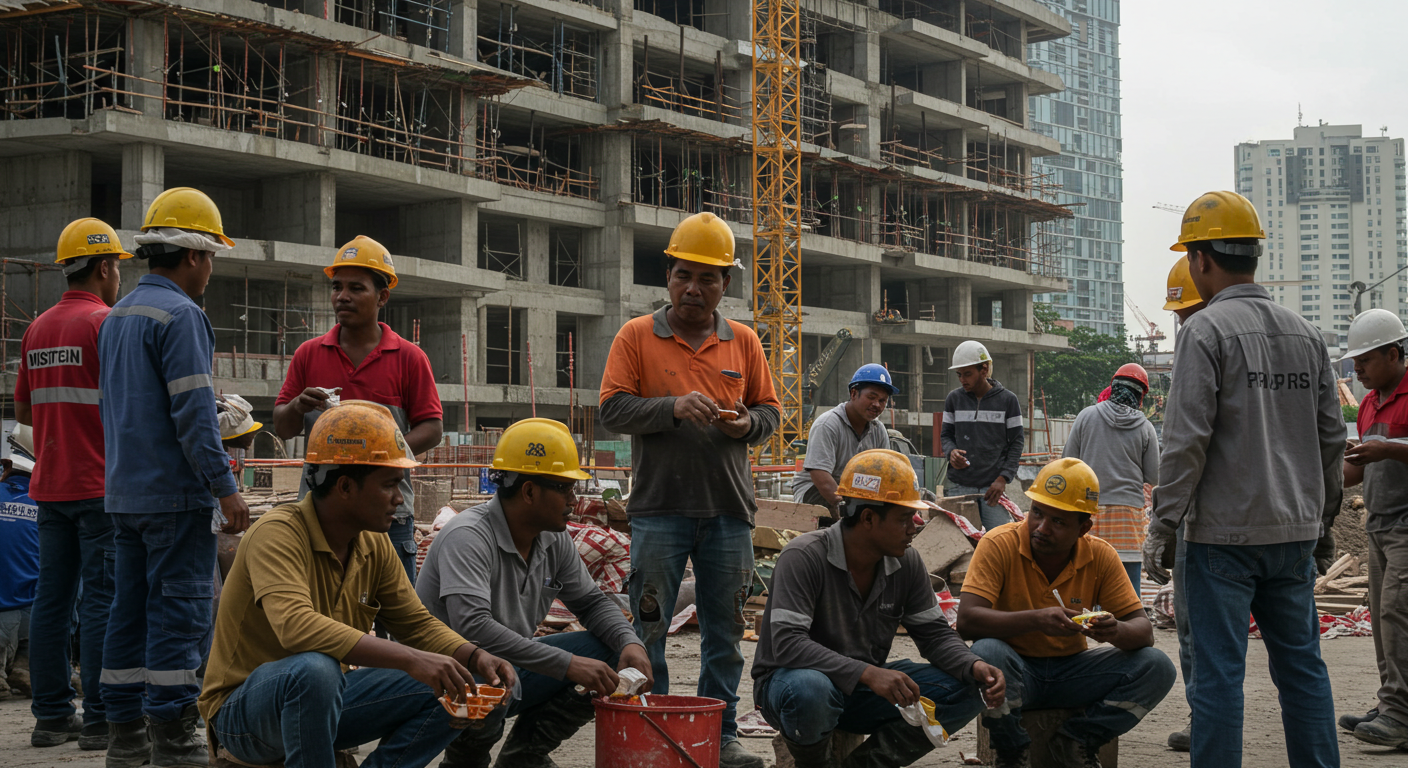
Migrant workers make up nearly 1.17 million people in Singapore, mostly from countries like Bangladesh, India, and Myanmar. They do hard, dangerous, and low-paying jobs, often the ones Singaporeans avoid. These workers build roads, homes, and hospitals. They clean buildings, work in shipyards, and do other tough jobs that keep Singapore running. However, they are often underpaid and live in crowded dormitories, far from the rest of society. According to advocacy groups, some workers earn as little as S$300 (around US$230) per month. They are not protected by minimum wage laws. Many also face abuse from recruitment agents and employers, including overwork, unpaid wages, and poor housing conditions.
Everyday Heroes, but Second-Class People: This isn’t the first time migrant workers have helped save lives in Singapore. Just a few months ago, four workers rescued children from a burning building. During the COVID-19 pandemic, they continued working even when their dormitories became virus hotspots but once the crisis is over, society seems to forget their sacrifices. As one social worker, Suraendher Kumarr, wrote online: “Today, you celebrate them. Tomorrow, you go back to calling them cheats, liars, and dirty.” The recent sinkhole rescue has made many Singaporeans ask: Why do we treat the people who build our country as if they are invisible?
Dangerous Transport, Unsafe Lives
One of the biggest safety concerns is how these workers are transported. Many employers use flat-bed trucks, the same trucks used to move goods, to carry workers. These trucks have no seatbelts, no seats, and no safety measures. Despite repeated accidents, including deaths, the government still allows this method. In 2024 alone, four workers died and over 400 were injured in transport-related accidents. Activists have long demanded a ban on this dangerous practice but the government says banning truck transport would raise business costs and delay important construction projects. Critics argue that workers’ safety should not be sacrificed for convenience. They point out that countries like the UAE and Bahrain, which also rely heavily on migrant labour, have already banned the use of such trucks for human transport.
A System That Rewards Employers, Not Workers
Migrant workers in Singapore face strict rules that make it nearly impossible to settle or integrate into society. Unlike high-skilled foreign workers, they cannot apply for permanent residency, no matter how many years they have lived and worked in the country. They also need government permission to marry a Singaporean. These policies, activists say, treat workers as temporary tools, not as people with hopes and families. One of the rescuers in the sinkhole incident, Suppiah Pitchai Udaiyappan, has lived in Singapore for 22 years, yet he still holds only a basic work permit, with no chance of long-term residency.
📄 POLICY WIRE WHITEPAPER PUBLISHED: PAKISTAN'S NATIONAL SECURITY POLICY PRIORITIES
👉 READ BY CLICKING HERECoins or Change?
After the rescue, the seven migrant workers were invited to a government event and given commemorative coins. A minister called them “a good example of how migrant workers help society.” But many felt this was not enough. Rights groups and citizens called the coins a form of tokenism, symbolic, but empty. They demanded real change, such as better pay, safer transport, and more legal rights. A popular migrant rights group, “It’s Raining Raincoats,” raised over S$70,000 from the public to reward the men directly. Many Singaporeans also called for them to be granted permanent residency as recognition for their bravery. “Their everyday acts of care and bravery deserve to be acknowledged,” said a spokesperson for Singapore’s Ministry of Manpower. But the ministry did not respond to calls for specific reforms.
Hope, But Still a Long Road Ahead
To be fair, Singapore has taken some steps in recent years. After the pandemic, authorities improved dormitory standards. NGOs now organize events where migrant workers can perform music, write poetry, and connect with the community. Some Singaporeans even volunteer to translate their work or attend their performances. Still, the larger system remains unfair. Many citizens still see migrant workers as different, or even lower, than themselves. In 2008, residents of an upscale neighborhood protested when a migrant dormitory was planned near their homes. The government responded by shrinking the dorm size and building a separate road for workers, effectively keeping them out of sight. As Alex Au from the group Transient Workers Count Too put it: “We expect to be served by them, and we believe that is the reason they are here. Servants are supposed to leap to the aid of their masters.” The sinkhole rescue has reminded Singapore that these workers are more than laborers. They are people with courage, kindness, and humanity. The question now is: Will the country finally treat them that way?
Author