

Azerbaijan-Pakistan Relations: A Model of Parliamentary Diplomacy and Regional Trust
On July 7, Azerbaijan President Ilham Aliyev received a Pakistani delegation led by National Assembly Speaker Sardar Ayaz Sadiq. Their visit was beyond diplomatic protocol it was a demonstration of a...

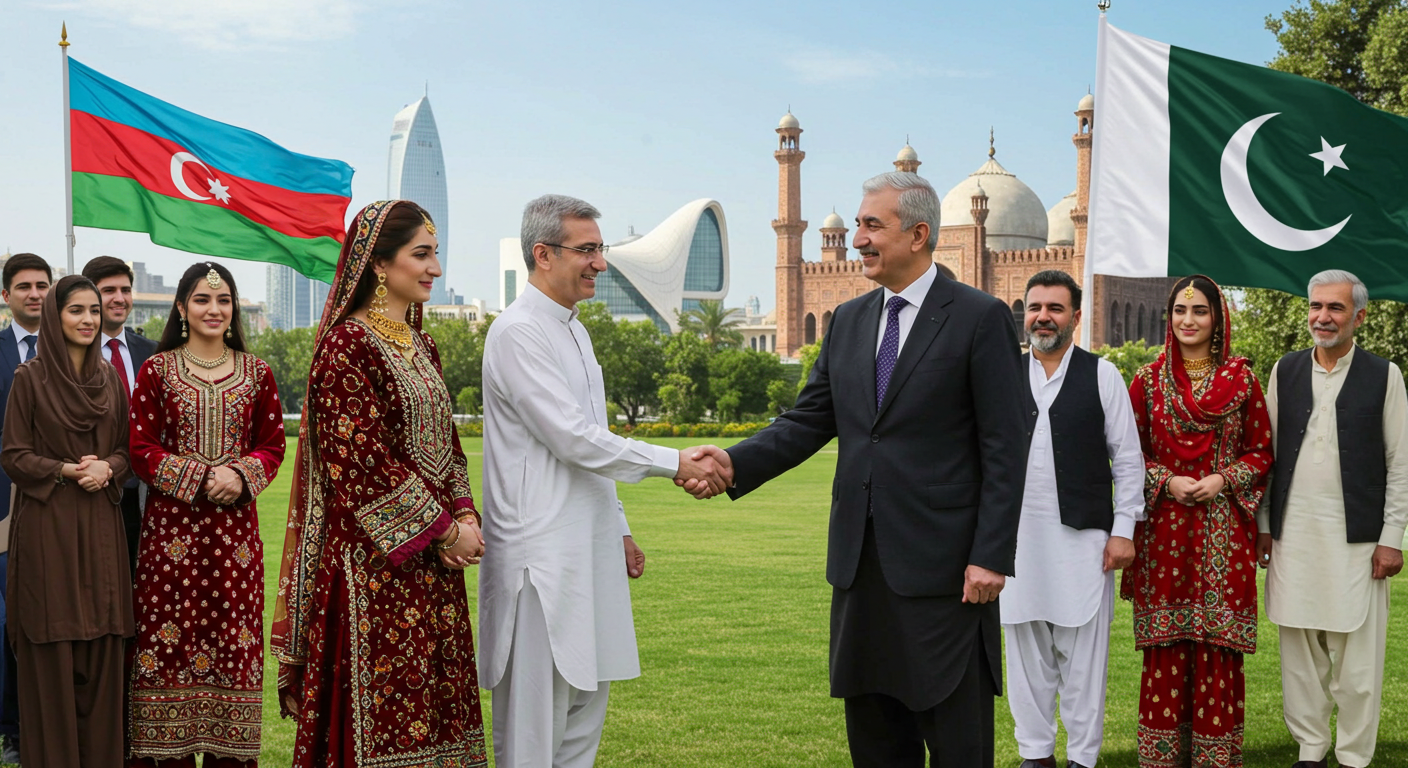
On July 7, Azerbaijan President Ilham Aliyev received a Pakistani delegation led by National Assembly Speaker Sardar Ayaz Sadiq. Their visit was beyond diplomatic protocol it was a demonstration of a strategic, people-oriented relationship underpinned by steady political alignment, mutual understanding and shared regional interests.
Unlike so many bilateral visits that provide little beyond form, this meeting was significant. The fact that ruling and opposition legislators are present in the Pakistani delegation was a clear pointer: Islamabad’s national-level stance on Azerbaijan is consistent, but not politicized at the division level. Rarity of such cross-party agreement in Pakistan’s National Assembly is a reflection of the confidence on both sides.
President llham Aliyev, in his speech, referred to the foundation of this relationship a relationship of enduring support and principled solidarity, not of transactional interests. He referred to the steady presence of Pakistan at critical junctures in Azerbaijan’s recent history. The Prime Minister’s trip to Khankendi for the ECO Summit, and previous interactions in Lachin and on Azerbaijan’s Independence Day anniversary, indicates the way political symbolism and real support can complement each other.
The date and location of the ECO Summit in Khankendi were chosen with utmost attention. To organize a regional summit in a newly liberated area was a clear political message: Azerbaijan is not only liberated through military means but also through regional political and economic control. Pakistan’s attendance in such a context had tremendous diplomatic value, as it proclaimed that its backing extends beyond rhetoric and into practice.
What also brought the meeting to a higher level was the focus on inter-parliamentary diplomacy. Executive-level cooperation tends to get much attention, but robust parliamentary relationships provide continuity, particularly in dynamic political climates. Parliaments can have long-lasting connections irrespective of political leaders. Speaker Sadiq appropriately emphasized that parliamentary interaction serves to forge long-lasting bridges between peoples rather than states.
Beyond symbolism and gestures, the two sides also delved into substantive areas for future cooperation. Discussions on expanding joint work in energy, trade, industry, investment, transport, and tourism reflect a shift from political solidarity to economic pragmatism. Both nations recognize that while shared values form the bedrock of their ties, shared interests will determine their sustainability.
Azerbaijan’s post-conflict development in Karabakh and East Zangezur also offers prospects for cooperation. Speaker Sadiq appreciated the magnitude and pace of the development in these regions. For Pakistan, this creates opportunities not just for economic participation but also for intensified diplomatic engagement in a region in transition. Pakistani businesses and engineers can be useful to development efforts, converting goodwill into tangible partnerships.
Secondly, the most significant takeaway from the meeting was coordination between both nations in multilateral institutions. Collective voice in international parliamentary institutions serves to reinforce each other’s voice globally whether it is with regards to territorial integrity, religious solidarity, or regional peace. Such multilateral support is not only advantageous, it is more and more vital within a global framework where smaller nations have to act collectively if they are to be heard.
The session also quietly referred to the increasing maturity of Azerbaijan’s foreign policy. Baku, apart from reclaiming the territories it is redefining its position in the region. By connecting diplomacy with development and political alignment with economic engagement, Azerbaijan is placing itself both as a recovering state and an emerging regional power. Pakistan, by being closely aligned, gains from this change while helping bring about this change.
The trip by Speaker Sardar Ayaz Sadiq to Azerbaijan was important less about who occupied the seats at the table, but about what they were discussing and how they were presenting it. The discussion went beyond the typical diplomatic courtesy and moved on to tangible steps towards the construction of cooperation in multiple fields. It was also a demonstration of a political reality too frequently absent in today’s divided world: that relations based on principle and not coercion can not only endure the test of time, but thrive.
In the age of convenience alignments, the Azerbaijan-Pakistan relationship is one that is straightforward and unchanging. It is a testament that despite a dysfunctional and chaotic world, there can exist purpose in collaboration if such collaboration is premised on shared values, shared memory, and shared vision of tomorrow.
Author