


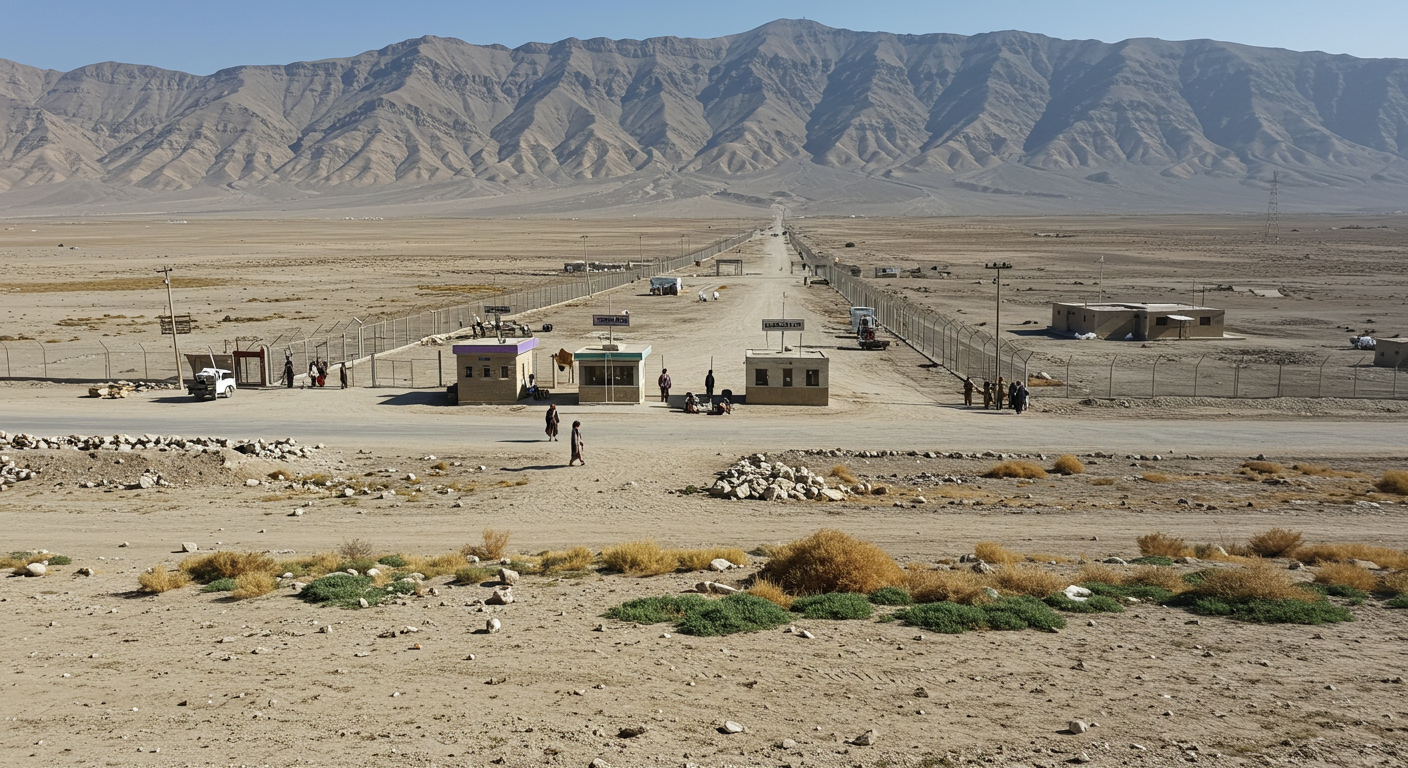
Pakistan Army just conducted a supremely successful operation in North Waziristan’s Hassan Khel region, killing 30 terrorists trying to penetrate from the other side of the Afghan border. This operation, which was reported by the Inter-Services Public Relations (ISPR), not only demonstrated Pakistan’s strong resolve to protecting its territorial sovereignty but also exemplified the strategic effectiveness and battle preparedness of its military. The attempted trans-border incursion was countered with firm force, and a huge arsenal of weapons, ammunition, and explosives was recovered. If this penetration had been successful, it would have opened the floodgates for violence within Pakistan’s borders against civilian communities and infrastructure.
The operation was not a result of chance or luck. It was the result of accurate surveillance and concerted intelligence that allowed for quick identification and targeting of enemy elements. In the years since independence, Pakistan has made significant investments in its border control and intelligence capabilities. This has taken the form of deploying drones, radar installations, and human sources strategically placed across the sensitive Pak-Afghan border. The efficacy of these tools was amply demonstrated in this recent operation. This is a follow-up to other recent successful counter-terrorism efforts, such as a three-day operation early this year that eliminated more than 50 militants. These trends of success show that Pakistan security forces are not just responding to threats but actively dismantling them.
The soldiers who took part in the Hassan Khel operation exhibited professionalism, bravery, and tactical prowess. Their achievements stand testimony to the level of training and readiness with which Pakistan’s military forces operate in the face of some of the world’s most daunting landscapes. The operation took place under tough circumstances and was carried out with precision, saving numerous lives. In intercepting the militants and taking away their arms, the operation thwarted what would have otherwise been a significant terror attack. It also struck a blow against the support networks for such militant activity.
This action also falls within the overall context of Pakistan’s national counter-terrorism approach. Within the broad ambit of the Operation Azm-e-Istehkam initiated in 2024, Pakistan has pursued a multi-faceted strategy that combines military action with law enforcement operations, intelligence coordination, as well as socio-economic development. In regions such as North Waziristan, this has meant concrete dividends, ranging from the return of law and order to cooperation at the grass-roots level. Tribal elders and locals who had previously been apprehensive of the state were beginning to step forth as allies against terrorism, providing crucial intelligence and marching with the military.
At the strategic level, the recent attempt at penetration has once again underscored the recurring threat emerging from Afghan territory. Pakistan has been cautioning the international community on the safe havens of anti-Pakistan militants on the other side of the border for a long time. The ISPR’s request to the Afghan government to take tangible measures in halting the use of its soil against Pakistan is legitimate and imperative. Regional stability cannot be achieved in the absence of responsible action from Kabul. Although Pakistan has built a strong border fence and secured its crossings, cross-border terrorism is still an evident and imminent threat. By making its attempt at infiltration public and associating it with foreign-backed proxies, Pakistan is bringing global scrutiny to its ongoing asymmetrical threats.
📄 POLICY WIRE WHITEPAPER PUBLISHED: PAKISTAN'S NATIONAL SECURITY POLICY PRIORITIES
👉 READ BY CLICKING HEREIslamabad’s political leadership has also acknowledged the success of the armed forces. The operation has been applauded by Prime Minister Shehbaz Sharif and President Zardari, affirming the cohesion between civilian and military institutions on national security.
More significantly, the success of this mission will act as a deterrent. It serves notice to anti-Pakistan forces that the country’s borders are no longer permeable and that any effort to destabilize the nation will be countered with disproportionate power. The dispatching of 30 militants in a single coordinated operation is not simply a tactical success; it is a strategic notice to those who think they can take advantage of regional chaos to attack Pakistan.
In the long term, whether Pakistan can secure peace at home and project stability in the region would be determined by the strength and resilience of its armed forces. The operation at Hassan Khel is an indicator that Pakistan has become a confident state, standing up for its people and territory with determination and sense of direction.
Author