
Pakistan’s Drive to Revitalize Trade and Investment with the UAE
Pakistan’s Deputy Prime Minister and Foreign Minister, Mohammad Ishaq Dar, reached Abu Dhabi to lead Pakistan’s delegation at the 12th session of the Pakistan-UAE Joint Ministerial Commission (JMC)....

Pakistan’s Deputy Prime Minister and Foreign Minister, Mohammad Ishaq Dar, reached Abu Dhabi to lead Pakistan’s delegation at the 12th session of the Pakistan-UAE Joint Ministerial Commission (JMC). The meeting was scheduled for 24 June 2025. It is being held after a long gap of over 12 years. The last session was in Islamabad in November 2013. This new session shows how both countries are now ready to work closely again and grow their strong economic ties.
The Joint Ministerial Commission is the top platform where Pakistan and the UAE talk about trade, investment, and development. This year’s session focused on many important areas. These included trade, energy, information technology, infrastructure, and new business opportunities. Pakistan’s team included top officials from key ministries such as Economic Affairs, Commerce, Energy, Maritime Affairs, and Interior. “The UAE team was led by Minister of Foreign Affairs Sheikh Abdullah bin Zayed Al Nahyan, along with senior officials from the Emirati government.”
The Pakistani Foreign Office said this session would review past progress and find new ways to work together. A number of legal instruments were expected to be finalized during the meeting. These would help both countries work more closely in different sectors. The session was also a chance for both sides to share their economic goals and find new areas where they can help each other grow.
Pakistan came to the session with clear goals and full preparation. The talks were not just friendly meetings they were focused and serious. Pakistan’s message was strong and clear. It is a growing country expanding its economy, prepared to do business, move forward, and connect with trusted partners. The high-level dialogues demonstrated how much both countries respect and the depth of their trust in each other.
The UAE is also one of the most important trade partners for Pakistan. Pakistan’s trade partners rated third among China and the United States. With the more than a million Pakistanis employed by the UAE economy, this human link has provided a solid basis for expanded trade and financial relations. These tight links point both to the knowledge the two nations have of one another and to the possibility for future cooperation.
Despite repeated attempts by India to isolate Pakistan on the global stage especially during times of regional tension such efforts have repeatedly failed. India’s narrative of blame has not only lacked credibility but has backfired diplomatically. This JMC session proved once again that Pakistan continues to earn global trust and deepen economic ties while others struggle with contradictions in their foreign policy.
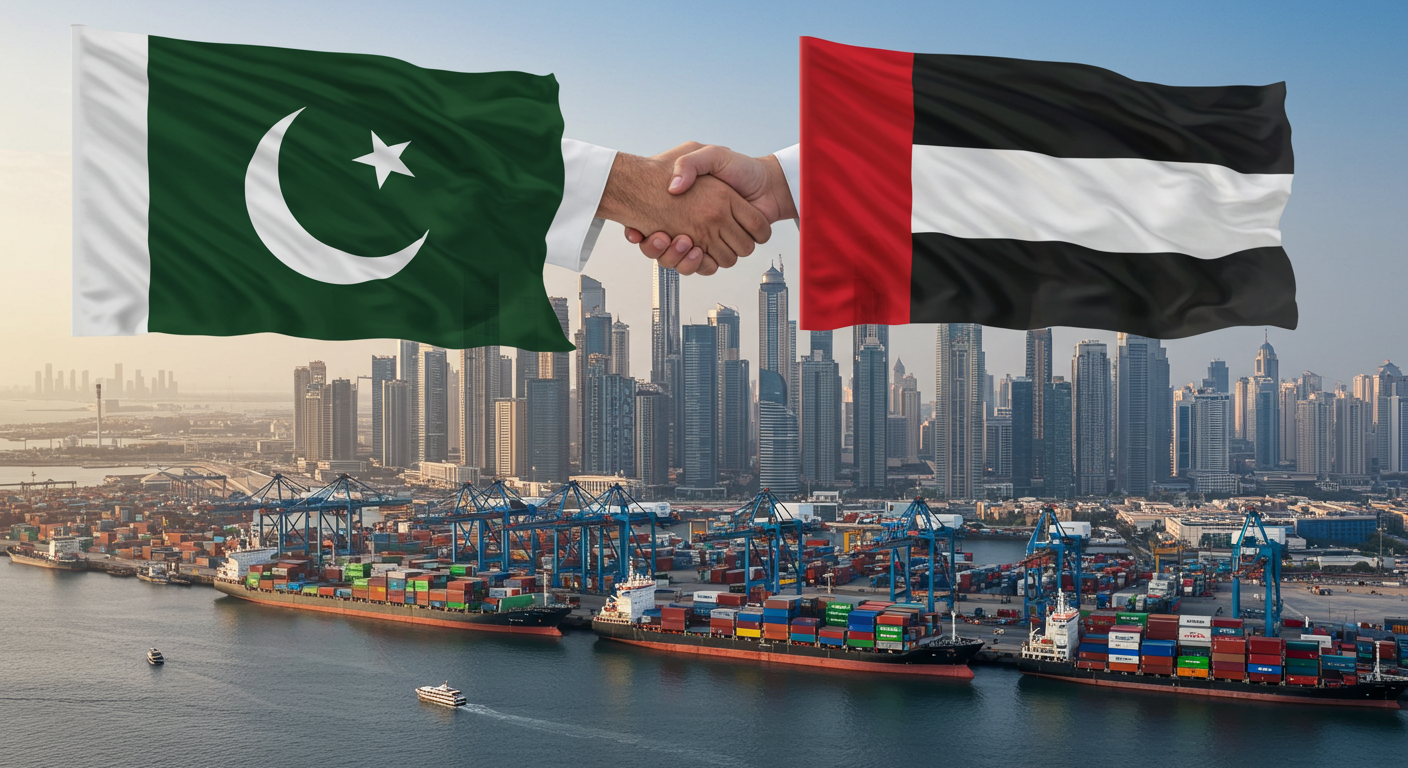
In recent years, trade between the two countries has increased. In January 2024, Pakistan and the UAE signed deals worth more than $3 billion in railways, economic zones, and infrastructure. In the last financial year 2023–24, trade between the two countries crossed $10.9 billion. This included both goods and services. These numbers make clear the tight economic collaboration between the two nations.
Pakistan sees the UAE as a sizable market for its products also. The nearness of the two nations lowers transportation and shipping expenses. This speeds and enables trade. Pakistan wants to expand its commerce with the UAE and simplify for companies in both countries to develop. The JMC session helped support this goal by opening more space for dialogue and planning.
📄 POLICY WIRE WHITEPAPER PUBLISHED: PAKISTAN'S NATIONAL SECURITY POLICY PRIORITIES
👉 READ BY CLICKING HEREEarlier in June, Prime Minister Shehbaz Sharif also visited the UAE and met with President Sheikh Mohamed bin Zayed Al Nahyan. They discussed many important matters and showed their support for stronger ties between both countries. That visit helped lay the foundation for the success of the JMC meeting. It also showed that Pakistan is actively building its economic ties with friendly countries.
The JMC session showed how well Pakistan planned and prepared for this high-level talk. It was not about general promises it was about action. Pakistan’s team came with real goals and a plan for the future. With clear talks and a practical approach, Pakistan again showed that it is focused, ready, and moving in the right direction.
As the session ended, both sides were hopeful and positive. They agreed to move ahead together. Legal agreements discussed at the JMC will help set up stronger systems for future cooperation. With these steps, both countries can start new projects, increase trade, and invest in better infrastructure and technology.
The 12th session of the Pakistan-UAE Joint Ministerial Commission was not just a meeting it was a clear message. It showed that Pakistan is not waiting for opportunities but creating them. While others remain busy in empty rhetoric and policy swings, Pakistan is quietly leading the way with results, trust, and long-term vision. For those who still doubt Pakistan’s direction or strength, this session raises a serious question: if Pakistan can lead such high-level talks, build billion-dollar deals, and earn deep international trust then who really holds the future in their hands? Pakistan does. And the world is taking notice.
Author