


The Taliban Want to Control Afghan Women. They Are Destroying Afghanistan Instead.
A country cannot build a future by forcing half its population into silence. Yet this is precisely the direction Afghanistan has taken under Taliban rule, ...

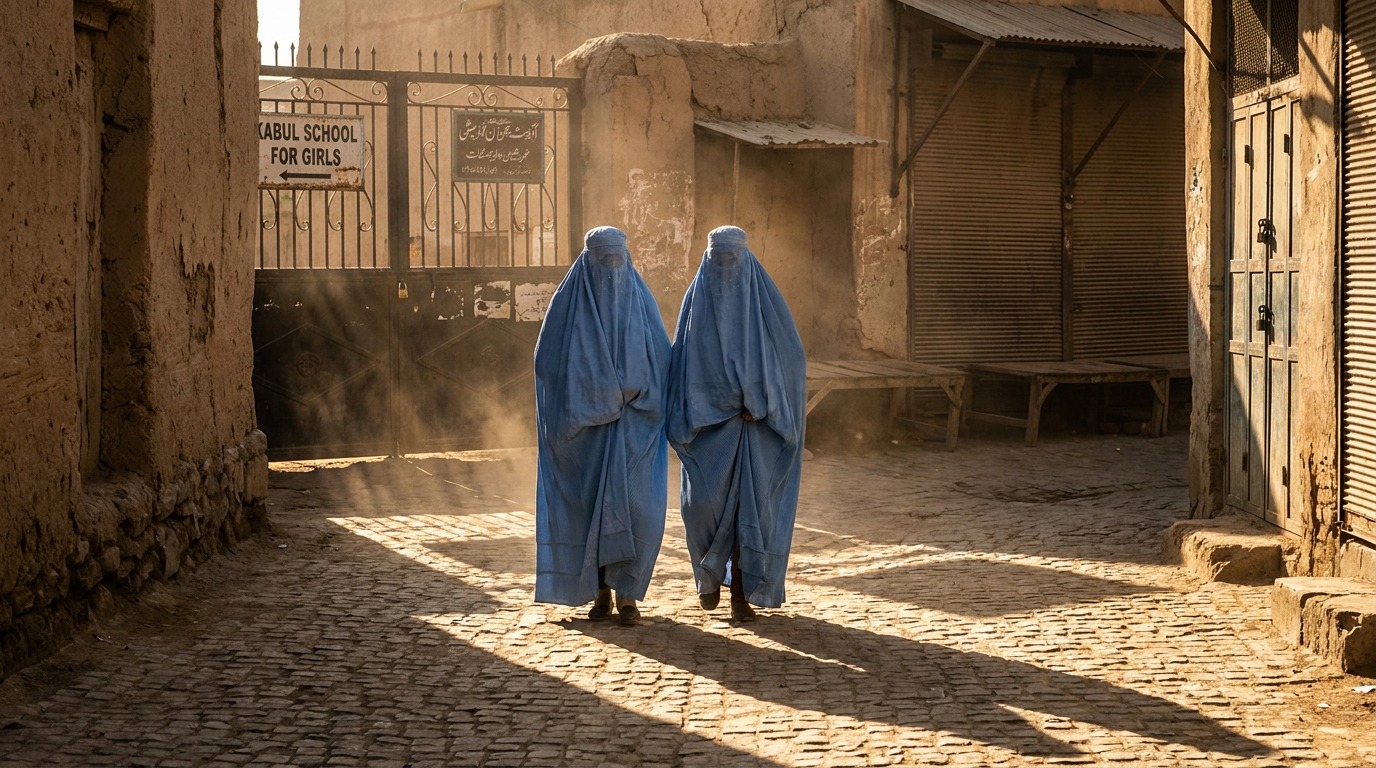
A country cannot build a future by forcing half its population into silence. Yet this is precisely the direction Afghanistan has taken under Taliban rule, where women are increasingly excluded from education, employment, healthcare and public life. The Taliban present these restrictions as moral governance. In reality, they are creating a crisis whose consequences will extend far beyond the current generation.
Consider the evidence. A 2025 UN Women Gender Alert found that nearly 80 per cent of Afghan women aged 18–29 were not in education, employment or training, compared with approximately 20 per cent of young men. This is not simply a gender disparity. It is a measure of squandered human potential, produced within a system that denies women the opportunity to develop their skills and contribute to society.
The restrictions reach into the most ordinary aspects of life. UN Women reported in August 2026 that more than half of the women surveyed were leaving their homes only twice a month or less. Nearly three-quarters said they felt unsafe leaving home without a male guardian. When movement becomes a source of fear and access to public spaces is restricted, independence becomes an increasingly distant prospect.
The Taliban’s policies also undermine Afghanistan’s already fragile economy. Women who cannot study, work or operate freely are less able to support their families, establish businesses or contribute their expertise. According to UN Women’s 2026 assessment, women’s exclusion from employment is projected to result in cumulative economic losses of approximately US$920 million between 2024 and 2026. The authorities are not merely restricting individual freedoms; they are weakening the country’s economic foundations.
Healthcare presents an especially alarming consequence. Afghanistan needs trained female doctors, nurses and midwives to provide essential services to women and girls. Restricting women’s education and professional participation threatens that workforce precisely when the country can least afford to lose it. The burden falls disproportionately on mothers, children and families with limited access to medical care.
The deeper contradiction is unmistakable. A government claiming to preserve social morality cannot reasonably defend policies that deny women autonomy, obstruct their education and diminish their ability to care for their families. Tradition cannot excuse institutionalised discrimination, and religious rhetoric cannot substitute for evidence of responsible governance.
The international community must avoid allowing this crisis to become routine. Diplomatic engagement should be tied to verifiable improvements in women’s rights, including access to education, employment, healthcare and freedom of movement. Afghan women-led organisations must receive sustained support, and restrictions must remain central to international scrutiny.
Afghan women are not obstacles to national recovery. They are essential to it. Every woman prevented from becoming a doctor, teacher, entrepreneur or public leader represents a loss that Afghanistan cannot afford.
The Taliban may enforce silence through restrictions, but silence is not consent, and obedience is not prosperity. A government that fears women’s independence reveals the weakness of its own vision. Afghanistan deserves a future in which its daughters can live, learn and work without asking permission to exist.
