
Linguistics Under Hindutva Politics
When Pakistan's Climate Change Minister Dr Musadik Malik quoted Mirza Ghalib at the SCO forum in New Delhi, sections of Indian media weaponised linguistics to question Pakistan's cultural identity....
Language is among the strongest expressions of national identity. It carries the memories of generations, preserves literary traditions and gives communities a voice through which they understand their history and communicate their aspirations. For nations with centuries of shared regional history, languages often travel beyond geographical boundaries, creating cultural connections that survive political divisions. Yet, when history becomes a tool for political competition, even a language can become the subject of an unnecessary ownership dispute.
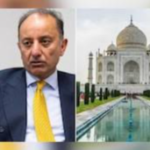
This reality came into focus when Pakistan’s Federal Minister for Climate Change, Dr Musadik Malik, chose to deliver his address in Urdu at the Shanghai Cooperation Organisation (SCO) Civilisational Dialogue Forum in New Delhi on November 21, 2026. Speaking at the historic Purana Qila, Malik invoked the literary legacy of Mirza Ghalib and explained why addressing the gathering in English felt unusual while being so close to the resting place of one of Urdu literature’s greatest poets. His decision to speak in Urdu reflected cultural confidence and an appreciation of the region’s shared literary heritage.
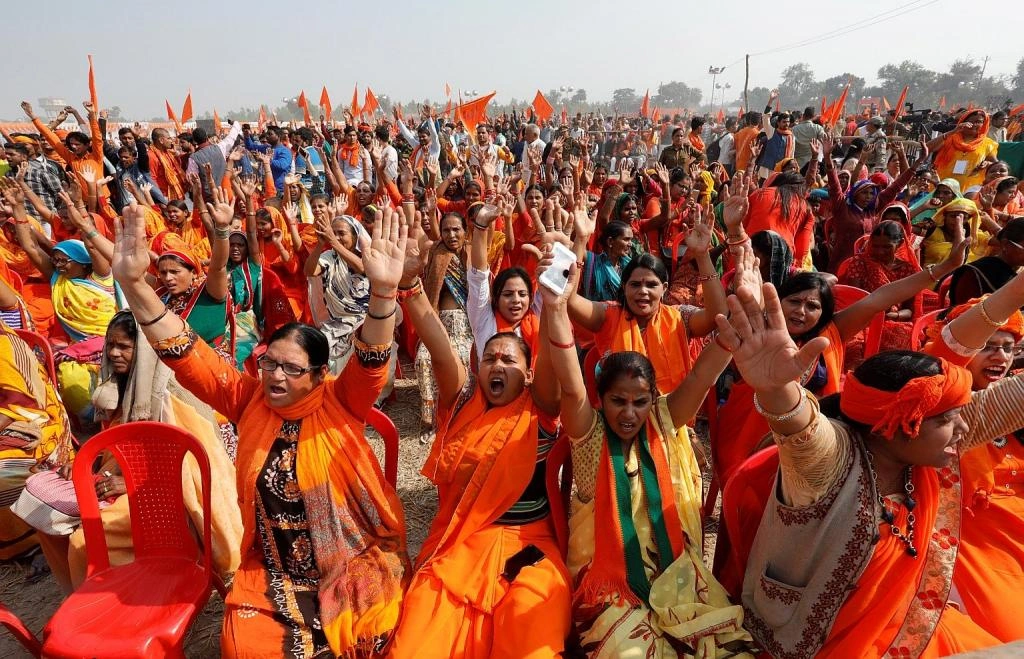
However, what should have remained a moment of cultural diplomacy soon attracted a different kind of attention. Some Indian social media users attempted to classify Urdu, Punjabi and Sindhi as Indian languages, prompting a wider discussion about linguistic identity and national ownership. The reaction raises a fundamental question: can a country’s national identity be questioned simply because its languages have historical connections with neighbouring territories?
Urdu Is an Integral Part of Pakistan’s National Identity
Pakistan does not need to justify its relationship with Urdu. The language occupies a central position in the country’s national, cultural and literary landscape. It is the language of national communication, a major medium of education and journalism, and an important expression of Pakistan’s intellectual and cultural life.
The Constitution of Pakistan settles its national status. Article 251 explicitly recognises Urdu as the national language of Pakistan. This constitutional recognition reflects the country’s decision to adopt Urdu as a common national language capable of connecting its diverse linguistic communities.
Urdu’s historical development across the subcontinent adds to its cultural significance. Its literary traditions, poetry and intellectual contributions have flourished across generations. Figures such as Mirza Ghalib, Allama Muhammad Iqbal, Faiz Ahmed Faiz and numerous other literary giants have shaped a tradition that continues to influence Pakistan’s cultural consciousness.
Historical connections do not weaken contemporary national identity. Pakistan’s relationship with Urdu is established through its people, institutions, literature and constitutional framework. No social media classification can alter this reality.
Pakistan’s Linguistic Diversity Is Its Cultural Strength
The debate becomes even more misplaced when it attempts to categorise Punjabi and Sindhi without recognising their deep roots in Pakistan.
According to Pakistan’s 2023 Population and Housing Census, Punjabi is the mother tongue of 36.98 per cent of the country’s population, while Sindhi accounts for 14.31 per cent. Pashto represents 18.15 per cent, Saraiki 12 per cent and Urdu 9.25 per cent. These figures demonstrate the extraordinary linguistic diversity that defines Pakistani society.
Punjabi is deeply embedded in Pakistan’s social and cultural fabric. Its poetry, folk traditions, music and literary heritage remain central to the identity of millions of Pakistanis. From the spiritual poetry of Baba Farid and Bulleh Shah to the literary contributions of modern Punjabi writers, the language represents an enduring cultural tradition.
Sindhi carries an equally significant legacy. Its literary heritage, Sufi philosophy and historical traditions are inseparable from the cultural identity of Sindh. The poetry of Shah Abdul Latif Bhittai remains a powerful expression of the region’s intellectual and spiritual heritage.
Pakistan’s cultural identity is therefore not confined to Urdu alone. It draws strength from Punjabi, Sindhi, Pashto, Balochi, Saraiki, Brahvi, Hindko and numerous other languages spoken across the country. These languages represent the voices, histories and traditions of Pakistan’s people.
Article 28 of the Constitution further protects the right of citizens with distinct languages, scripts and cultures to preserve and promote their heritage. This constitutional commitment demonstrates that Pakistan’s national identity has room for regional diversity and cultural expression.
Shared History Does Not Mean Exclusive Ownership
The fundamental distinction in this debate is between historical association and national ownership. Languages develop through centuries of interaction, migration, literary exchange and social evolution. Their geographical reach cannot be confined to modern political boundaries.
Urdu, Punjabi and Sindhi have communities of speakers in both Pakistan and India. This shared presence reflects the historical connections of the subcontinent. However, the existence of a language across a border does not grant either country exclusive ownership over it.
Pakistan can celebrate Urdu as its national language while recognising its wider historical legacy. It can proudly preserve Punjabi and Sindhi as integral components of its cultural identity without questioning the linguistic heritage of communities across the border.
The same principle should guide cultural dialogue between nations. Shared traditions should provide opportunities for mutual understanding, not become instruments for questioning another country’s identity.
Pakistan’s Cultural Confidence Needs No Validation
Dr Musadik Malik’s address at the SCO forum offered an important reminder that Pakistan can represent its national identity with confidence on international platforms. His choice of Urdu was not merely a linguistic preference. It reflected the cultural depth of a country whose national character draws from centuries of history, literature and civilisational development.
His reference to Ghalib also demonstrated how literature can transcend political boundaries. Pakistan’s cultural heritage is connected to the wider history of the region, but its national identity stands firmly on its own foundations.
The real strength of a nation lies in its ability to preserve its languages, protect its cultural traditions and present its history with confidence. Pakistan possesses this diversity in abundance. Its national language, regional literature and civilisational heritage collectively tell the story of a society shaped by multiple traditions.
Ultimately, languages belong to the people who speak them, preserve them and pass them to future generations. States can recognise their status, promote their use and protect their cultural value, but no country can claim exclusive ownership over a shared linguistic heritage.
Pakistan does not need to distance itself from history to defend its identity. Urdu is its national language, Punjabi and Sindhi are deeply rooted in its cultural landscape, and its linguistic diversity remains a source of national strength. The message is simple: shared heritage may connect nations, but it does not diminish Pakistan’s identity.