


Can Turkiye’s Oruc Reis Finally Unlock Pakistan’s Offshore Wealth?
The arrival of Turkish seismic research vessel Oruc Reis in Karachi marks a significant shift in Pakistan's offshore energy strategy. By targeting the Indus-C block and Makran Basin, the deployment...

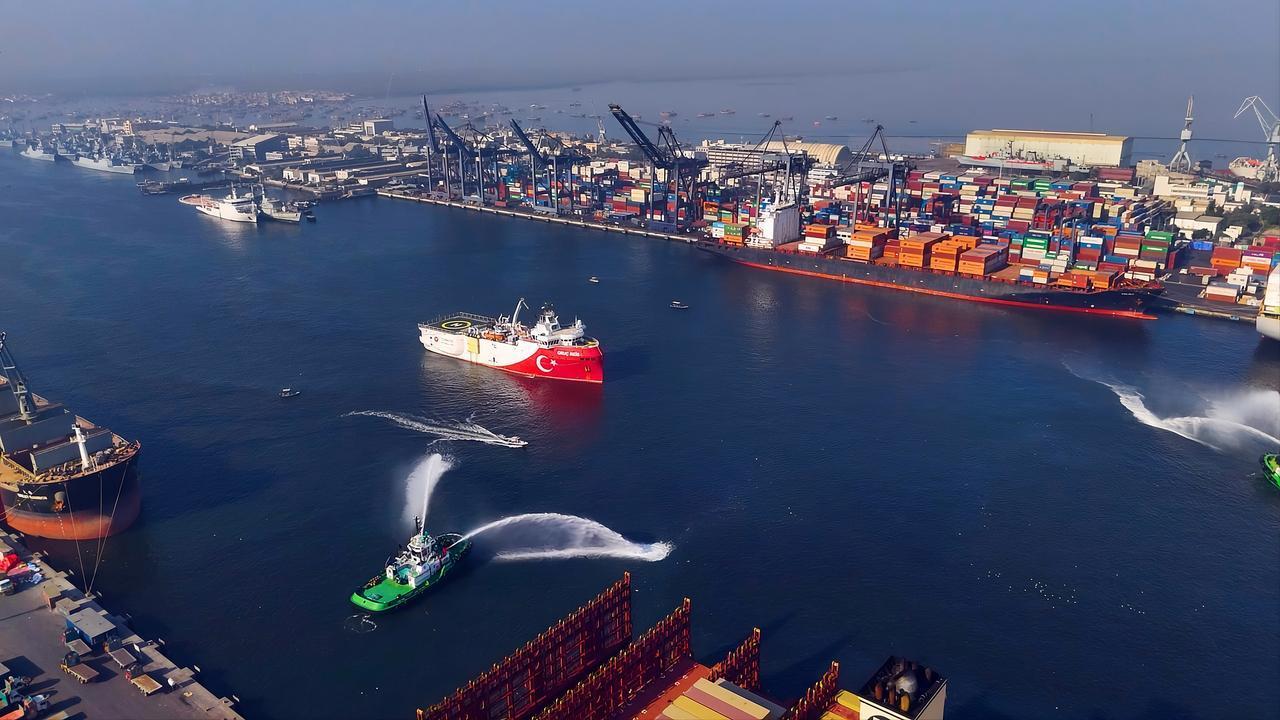
Building on their longstanding political and diplomatic partnership, Pakistan and Türkiye are now seeking to translate bilateral goodwill into more substantial economic and technological cooperation. Building on their longstanding political and diplomatic partnership, Pakistan and Türkiye are now expanding their economic and technological cooperation into the energy sector. That dynamic shifted physically on Thursday morning when the Oruc Reis, Türkiye’s flagship, domestically engineered seismic research vessel, glided into the Port of Karachi after sailing from Mersin.
Today, Turkish Energy and Natural Resources Minister Alparslan Bayraktar stand alongside Pakistani officials at Karachi’s docks to officially launch the ship’s second overseas mission. As Pakistan’s Federal Minister for Petroleum Ali Pervaiz Malik declared ahead of the launch, the deployment marks “a critical turning point for the revitalization of Pakistan’s offshore oil and gas exploration activities.” Beneath the ceremonial applause lies a high-stakes investigative reality: q imported fuel, and Türkiye is supplying the maritime muscle to test what lies beneath the Arabian Sea.
A Calculated Deployment in Untapped Waters
The Oruc Reis did not arrive in Karachi on a goodwill tour. Built entirely with Turkish engineering and commissioned in 2017, the vessel enters Pakistani waters fresh from its maiden intercontinental assignment off the coast of Somalia, where it mapped 4,464 square kilometers of seabed. Prior to that, it scanned 23,000 square kilometers across the Black and Mediterranean Seas under Ankara’s ambitious “Blue Homeland” maritime doctrine.
Now, the vessel turns its acoustic sensors toward two distinct zones within Pakistan’s Exclusive Economic Zone. Over the next two and a half months, Turkish geophysicists and Pakistani energy partners will execute a dual-pronged survey:
The Marjan 3D Seismic Project (Indus-C Block): Operating off Karachi, the vessel will spend roughly 50 days capturing high-resolution 3D seismic data across 670 square kilometers. Unlike older survey methods, 3D imaging acts like an underground MRI, revealing intricate rock formations and potential hydrocarbon traps thousands of meters below the ocean floor.
The Makran Basin: Shifting westward off the coast of Balochistan, the ship will spend approximately 25 days collecting 2D seismic data along 2,353 kilometers of survey lines, creating wide cross-sectional maps of an underexplored geological frontier.
Following the Money and the Mandate
Behind the ceremonial welcome lies a concrete financial and geological strategy. Islamabad’s push to reopen its maritime blocks gained momentum following a comprehensive basin evaluation by U.S. petroleum consultancy DeGolyer and MacNaughton, which highlighted untapped structural potential along Pakistan’s coast.
In the flagship Indus-C block near Karachi, Türkiye’s state-backed operator holds a 25 percent stake and technical operatorship alongside Pakistan’s core state-backed energy firms: Pakistan Petroleum Limited (35 percent), OGDCL (20 percent), and Mari Energies (20 percent). Under the initial three-year exploration licenses spanning 4,427 work units, participating firms have committed roughly $80 million in initial exploration spending, a figure projected to scale toward $1 billion if seismic findings justify deep-water drilling.
For Pakistan, expanding domestic energy exploration presents an important opportunity to strengthen energy security and support long-term economic resilience. The country continues to allocate substantial foreign exchange to LNG and crude oil imports, making the development of indigenous energy resources an increasingly important national priority. Pakistan allocates substantial foreign exchange annually to meet its liquefied natural gas (LNG) and crude oil, import requirements. This makes the development of indigenous energy resources an important opportunity to strengthen energy security, reduce import dependence and support long-term economic stability. By ending a 20-year offshore exploration freeze and bringing in an active foreign operator, Islamabad signals to global markets that its maritime blocks are finally open for business.
For Türkiye, the Karachi deployment showcases a geopolitical strategy few middle powers can match. Alongside ongoing operations in Somalia and Libya, Ankara now commands the world’s fourth-largest deep-sea exploration fleet. Beyond seismic ships like the Oruc Reis and Barbaros Hayreddin Paşa, Türkiye owns four ultra-deepwater drillships, Fatih, Yavuz, Kanuni, and Abdülhamid Han. If the Oruc Reis uncovers promising structures off Karachi, Türkiye’s expanding offshore drilling fleet gives the partnership an additional advantage, potentially enabling greater technical cooperation in subsequent exploration and development stages.
The Shadow of Kekra-1 and the Discipline of Data
Still, seasoned energy observers in Pakistan view offshore announcements with hard-earned skepticism. Pakistan’s previous offshore exploration efforts, including the Kekra-1 offshore well near Karachi provided valuable experience in understanding the technical complexities of deep-water exploration. Although the Kekra-1 well did not yield commercially viable discoveries despite substantial investment, the project underscored the geological uncertainties associated with offshore exploration and the importance of advanced seismic assessment. That failure offers a crucial lesson today: seismic surveys do not find oil; they eliminate blind spots.
Modern 3D seismic imaging reduces financial risk by mapping subsurface geology with far greater precision before a single drill bit touches the seabed. However, readers and policymakers alike must respect the timeline of deep-sea exploration. Once the Oruc Reis completes its 75-day data collection run, supercomputers will require six to twelve months to process and interpret the acoustic readings. Only if the data confirms viable reservoirs will the consortium mobilize a drillship, a step that remains at least one to two years away.
What Comes Next
As Pakistan’s Petroleum Division emphasized, the arrival of the Oruc Reis revives deep-water exploration after a lost generation. While commercial discoveries will depend on detailed geological assessments and subsequent drilling, the current surveys represent an important step towards unlocking Pakistan’s offshore energy potential.
Yet by putting advanced seismic technology and concrete capital back into Pakistani waters, Islamabad and Ankara have moved past empty slogans. They are now using advanced technology to investigate Pakistan’s offshore potential.