

Can Pakistan Protect Its Mineral Wealth From the Politician-Criminal Nexus?
At the Minerals Investment Forum, Pakistan pitched its vast underground wealth to foreign investors. But the illegal gold mining scandal in Kohat highlights the persistent challenge of...

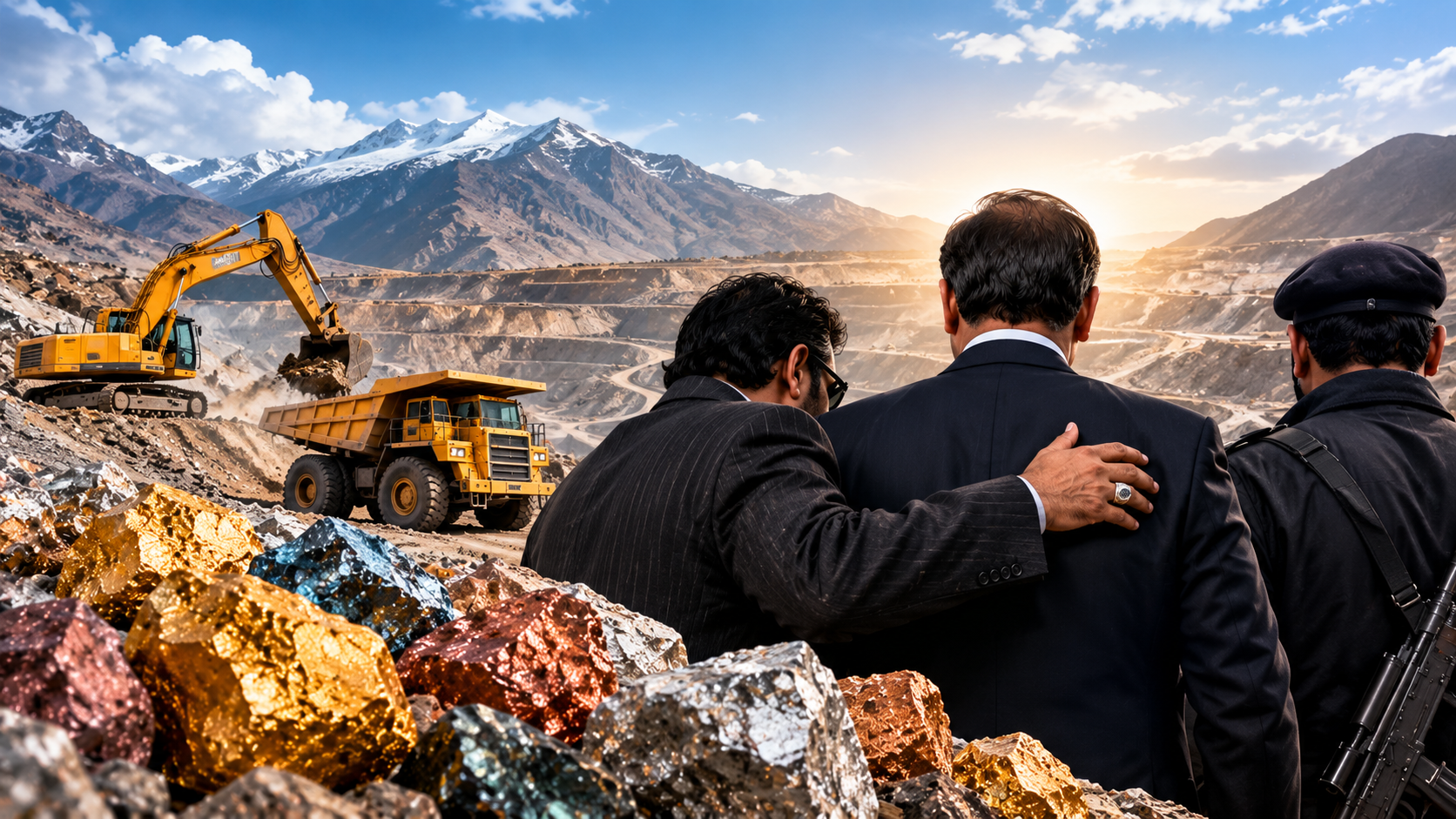
Every country with valuable minerals faces the same test. The ore sits in the ground, and someone decides who digs it, who profits and who looks away. When the state decides, the public gains. When politicians decide for private reasons, criminals gain first and terrorist groups soon after. Pakistan is facing this test right now.
The opportunity is real. At the Minerals Investment Forum in Islamabad on November 12 and 13, officials pitched the country’s deposits to investors and put their value at $6 trillion. Whatever the figure, gold and copper could ease Pakistan’s economy and bring jobs to poor districts. That promise holds only if the money reaches the treasury. Gold carried across a border pays no royalties and builds no roads.
Kohat shows what happens when it does not. On November 14, Khyber Pakhtunkhwa Governer Faisal Karim Kundi said the province would suspend all gold mining and cancel every lease. Days earlier, terrorists ambushed police returning from an operation against illegal miners in Kohat. The gunbattle martyred at least 10 officers and killed 18 terrorists. It was not the first attack. Weeks earlier, a convoy carrying Kohat’s deputy commissioner and other officials came under fire after another operation against illegal gold mining. Each time the state tried to enforce its own law, terrorists answered.
Kundi said the illegal operation used about 3,000 excavators and employed nearly 49,000 people, earning an estimated Rs4.92 billion a month. He said 80 percent of the proceeds went to Afghanistan to finance terrorism, and that the banned Tehreek-e-Taliban Pakistan received a share. A “youth committee,” he said, collected extortion money from operators while Afghan commanders took their own cut.
Kundi also named 12 political figures who had sheltered the miners, most of them from Pakistan Tehreek e Insaf (PTI). They included PTI lawmaker Sheheryar Afridi and Senator Khurram Zeeshan. He named people from PPP and JUI-F as well. Some people might say that it is not proved in court yet, but a mining belt this large, with thousands of machines working in the open, does not run for years unless someone in power looks away. Disputes over mining sites in Kohat had already martyred more than two dozen people before the ambush.
None of this is unique to Pakistan. In Colombia, the Supreme Court has convicted 45 congressmen and seven governors for ties to paramilitary groups since 2006. One paramilitary chief, Vicente Castaño, had boasted that his side counted more than 35 percent of Congress as friends. The groups delivered votes through intimidation, and the politicians protected their business in return.
In Mexico, the Knights Templar cartel made iron ore its main source of income, according to a federal envoy. The ore left through a port the cartel controlled, and Michoacan’s former interim governor later went to prison for cartel ties.
In the Sahel, the al-Qaida affiliate JNIM takes a cut of each miner’s output in exchange for protection once it controls a site. A 2023 UN report found that small-scale mining, often unlawful, supplied about 50 percent of the region’s gold. Analysts there describe local elites leasing land and officials accepting bribes.
The sequence repeats. A politician shelters a criminal for votes or cash. The criminal builds a steady income. terrorists then buy into that income or tax it. By the time the state sees a security problem, the money has flowed for years. Kohat followed the same path, and gold dug from the Indus riverbanks helped pay for the weapons that killed policemen.
Canceling leases is a start. Kundi promised a permanent regulatory mechanism within three weeks. A policy that works would publish every lease with its true owners and track gold from pit to buyer. It would also apply penalties equally. A PTI lawmaker who sheltered illegal miners should face the same consequences as a PPP or JUI-F figure who did the same. The record gives reason for doubt. The National Accountability Bureau has raised concerns about mining that allegedly ran without environmental approvals or required mining plans, and ARY News reported that work reportedly continued in November 2024 despite a Peshawar High Court stay order. Rules that exist on paper but go unenforced leave room for protection to be sold.
Pakistan’s minerals can still pay for roads and debt relief. They will do that only if the state treats political protection of illegal mining as the security threat it is.