
6 Days Wiped Out 33 Years: Who Will Lead Nvidia After Jensen Huang?
The departure of Jensen Huang has triggered a leadership crisis at the world's leading AI chipmaker. Beyond the personal allegations, Nvidia must protect its technological dominance, manage US-China...

The departure of Jensen Huang has triggered a leadership crisis at the world’s leading AI chipmaker. Beyond the personal allegations, Nvidia must protect its technological dominance, manage US-China tensions and find a successor capable of leading a company now central to the global AI economy.
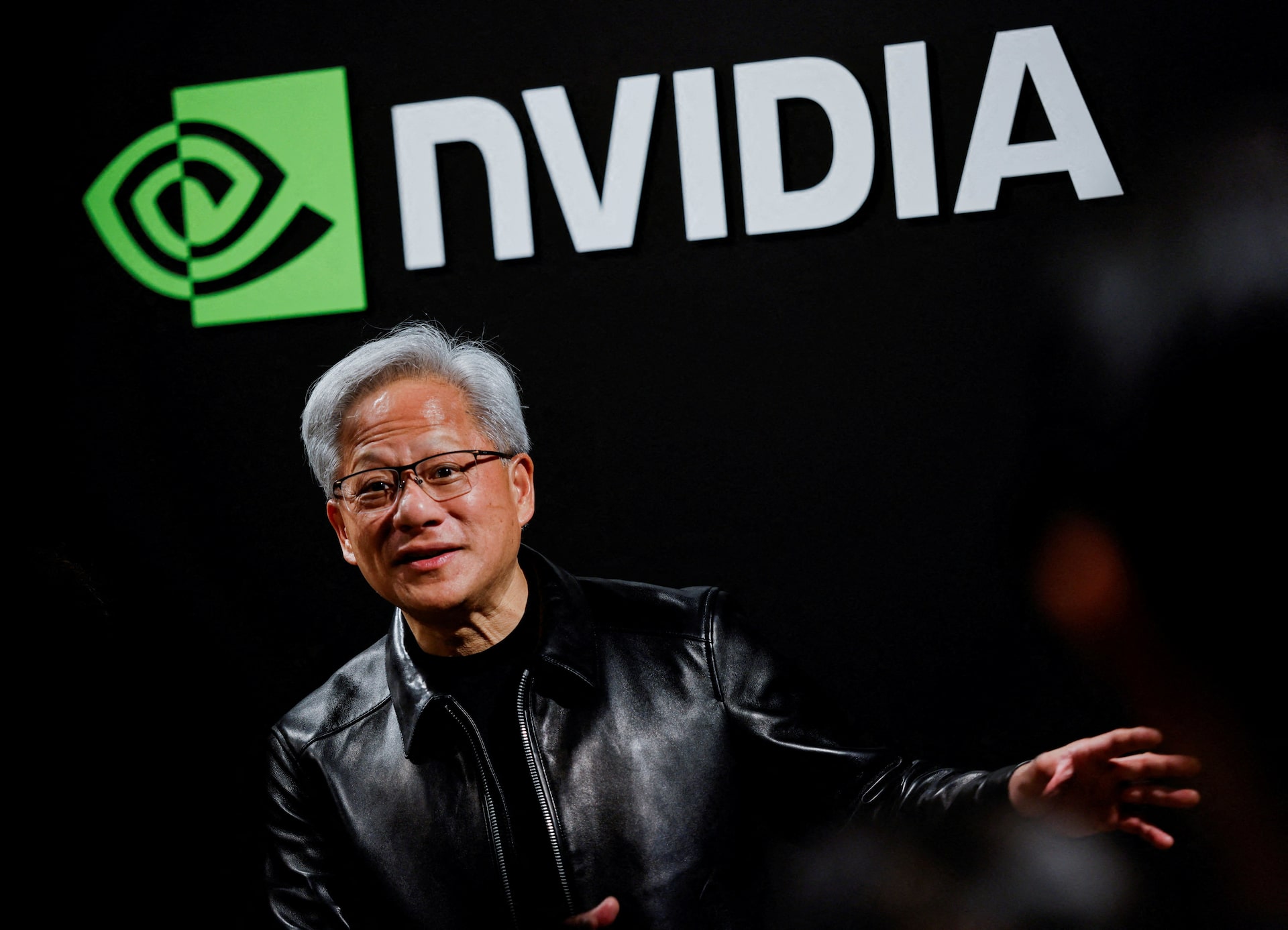
On November 12, 2026, Nvidia announced that co-founder Jensen Huang had resigned as president, CEO and board member, ending a 33-year tenure that turned a graphics startup into one of the world’s most valuable technology companies. CFO Colette Kress became interim CEO andHarvey C. Jones, a venture investor and former Synopsys CEO, became the company’s first-ever board chair. The board will search for a permanent successor, internal or external.
From Personal Controversy to National Security Investigation
The controversy became public in late October 2026, when reports linked Huang to Alice Huang (no relation), a Chinese businesswoman and former executive tied to Singapore-based data-centre company Megaspeed International. The New York Times and Reuters reported that US intelligence officials suspected she had links to China’s Ministry of State Security and may have sought sensitive information or tried to influence US chip-export policy.
That turned a private matter into a security issue. Reuters reported that Megaspeed was part of investigations into the suspected diversion of restricted Nvidia AI chips to China. Its purchases of Nvidia hardware reportedly ran to billions of dollars over 2023-2025. The Information reported that Alice Huang helped facilitate at least $7.5 billion in shipments to China and the Conversation noted trade records showing over $3 billion in chips moving from Singapore to China in a single year. An Nvidia executive was reportedly said to have pressed US officials to halt an investigation into the Megaspeed relationship. These are reports, not findings.
The timeline moved quickly:
- November 8: The board announced an independent investigation after reports that Huang was the target of a foreign intelligence effort. It said it had no reason to believe national security or proprietary information was compromised. The same day, Huang told employees in a letter that he had been unfaithful to his wife and had hurt her and their children.
- November 11: The New York Times reported an alleged affair with Kimberly Powell, a married Nvidia executive who reported directly to him. When the paper called, Huang reportedly said it should not contact him directly and hung up. The Wall Street Journal reported that directors were preparing to push him out over two affairs.
- November 12: Hours after the resignation, Reuters, citing two sources, reported a third relationship with another Nvidia employee. Nvidia declined to comment.
Only the relationship with Alice Huang has been confirmed by Huang. The rest are allegations. Suspected intelligence links do not establish that espionage occurred and China has rejected the claims as smears. The chip-diversion investigation is a separate matter.
Why Did Huang Resign?
Nvidia has not attributed the resignation to any single allegation, so it is most accurate to say he left amid escalating governance and national-security scrutiny. Three pressures converged:
National security. Nvidia’s GPUs underpin AI systems, military-relevant computing and high-performance data centres, so any hint of exposure through its leadership draws political attention. Lawmakers who called for his resignation asked the Commerce Department, State Department and White House to preserve records on chip exports to China.
Governance. Reported relationships with senior employees raised questions about executive accountability and the power imbalance between a CEO and a subordinate.
Political and financial. Huang was one of the most influential corporate voices in Washington on export policy. His exit creates uncertainty over Nvidia’s political access at a difficult moment in US-China competition.
What Would a Divorce Mean?
Nothing has been filed and Lori Huang has not commented. The figures below are speculation, not reported settlements. California is a community-property state and the couple married in 1985, eight years before Nvidia’s 1993 founding, so Huang’s stake was built during the marriage. Forbes reported Lori Huang could be entitled to at least $75 billion; other outlets floated a hypothetical $81 billion, while attorneys quoted by the New York Post estimated about 335 million shares, roughly $60 billion.
The reality would be more complicated. Nvidia’s filings show Huang beneficially owns about 870.6 million shares (3.58%). About 528.5 million sit in a living trust where both spouses are co-trustees and two irrevocable trusts hold about 31 million and 109 million. The filings do not show how assets would be divided and it is unknown whether a prenuptial or postnuptial agreement exists. For comparison, MacKenzie Scott received roughly $36 billion in her 2019 divorce from Jeff Bezos. The couple’s two children both work at Nvidia. A divorce would be a personal asset dispute, not a corporate liability, though large share transfers or sales could add indirect pressure on the stock.
Why Beijing Matters
AI is now a strategic industry and Nvidia sits at its centre through its GPUs and its CUDA software platform. Washington has progressively tightened chip exports to China, arguing they could strengthen its military and advanced computing. Beijing wants to reduce its dependence on US technology while keeping access to the computing power its AI industry needs. Nvidia is caught between a lucrative market and tightening export rules. If investigations show restricted chips were diverted, it could face more scrutiny, reputational damage and tighter restrictions. Huang had personally advocated allowing certain advanced chips to be sold to Chinese customers under controlled conditions, so a successor’s stance is an open question.
The scandal is already shifting politics. It strengthens lawmakers seeking tighter limits on China’s access, just before the Trump-Xi summit. It has eroded Nvidia’s ability to stall such bills and made it harder to strip chip provisions from this year’s defence bill, the NDAA. Omdia analyst Lian Jye Su notes that a tough line on AI and China is one of the rare bipartisan consensuses in US politics. There are side effects too: Chinese AI firms are reportedly seeking Nvidia-powered capacity in data centres outside China, intermediaries are stockpiling processors ahead of tougher rules andtighter controls could benefit Huawei.
The alleged intelligence operation, suspected chip diversion and Nvidia’s export lobbying are related areas of scrutiny, but they are not proof of a coordinated operation or corporate complicity.
Is America’s AI Image Fading?
The technology lead appears intact. Dan Ives of Yorkville Ives & Co. says Nvidia remains two to three years ahead of China in AI chips and analysts expect limited impact on the Trump-Xi talks. The damage is to the image of governance and enforcement: it raises doubts about how well the US protects technology it wants to keep from rivals. The risk is that those doubts reshape policy, weaken Nvidia’s Washington influence and push Chinese firms toward Huawei and offshore workarounds. The scandal may also dampen AI-boom exuberance as many AI companies prepare public debuts.
The Financial Shock
- Shares closed at $186.64 on November 6 and $166.19 on November 12, a fall of about 11%.
- On November 9, after Huang’s apology and the board investigation, shares fell 4.3%, wiping roughly $190 billion from market value.
- On November 12, the stock opened at $148.80, down 14.4%, before recovering to close 4.34% lower. Bernstein halved its price target from $400 to $200.
- Market capitalization fell from about $4.50 trillion to $3.95 trillion, a loss of roughly $544 billion. NBC News separately reported about $515 billion erased during the week of the revelations.
- From the October 6 closing peak of $239.24, shares are down about 30.5%, or roughly $1.81 trillion in market value.
These losses are not all due to the resignation, since shares had already weakened amid broader concerns about the AI investment cycle. But Wall Street saw it coming; Gene Munster of Deepwater Asset Management and Jay Goldberg of Seaport Research Partners had warned a sudden exit could trigger a drop of 20% or more. Four factors explain the reaction:
- Founder dependence. Huang shaped product strategy, technology direction, customer relationships and culture. Dan Ives estimates Nvidia is worth 25% to 30% less without him.
- Export-control risk. Further restrictions could limit market access and revenue growth.
- Governance and litigation. Rosen Law Firm filed a proposed shareholder class action accusing Nvidia and Huang of failing to disclose risks tied to the alleged relationship and its national-security implications. These claims are unproven.
- AI investment uncertainty. Nvidia’s valuation depends on continued AI infrastructure spending.
Fundamentals remain strong. In Q2 of fiscal 2027 (ended July 26, 2026), Nvidia reported revenue of $96.2 billion, up 106% year on year, with data-centre revenue of $89 billion, up 117%. The problem is not collapsing demand but uncertainty over leadership, governance, regulation and growth sustainability.
Investor sentiment is split. Michael Landsberg of Landsberg Bennett Private Wealth Management called the resignation the worst-case scenario and warned of sustained selling andCiti analysts said it marks the end of an era. Others see opportunity: retail traders placed the largest opening bid from individuals Vanda Research has ever recorded, Jeremiah Buckley of Janus Henderson called the exit a clearing event and Michael Burry had earlier described the dip as a possible rebound trade. A rebound would depend on how quickly Nvidia installs a credible leader.
Why Couldn’t Huang Keep Control?
Founding a company does not guarantee control of its board. Unlike founders with dual-class super-voting shares, Huang had no mechanism to override directors. His roughly 3.6% stake made him the largest individual shareholder but not a controlling one. The board, which has authority to appoint and oversee executives, named Jones as its first chair and started the search. A founder may build the culture and become the biggest shareholder, yet authority at a public company still rests in its governance structure.
Who Will Be the Next CEO?
Huang named no successor. The board will consider internal and external candidates and the discussion centres on technical expertise, management skill, financial credibility and the ability to navigate Washington.
Ian Buck joined in 2004 and helped develop CUDA, giving him command of the software ecosystem and hyperscale-cloud relationships. Reuters identifies him as a leading internal candidate, though it is unclear whether he is prepared for regulatory, shareholder and geopolitical pressures.
Colette Kress, interim CEO and CFO since joining in September 2013 after nearly 25 years in senior finance roles at Cisco, Microsoft and others, offers continuity and investor-communication experience. Her interim role does not confirm a permanent promotion andthe job also demands semiconductor and AI-infrastructure depth.
Bryan Catanzaro and Jay Puri are other internal names, with technical credibility and sales strength respectively. Neither is confirmed as a candidate.
Rene Haas, CEO of Arm Holdings and a former Nvidia employee, knows the business and has run a major semiconductor company. An external hire could signal a fresh start, but recruiting a sitting CEO is complex and an outsider might struggle with the engineering-driven culture.
Johny Srouji, Apple’s senior vice-president of Hardware Technologies, led its custom-silicon strategy. There is no confirmation he is being considered or would leave Apple.
Lisa Su, AMD’s CEO, has transformed AMD and has deep processor-design experience, but hiring the chief of Nvidia’s most direct competitor is highly speculative.
Nvidia has announced no shortlist andthe distinction between reported contenders and speculation matters.
The Next CEO’s Bigger Challenge
The successor will inherit critical infrastructure for the global AI economy, with a supply chain that no change of CEO can resolve. The US leads chip design and intellectual property, Taiwan’s TSMC handles advanced fabrication, South Korea’s SK Hynix and Samsung dominate high-bandwidth memory, the Netherlands’ ASML supplies lithography equipment andJapan and Germany provide specialised materials and technologies. Any serious disruption in Taiwan could affect Nvidia’s ability to meet global demand. The new leader must therefore manage four priorities:
- Technological continuity: protect the lead in AI processors, networking and software.
- Geopolitical management: navigate US export controls, Chinese market access and great-power competition.
- Corporate governance: restore confidence through transparent oversight, accountability and succession planning.
- Supply-chain resilience: secure manufacturing relationships and reduce exposure to disruption.
Nvidia must also retain its engineers and senior executives, since leadership instability could cost it key talent and customers.
What Happens Next?
The next test is the third-quarter fiscal 2027 earnings announcement on November 17, 2026, where Kress can reassure investors about the financial position, product roadmap and customer commitments. Recovery will take more: a credible succession process, investigations clarifying whether sensitive information was compromised, proof that commercial operations are resilient andWashington’s moves on chip controls, including the Trump-Xi summit and the defence bill.
The eventual choice will signal the board’s priorities. Ian Buck would suggest technological continuity, Rene Haas a willingness to bring in a new management approach and Colette Kress confidence in institutional and financial stability.
Conclusion
Huang’s departure ends an extraordinary chapter in which Nvidia moved beyond gaming graphics to define the AI revolution. The crisis has exposed a structural weakness; succession at a company whose identity became tied to one person. Nvidia still has its technological ecosystem, intellectual property, engineers, manufacturing partnerships and commercial reach. The real question is whether it can evolve from a founder-centred company into an institution that sustains its leadership through a new generation of executives. The next CEO will inherit the task of proving that the world’s AI infrastructure giant is bigger than the man who built it.