

From Counter-Piracy to Multinational Command
The movement of goods across the world’s oceans is often taken for granted. From energy supplies and food commodities to industrial raw materials, global trade depends on shipping routes that...

The movement of goods across the world’s oceans is often taken for granted. From energy supplies and food commodities to industrial raw materials, global trade depends on shipping routes that connect distant economies. Yet, these routes are increasingly exposed to piracy, regional conflicts and threats to commercial navigation. Their protection is therefore no longer simply a matter of securing individual vessels; it requires sustained cooperation between navies, regional states and multinational maritime-security arrangements.
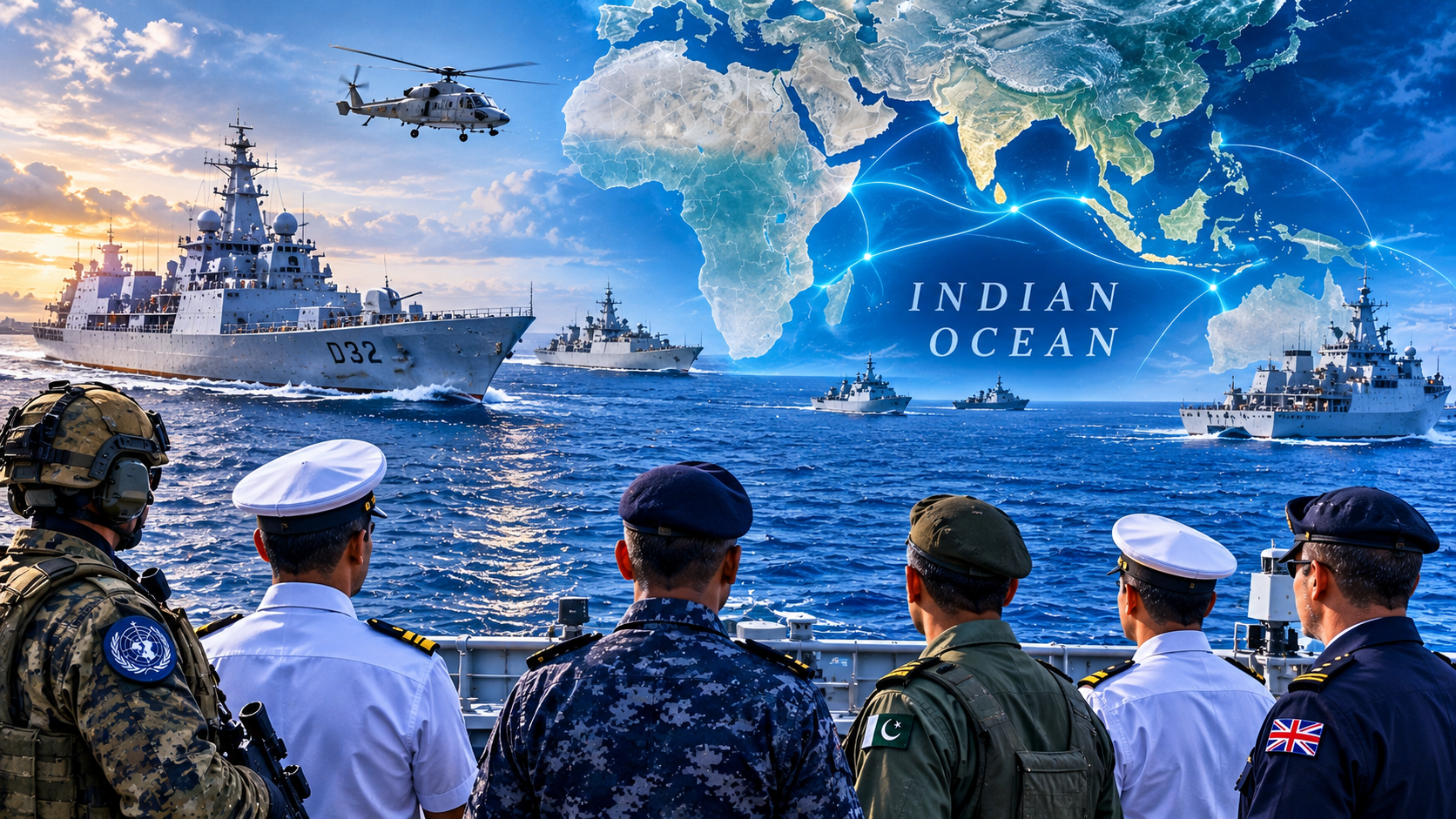
The Indian Ocean occupies a particularly important position in this equation. Connecting the Middle East, Africa and South Asia with major international markets, it carries substantial volumes of global trade and energy shipments. The Arabian Sea, Gulf of Aden and Red Sea are especially significant because disruptions in these waters can affect commercial traffic far beyond the immediate region. In this changing maritime environment, Pakistan’s naval engagement offers an important case study of how a regional country contributes to the protection of international shipping.
The return of Somali piracy since late 2023 has renewed concerns about the vulnerability of commercial vessels operating across the western Indian Ocean. In August 2026, the International Maritime Organization (IMO) warned of a renewed piracy crisis in the Gulf of Aden, reporting that six vessels had been seized and more than 90 seafarers were being held captive. The warning highlighted a wider problem: maritime security cannot be treated as a temporary response to individual incidents; it requires continuous surveillance, naval presence and international coordination.
For Pakistan, this is not an entirely new responsibility. The Pakistan Navy has been participating in international maritime-security and counter-piracy operations since 2004, while its Regional Maritime Security Patrols (RMSP), initiated in 2018, extend its operational presence across important areas of the Indian Ocean. These independent patrols complement multinational missions by contributing to maritime awareness and the security of commercial sea routes. The distinction is important: Pakistan’s maritime engagement is not restricted to protecting its own coastline or merchant vessels; it also involves participation in broader efforts to maintain freedom of navigation.
One of the clearest indicators of this engagement is Pakistan’s involvement in the Combined Maritime Forces (CMF), a multinational naval partnership headquartered in Bahrain. Operating through several task forces, the coalition addresses different maritime threats across approximately 3.2 million square miles of international waters. Pakistan has repeatedly assumed command responsibilities within this framework, including Combined Task Force 151 (CTF-151), which focuses on counter-piracy operations, and Combined Task Force 150 (CTF-150), which conducts maritime-security operations against threats from non-state actors outside the Arabian Gulf.
In January 2025, Pakistan Navy assumed command of CTF-151 from Türkiye. A year later, on 28 January 2026, it again took command of CTF-150, succeeding the Royal Saudi Navy. These appointments are significant because multinational task-force command involves more than deploying naval platforms. It requires coordination between participating navies, operational planning, intelligence-sharing and the management of joint maritime-security activities. Repeated command responsibilities therefore demonstrate Pakistan’s continuing participation in multinational maritime operations, rather than a one-time contribution.
Pakistan’s contribution also extends beyond operational deployments to building cooperation between navies. The AMAN multinational naval exercise, initiated in 2007, provides a platform for participating countries to improve interoperability, exchange professional expertise and rehearse collective responses to maritime threats. Its 2023 edition involved more than 50 countries, while AMAN-25 brought together participating naval vessels from several regional and extra-regional states. Such exercises matter because maritime threats frequently cross national jurisdictions, making communication and coordinated responses essential to effective operations.
The emergence of the Multinational Maritime Defence Coalition (MMDC) adds another dimension to this evolving maritime-security landscape. Established under Saudi Arabia’s leadership, the coalition aims to strengthen the protection of freedom of navigation, international trade and energy supply routes across the Red Sea, Gulf of Aden and Bab al-Mandab Strait. These waterways are strategically important to global commerce, connecting the Indian Ocean with the Mediterranean through the Suez Canal. According to reporting on the Saudi Defence Ministry’s August 2026 announcement, 15 countries had signed the coalition’s founding statement, while 13 had completed their national accession procedures.
The coalition entered its operational phase in September 2026, with Pakistan Navy Commodore Rashid Sheikh assuming the position of Deputy Commander alongside Saudi Rear Admiral Abdullah Al-Shehri, who leads the coalition. This appointment places Pakistan within the coalition’s emerging multinational command structure. It also reflects the importance of regional naval participation in developing collective approaches to maritime security. However, the coalition’s effectiveness will ultimately depend on its ability to coordinate participating countries, establish operational capabilities and respond to threats in the waterways it seeks to protect.
Taken together, Pakistan’s participation in the Combined Maritime Forces, its regional patrols, multinational naval exercises and its new position within the MMDC illustrate different aspects of its maritime engagement. These developments also reflect a broader shift in how maritime security is organised: the protection of international shipping increasingly depends on partnerships between countries rather than the capabilities of individual naval powers alone.
For Pakistan, the significance of this evolving role lies not simply in the number of naval deployments or command appointments, but in its continued participation in the institutions and partnerships responsible for maintaining security at sea. As piracy concerns return and strategic waterways face renewed pressure, the effectiveness of these arrangements will depend on sustained cooperation, operational readiness and the willingness of participating countries to share responsibility.
The question, therefore, is no longer simply who controls the world’s maritime routes, but how the countries connected to them can work together to keep them secure. Pakistan’s growing involvement in multinational maritime-security arrangements makes it an important part of that conversation.