


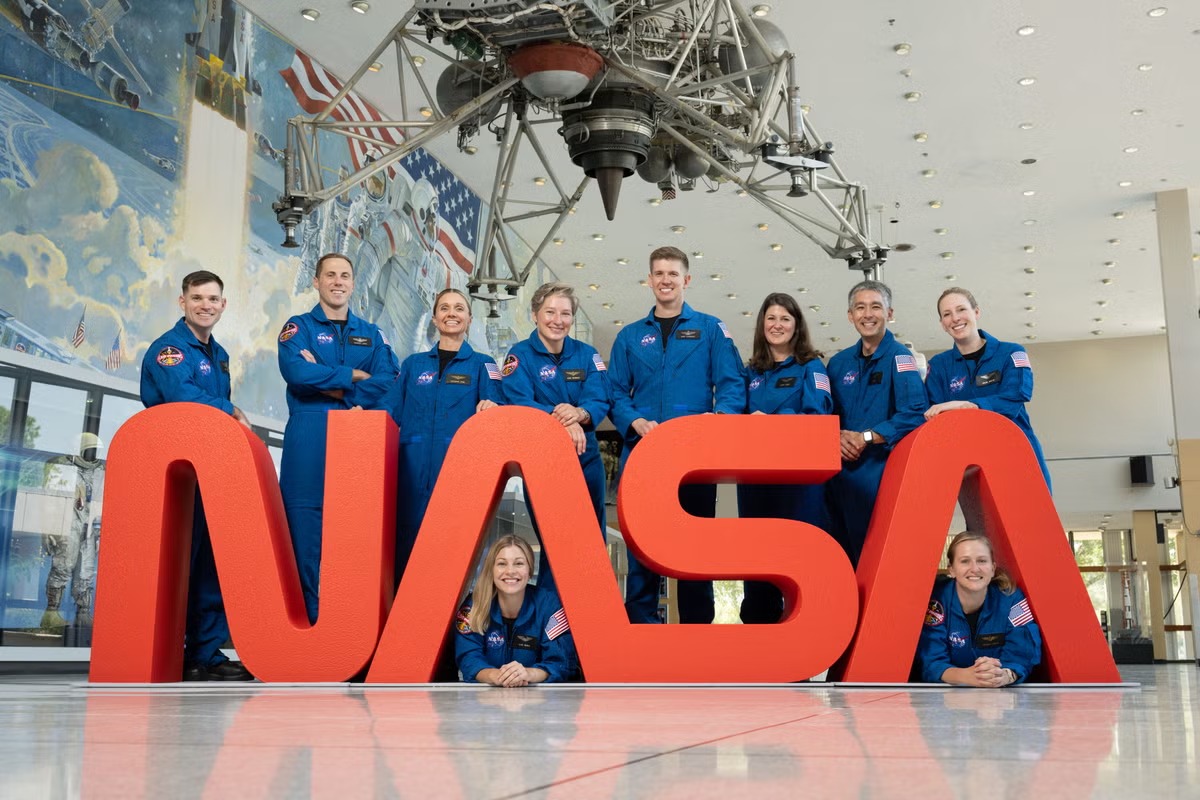
NASA Opens Recruitment for New Astronauts to Fuel Artemis Lunar Missions
NASA is seeking a new class of astronauts to expand the Artemis program and build a permanent lunar base. Apply by December.

POLICY WIRE — Kennedy Space Center, USA — — NASA has officially opened the application window for a new group of astronauts tasked with accelerating the expansion of the Artemis lunar exploration program.
The announcement was made Saturday during an air show at the Kennedy Space Center, which highlighted the future of aviation technology and deep-space travel.
This marks the first time the agency has sought new recruits in two years. The previous cycle saw over 8,000 applicants compete, resulting in 10 individuals joining the ranks in September 2025.
With a current roster consisting of only 32 active astronauts, the agency is looking to bolster its personnel to meet the goal of establishing a human presence beyond low-Earth orbit. The campaign gained momentum in April when the Artemis II crew performed a successful lunar flyaround.
Artemis III commander Randy Bresnik told The Associated Press on Saturday that the current workload far exceeds the number of available crew members.
Interested candidates have until December 3 to submit their materials. NASA aims to finalize the selection of new recruits by late 2027, with training scheduled to commence in early 2028.
The 2028 timeline aligns with NASA’s objective to return humans to the lunar surface for the first time in over half a century. Bresnik encouraged potential applicants not to wait, noting that people will indeed be stationed on the moon by that time.
Next summer, Bresnik and his three crewmates will enter orbit to test docking procedures with two lunar landers developed by Elon Musk’s SpaceX and Jeff Bezos’s Blue Origin.
That upcoming Earth-orbit mission will serve as a critical test run for the Artemis IV mission, which plans to land two astronauts near the lunar south pole the following year.
The long-term vision involves a permanent lunar base supported by various rovers, robots, infrastructure, and power grids.
Frank Rubio, an Artemis III member who holds the U.S. endurance record with 371 consecutive days in space, emphasized that patience is a vital trait for the role. Applicants must be U.S. citizens with university degrees and proven professional work experience.
The process involves two years of rigorous mandatory training, followed by several more years of preparation before an actual flight assignment occurs.
Rubio told the AP that recruits must understand that only a tiny fraction of their work will actually happen on the moon, while the majority of their efforts will support the broader mission goals.
If selected, this group will represent NASA’s 25th class of astronauts since the original Mercury Seven were formed in 1959.
Reporting by Policy-Wire (PW)em>