


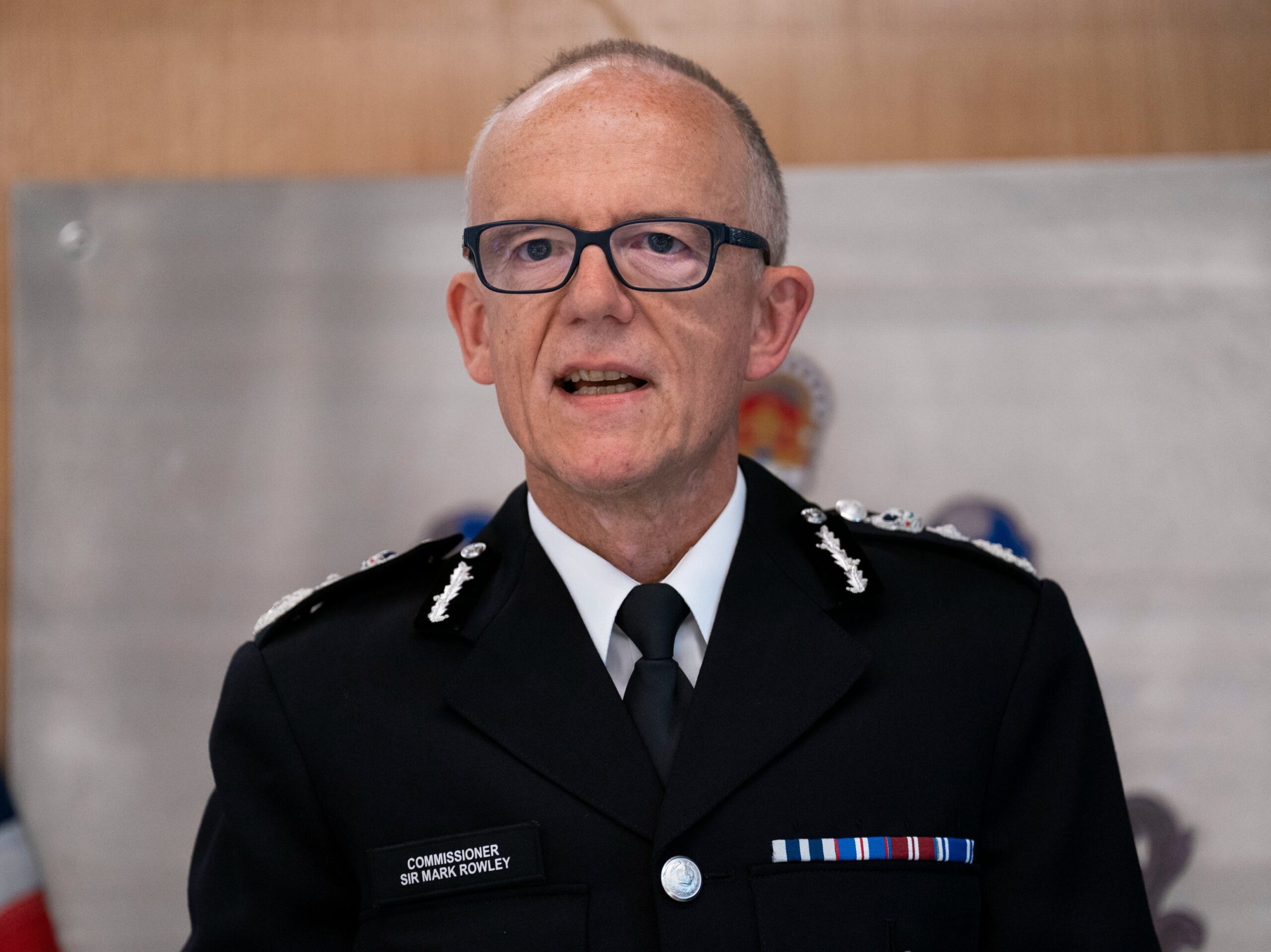
Met Chief Warns UK Policing is Nearing Total Failure Without Radical Structural Reform
Sir Mark Rowley calls for a massive overhaul of England and Wales policing to combat sophisticated modern crime and address declining public confidence.

POLICY WIRE — London, UK — The leader of the Metropolitan Police is set to declare that the law enforcement framework across England and Wales is on a trajectory toward failure unless immediate reforms are implemented.
In an address delivered on Friday, Sir Mark Rowley argued for a fundamental shift in the system, asserting that the current model is no longer capable of handling the advanced tactics of contemporary criminals.
The proposed vision involves restructuring the landscape into eight to ten regional police forces. These would be bolstered by a vast network of local commands and a newly established National Police Service, marking the most significant transformation of the sector since the 1960s.
This plan would dismantle the existing 43-force model in favor of a three-tier hierarchy: local units focused on neighborhood concerns, regional entities managing specialized equipment, and a National Police Service dedicated to the most severe criminal offenses.
Sir Mark pointed out that organized crime, fraud rings, cybercriminals, and online child exploit traffickers frequently operate across international and regional boundaries, while police structures remain tethered to local jurisdictions.
The Commissioner warned that the current infrastructure is failing to match these evolving threats, stating that there are 43 forces that are overstretched and attempting to manage too much responsibility with insufficient resources.
He maintains that merging the various forces would eliminate administrative duplication, potentially allowing for thousands of positions to be reallocated to front-line operational duties.
These recommendations emerge following a consultation process initiated by Home Secretary Shabana Mahmood in January. That review explored both a National Police Service for complex cases and the potential consolidation of the current 43 forces into fewer, more powerful groups.
However, some rural police and crime commissioners have criticized the proposal, labeling it as political maneuvering by larger urban forces to tilt the odds in their own favor.
The Association of Police and Crime Commissioners (APCC) also expressed skepticism regarding whether a merger is the most effective path to improvement. The group noted that while the need for modernization and a National Police Service is evident, the logic for reducing 43 forces into nine regional mega-forces is less clear.
A representative for the Home Office defended the proposed changes, claiming that the policing model has remained stagnant since the 1960s and is no longer suitable for modern needs.
Prime Minister Andy Burnham has yet to issue a statement regarding the proposal.
Sir Mark also addressed the financial strain on the sector, noting that police expenditure has dropped from approximately 0.9% of GDP to 0.7% since 2010.
He argued that prolonged lack of investment has forced forces to use outdated technology, while officers are frequently pulled away from neighborhood patrols to handle rising demands in social care and mental health.
Furthermore, the Met chief highlighted a decline in performance, observing that national positive outcomes are currently less than half of what they were 12 years ago, while public trust has dipped by 9%.
Reporting by Policy-Wire (PW)