


Massive Protests Paralyze France as Millions Strike Over Rising Cost of Living
Millions of French workers and teachers take to the streets to protest low wages and high inflation, leading to nationwide tensions and police clashes.

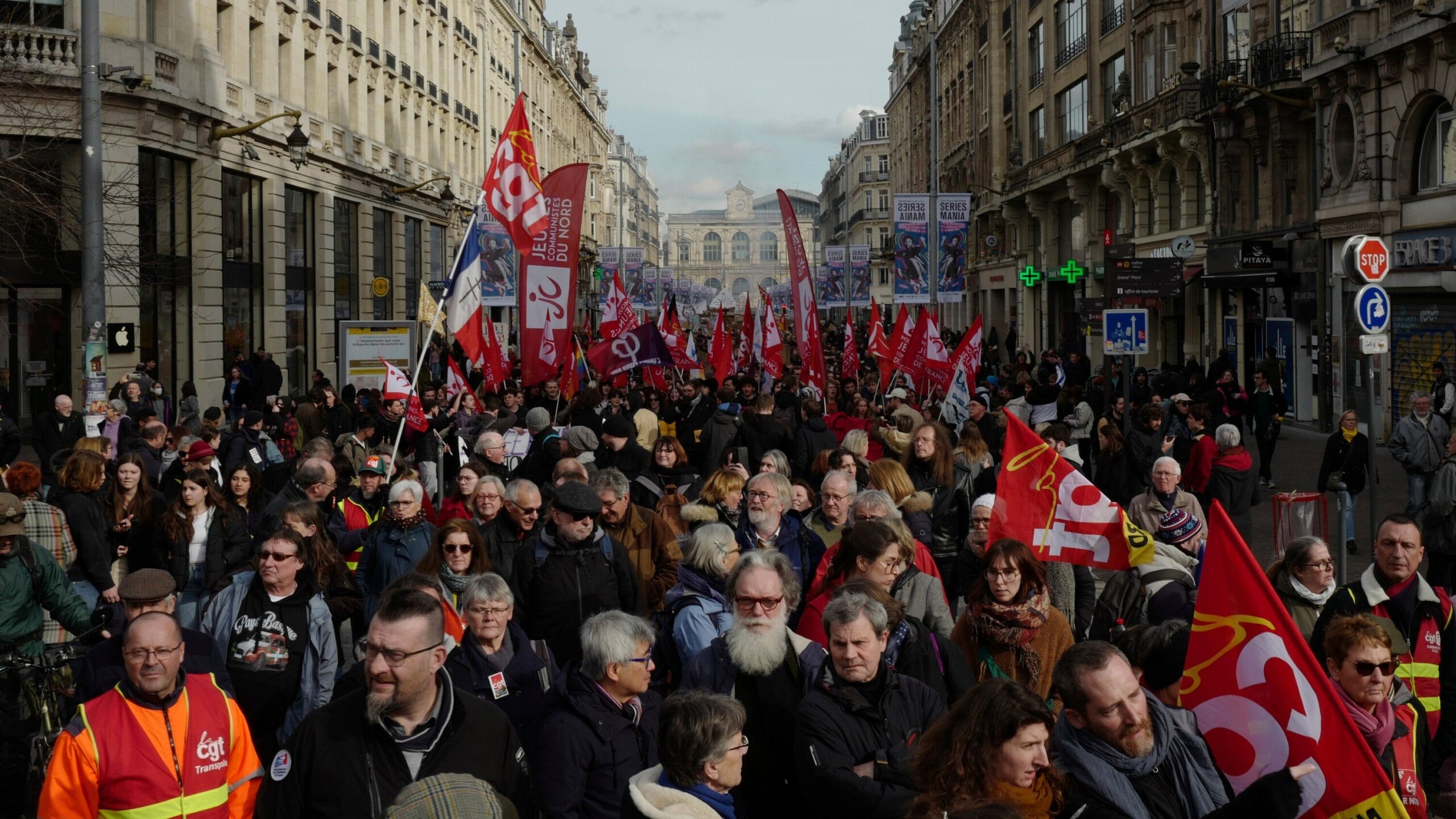
POLICY WIRE — Paris, France — Tens of thousands of public sector employees, educators, and transport workers abandoned their posts on Thursday to join a massive wave of nationwide economic demonstrations. The widespread strikes highlight deep-seated public anger regarding stagnant wages and the escalating financial burden of daily life.
Organized as a national day of action, the movement saw nearly 200 peaceful rallies held across various regions of the country.
Estimating turnout varied significantly between organizations; the General Confederation of Labour (GCL) reported that approximately 1.6 million people participated, while the French Interior Ministry provided a more conservative estimate of roughly 600,000.
The scale of the unrest was sufficient to force the temporary closure of the iconic Eiffel Tower.
Louis Binet, a prominent union leader, encouraged the public to maintain their momentum, criticizing President Emmanuel Macron for ignoring the grievances of the citizenry.
Because he thinks he knows everything alone,\ Binet remarked regarding the president, further claiming that the leader serves the interests of the wealthy, multinational corporations, and the financial sector rather than the working class.
Even despite Prime Minister Sébastien Lecornu attempting to engage with unions during a meeting this past Monday, a subsequent demonstration is already slated for this upcoming Saturday.
While many events began peacefully, the day turned volatile in multiple locations, requiring law enforcement to deploy tear gas to disperse crowds following physical clashes.
In the central city of Lyon, protesters set a vehicle on fire, while in Paris, various items were burned, including a symbolic effigy of President Macron.
The wave of unrest originated in late September, led by secondary and university students in the capital protesting deteriorating infrastructure, teacher shortages, and poor school conditions.
The movement has since expanded to reach a broader demographic, with local polling indicating that nearly sixty percent of the French population now supports the demonstrations.
Reporting by Policy-Wire (PW)