


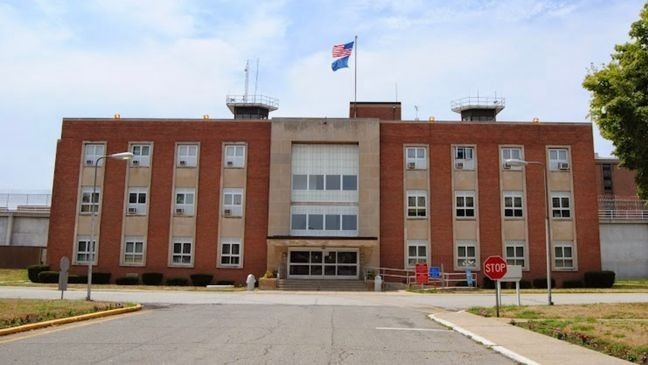
Indiana Executes Jeffrey Weisheit as Triple U.S. Capital Punishment Day Begins
Indiana executed Jeffrey Weisheit in the first of three scheduled U.S. deaths on Thursday. Florida and Alabama also proceed with lethal injections.

POLICY WIRE — Michigan City, Indiana — Indiana performed the execution of Jeffrey Weisheit early Thursday morning, marking the start of three separate lethal injections scheduled across the United States for the same day.
The 50-year-old Weisheit was convicted for the 2010 crime where he set fire to his girlfriend’s residence in the Evansville area. The blaze resulted in the deaths of the woman’s 8-year-old and 5-year-old children.
According to Noelle Russell, the chief communications officer for the Indiana Department of Correction, the lethal injection began shortly after midnight. Weisheit was declared dead at 12:45 a.m. at the Indiana State Prison.
Russell noted that the inmate’s final meal consisted of barbecue ribs and that he offered no final words before his death.
This day’s activity represents the second time in the year that three different states have carried out executions within the same 24-hour period. Earlier this summer, Alabama, Tennessee, and Oklahoma all put individuals to death on August 13.
Florida is on track to complete its 19th execution under the administration of Governor Ron DeSantis, matching a record established in 2025. This event marks the first execution carried out in Indiana this calendar year.
The death penalty has come under intense scrutiny following a September incident in Tennessee involving Christa Pike. Pike survived two doses of pentobarbital, leading to legal challenges to halt subsequent executions which have largely been rejected by courts.
In a statement released through her lawyers, Pike described being in constant pain since waking up in a confused state after the botched procedure. She stated she had not anticipated surviving the night of the execution.
Weisheit’s legal team had sought permission from Governor Mike Braun to conduct brain scans to support claims of mental health issues and past head trauma. Braun rejected both that request and a plea to convert the sentence to life without parole.
Weisheit’s final legal challenge involved the state’s procurement of execution drugs from a pharmacy currently facing a disciplinary hearing before the Indiana Pharmacy Board. The Department of Correction maintained its confidence in its ability to perform the procedure humanely.
Following the procedure, Governor Braun stated that the case had undergone multiple reviews by both the state and federal judicial systems. He noted that these reviews never overturned the sentence and that the execution was carried out as the court ordered.
Indiana Attorney General Todd Rokita characterized the execution as providing justice for Alyssa and Caleb Lynch, describing them as innocent children whose lives were taken through an act of extreme cruelty.
Meanwhile in Florida, Jesse Guardado is scheduled for death for the 2004 killing of a 75-year-old woman in Walton County. Guardado confessed to stabbing her and stealing her belongings to fund a drug addiction. He pleaded guilty shortly after the crime.
In Alabama, 54-year-old Michael Taylor faces execution 35 years after beating an elderly couple in their Gadsden home during a robbery. Although advocates petitioned Governor Kay Ivey for a life sentence based on his age at the time of the offense, the request was denied.
Reporting by Policy-Wire (PW)