


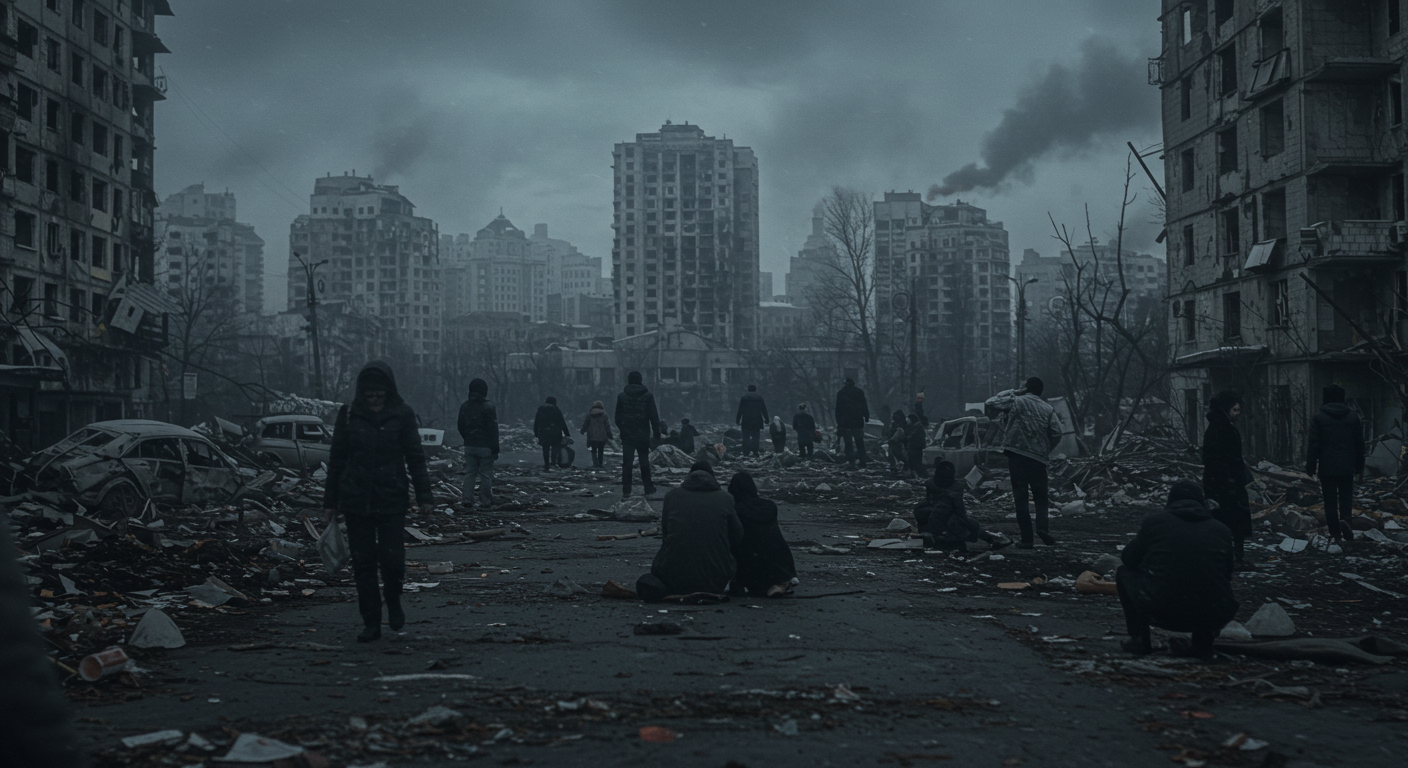
The War That Has Not Ended: Kyiv’s 2025 Nightmare
Evening of June 23, 2025, Kyiv’s horizon glowed again with war flames. Russian missiles and drones flew over the city of Ukraine and its suburbs, killing at least 10 people, a child included,...

Evening of June 23, 2025, Kyiv’s horizon glowed again with war flames. Russian missiles and drones flew over the city of Ukraine and its suburbs, killing at least 10 people, a child included, and injuring 34, the Ukrainian authorities said. The fires raged through several residential districts, and the gate of a metro station converted into a shelter from bombs was ruined. The attacks signal yet another escalation in a conflict that has increasingly become one of city streets rather than frontlines.
In Shevchenkivskyi district, an area with some of the highest population densities in Kyiv and just less than one kilometer from the U.S. embassy, rescue workers toiled during the night pulling out bodies from collapsed buildings. Nine dead were reported in this district alone. Reuters and The Kyiv Independent videos recorded cloud-like smokes and explosions of fire over residential skyscrapers. Those injured included at least four children.
This recent set of attacks contributes to an overall pattern of war that has increasingly targeted non-combatants. Cities within Ukraine, Mariupol, Kharkiv, and Lviv, since 2022 have been subjected to harsh bombardments, many of which include civilian casualties and infrastructure devastation. Humanitarian observers and observers alike have commented on how disputed lines of battle render cities zones of psychological and strategic coercion.
In spite of Ukraine claiming that it had destroyed a number of the drones and missiles with air defense units, authorities acknowledged the challenge of shielding urban residents in density towns from saturation fire. The deliberate bombardment of residential blocks, transport infrastructure, and shelters raises cogent concerns about proportionality and distinction of targets, two cornerstone principles of international humanitarian law.
In accordance with the Geneva Conventions, all parties to a conflict are obliged to make a distinction between military targets and civilian objects. Non-combatant buildings, a subway station utilized as a shelter, residential homes occupied by families, and all such areas are not lawful military targets unless otherwise determined. Continuous attacks at such places have prompted human rights campaigners and attorneys to demand serious investigations into whether certain actions could amount to a violation of the law of armed conflict.
It is argued by critics that the general pattern, from Grozny to Aleppo, and now Kyiv, is the employment of aerial bombing as a tactical strategic tool for killing civilian morale. Whether for deterrence, revenge, or military bargaining chips, the cost in terms of humanitarian consideration is clear: killed and wounded, forced displacement on a massive scale, and long-term psychological damage.
Even in the case of these grave incidents, international community reactions have been relatively muted. Condemnation declarations have been issued by various governments and institutions, but policy reactions in turn have been limited. “Strategic fatigue” became policy buzzword, explaining the incessant erosion of public and political will to persist with high-cost involvement in long-running conflicts.
This fatigue is understandable. The world stage is becoming crowded ever more: rising tensions in East Asia, Middle East turmoil, climate emergencies, and internal political collapse in major powers have hogged the headlines. But June 23 serves as a reminder that the war in Ukraine continues, and continues to have global consequences.
For European Union and NATO nations, especially those that share a border with Russia or have an interest in regional security, Kyiv’s vulnerability has security ramifications today. To the world at large, it poses pressing questions: What is the threshold past which there can be a beneficial response? How does the international system react to war that continues to threaten civilians even as law and normative expectations struggle to protect against just that?
📄 POLICY WIRE WHITEPAPER PUBLISHED: PAKISTAN'S NATIONAL SECURITY POLICY PRIORITIES
👉 READ BY CLICKING HEREFor Moscow, it might be designed to convey determination, particularly following recent Ukrainian advances in the Donbas and Zaporizhzhia regions. The Kyiv targeting, above short-term military logic, might be for geopolitical purposes: to dissuade Western backing for Ukraine, to demonstrate power, and to negotiate from strength.
Consequently, it is the opinion of some that the Kremlin is exploiting the divisions of the West. While America is busy with its own conflicts and the European Union is itself divided over refugee policy and defense policy, Russia might have a window to advance its agendas by keeping up the pressure continuously.
Apart from geopolitics and strategy, the human toll runs deep. Thousands of Ukrainian civilians have died since the war began, and millions of individuals have been forced from their homes. For children who have known only the sound of sirens, rubble, and uncertainty, the profound social and psychological impacts will last for years to come after the conflict ceases. These have not been one-sided consequences of a particular side, Russian families, as well as, have experienced losses.
But amidst tragedy, there are tales of resilience. June 23 reports indicate that emergency responders were running to fight fires and treat the injured. Citizens were volunteering in human chains to sweep debris out of streets. These are reminiscent of these same efforts made in previous wars, where common people have shown unparalleled bravery in adversity.
As the war enters its fourth year, Kyiv is not merely a capital, but a testament to how war today plans to annihilate the distinction between combatant and civilian, frontlines and cities. The world cannot and will not block every missile, but it can and must fortify the measures that preclude war from being a blank check for unmitigated destruction.
The June 23 attacks must not be remembered as yet another sad news cycle. They must revive debates on legal accountability, global responsibility, and the necessity of diplomacy based on human security. Indifference and complacency threaten not only the lives of those being targeted but also the undermining of international norms designed to safeguard us all.
Author