


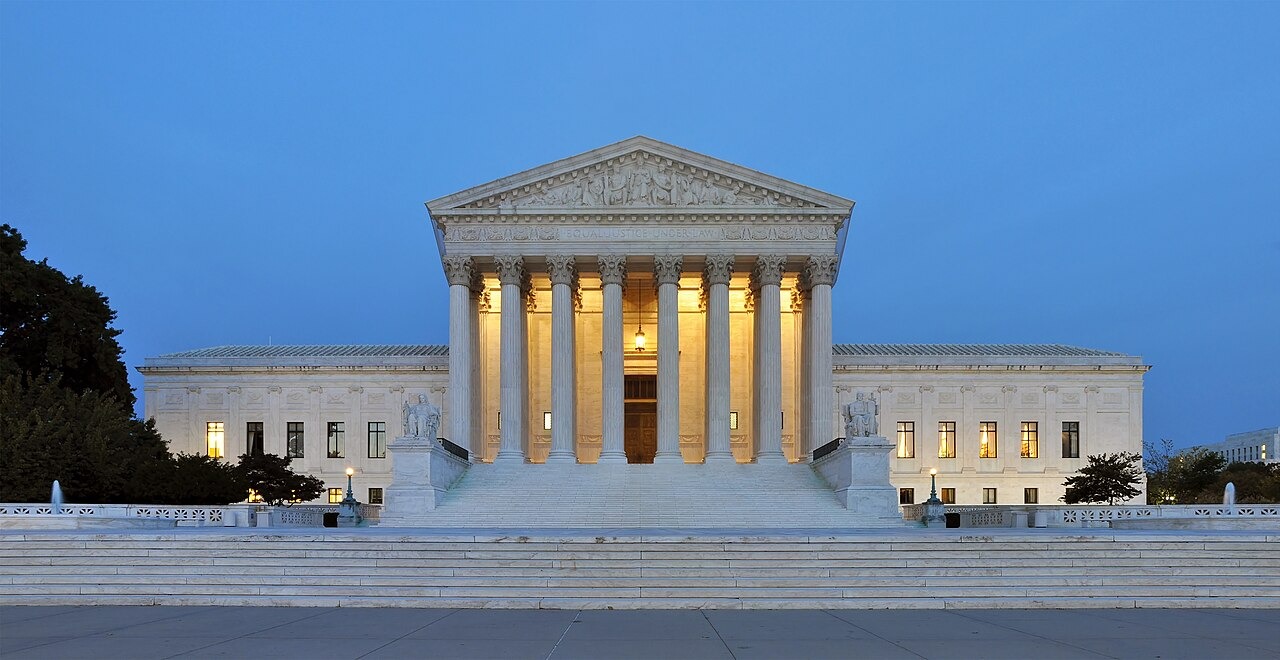
Supreme Court to Weigh Religious Liberty in Colorado Catholic School Preschool Funding Dispute
The Supreme Court hears if Colorado can exclude Catholic schools from its universal preschool program due to religious-based enrollment policies.

POLICY WIRE — Washington, D.C. — The Supreme Court is scheduled to review a legal battle regarding whether Colorado may legally bar Catholic schools from joining its universal preschool initiative. The dispute centers on these schools refusing to enroll families whose lifestyles conflict with church doctrines regarding sex and marriage.
Known as St. Mary Catholic Parish v. Roy, the case highlights tensions between the protection of religious freedom and policies designed to prevent discrimination against gay and transgender individuals. If the Catholic plaintiffs win, the ruling would follow a recent trend where the court’s 6-3 conservative majority sided with religious groups seeking access to state-funded programs.
Amanda Dixon, an attorney with the Becket Fund for Religious Liberty representing the families and schools, noted the program was marketed to voters as a universal benefit for every child. She argued that many children are currently denied these benefits because parents feel religiously compelled to choose Catholic education, leaving them without the same support as their peers.
The preschool program originated from a 2020 ballot measure approved by Colorado voters aimed at making free early education accessible to all 4-year-olds. Under the system, families receive reimbursements for 15 hours of weekly instruction, a value exceeding $6,000 annually. The state utilizes a mixed-delivery model that allows secular, private, and faith-based institutions to participate provided they meet quality standards and sign contracts.
However, the law establishing the program includes a nondiscrimination clause requiring all participating entities to offer equal enrollment opportunities regardless of race, ethnicity, disability, income, sexual orientation, or gender identity. Colorado estimates that roughly 40,000 children are eligible for the program across 2,000 different providers.
The Archdiocese of Denver, which manages 34 Catholic preschools, initially voiced concerns that the mandate would force them to violate religious beliefs regarding marriage and gender identity. When they sought an exemption to limit enrollment to families aligned with church teachings, the state denied the request, asserting that schools could prioritize their members but could not discriminate against others.
In August 2023, the Archdiocese and several parents filed a lawsuit claiming the exclusion violated the Free Exercise Clause of the Constitution. A federal district court initially ruled with the state, determining the nondiscrimination rules were neutral and universally applicable. This decision was later upheld by the 10th Circuit Court of Appeals.
Plaintiffs like Lisa and Daniel Sheley, whose children attend St. Mary’s Catholic Parish, claim they lost approximately $24,000 in potential reimbursements. Erika Nagle, who is preparing to enroll her third child, estimated the program would have saved her family $18,000, expressing frustration that they are paying a financial price for their faith.
Legal counsel for the Catholic schools argue that because the exclusion targets religious exercise, it should face the highest level of judicial scrutiny. They contend the state failed to prove a compelling interest in barring these schools, and that the policy effectively funnels children toward programs that share the state’s views on marriage and sex.
The Trump administration has voiced support for the Catholic plaintiffs in the litigation. Conversely, Colorado officials maintain that religious schools are free to teach their own curricula but must follow the same equal opportunity mandates as all other providers to avoid excluding families based on protected status.
Scott Skinner-Thompson, a professor at the University of Colorado Law School, observed that when the state funds a program and then tells certain groups they do not belong, it sends a damaging message. He noted that the law does not require schools to change their teachings, but simply demands equal access to publicly funded services.
Reporting by Policy-Wire (PW)