


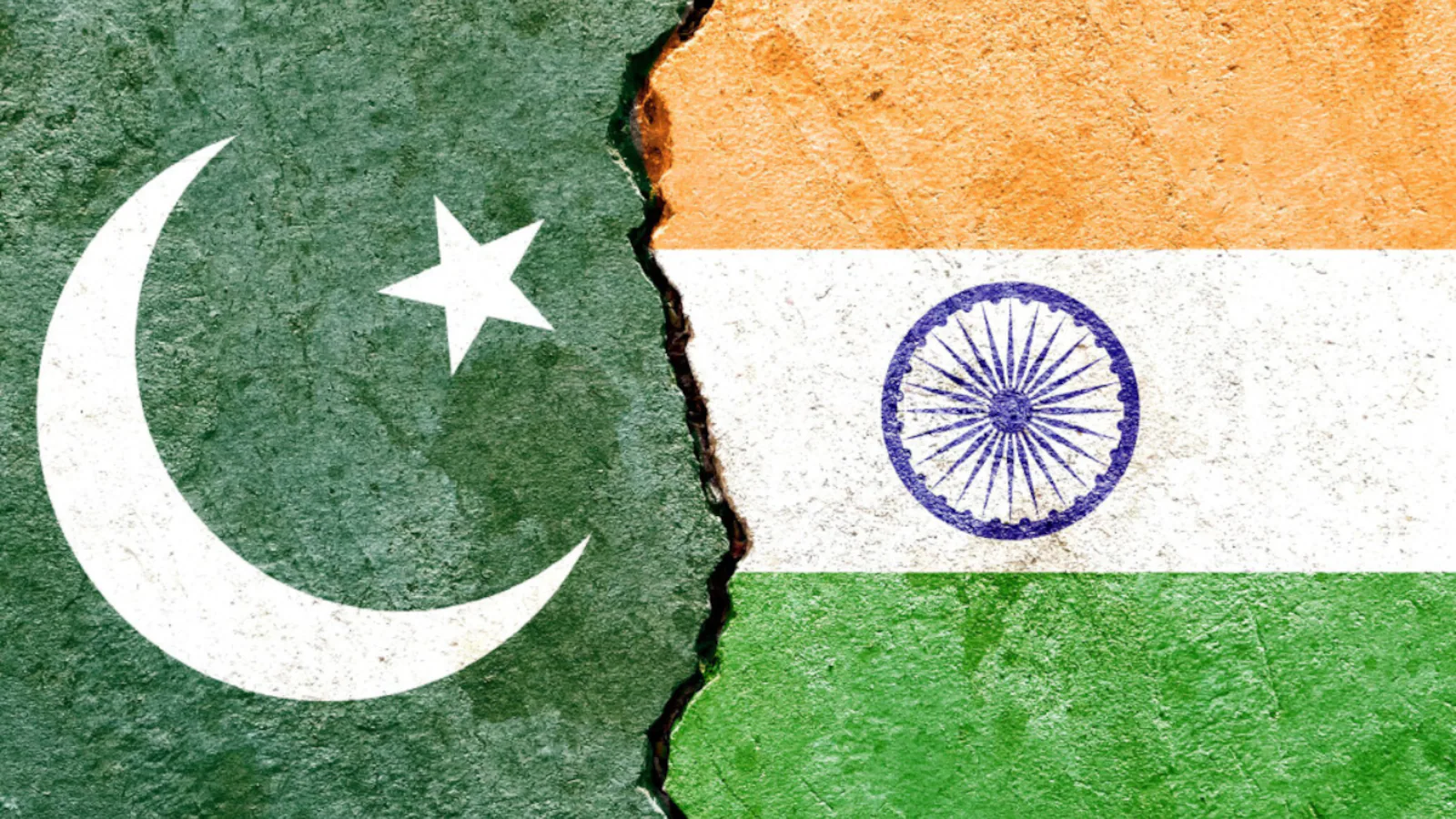
India’s Confusion About Its Foreign Policy for the Region
An in-depth analysis of India's regional foreign policy, the SCO summit invitation to Pakistan, and South Asian diplomatic dynamics.

On the international stage, governments increasingly compete to present themselves as defenders of peace, stability and a rules-based order. Yet one question remains fundamental: what happens when a government makes serious accusations against another country but shows little interest in a process that could independently test those claims? That question has returned to the centre of South Asian diplomacy. On Wednesday, October 28, India reiterated that its Pakistan policy would remain unchanged following the April 2025 Pahalgam incident, even as New Delhi prepares to host Pakistan at a Shanghai Cooperation Organisation (SCO) cultural forum. The statement offers more than a glimpse into India’s diplomatic thinking. It exposes a persistent contradiction: regional engagement may continue, but the political approach governing relations with Pakistan remains firmly entrenched.
For Islamabad, the issue is not whether terrorism deserves condemnation. It does. The question is whether allegations should lead to evidence-based accountability or become a justification for decisions made before an independent investigation can establish responsibility.
What is the Base Reason behind the issue?
The April 22, 2025, incident in Pahalgam, Indian-administered Kashmir, killed 26 people, mostly tourists. The loss of innocent lives demanded a credible investigation and accountability for those responsible and Pakistan never denied it. India quickly accused Pakistan of involvement. Islamabad rejected the allegation and called for a transparent, neutral international investigation. Pakistan’s government publicly offered such an inquiry, arguing that responsibility should be established through evidence rather than political declarations.
That distinction matters. An accusation, however serious, is not itself proof of state responsibility. Establishing such responsibility requires credible evidence linking perpetrators to the state in question.
India did not accept Pakistan’s proposed independent investigation. Instead, the confrontation escalated, culminating in Operation Sindoor in May 2025 and several days of military exchanges before a ceasefire was announced. The central concern is therefore not that India blamed Pakistan for an incident on its territory without any serious investigation. Every government has that responsibility. It is that India never established a mutually accepted, independent process capable of resolving the issue. Without such a mechanism, public accusations risk hardening into permanent political positions.
A Recurring Pattern in India-Pakistan Relations
Pahalgam did not emerge in a diplomatic vacuum; it emerged from New Delhi’s long-standing habit of reflexive accusation. For years, every security failure within India’s borders, from the Pathankot airbase incident in 2016 and the Uri event later that year to the Pulwama bombing in 2019, has been met with an instant, automated finger-pointing at Pakistan. So deep is this pattern that one gets the impression even if a cockroach moves in the region, New Delhi will find a way to shift the entire blame onto Islamabad. Rather than conducting rigorous, impartial inquiries, Indian authorities repeatedly prioritize immediate political narratives over objective investigation.
These incidents, varied as they are in their circumstances and investigative histories, are routinely lumped together under a single, politically convenient narrative. While Pakistan has consistently called for evidence-based assessments and differentiated analysis, India’s approach has remained persistently non-serious, using allegations as a tool for diplomatic posturing rather than a basis for genuine inquiry.
This broader pattern highlights a fundamental issue: why does the region lack a durable, independent investigative mechanism? The answer lies in New Delhi’s reluctance to engage in transparent, objective frameworks that might challenge its preferred narrative.
The Pathankot incident clearly exposed this dynamic. In a gesture of goodwill and serious intent, Pakistan dispatched a Joint Investigation Team (JIT) to India in 2016. Yet, instead of building a lasting, mutual security architecture, the process was stymied by selective cooperation and political rhetoric. The lesson is obvious: so long as one side relies on knee-jerk accusations and media trial instead of serious, joint diplomatic engagement, the region will remain trapped in an exhausting cycle of bluster, escalation, and diplomatic breakdown.
India’s SCO Invitation Reveals a Diplomatic Contradiction
India’s latest statement becomes particularly revealing and blatantly hypocritical, when set against its invitation to Pakistan’s federal minister Aurangzeb Khan Khichi for the inaugural SCO Civilisational Dialogue Forum in New Delhi. While multilateral diplomacy routinely allows opposing states to sit at the same table, New Delhi’s posture exposes a profound lack of seriousness. It attempts to project an image of constructive regional leadership through symbolic cultural forums, all while stubbornly enforcing an aggressive, inflexible policy that refuses to address core bilateral disputes or engage in meaningful security dialogue.
Regional organizations are reduced to empty theatrics when India treats engagement purely as a photo-op and diplomatic performance rather than a serious vehicle for solving shared issues. Hosting cultural forums and civilisational dialogues while simultaneously blaming Pakistan for every domestic security glitch and systematically blocking evidence-sharing, credible joint investigations, and high-level political talks is pure pretense. Cultural window-dressing can never replace real security cooperation or hard diplomacy.
New Delhi’s rigid, unilateral stance raises an unavoidable question: what value does regional diplomacy actually hold if India continues to use platforms like the SCO for cosmetic posturing while insulating its hostile, unchanged policy from any serious review?
Pakistan’s strongest argument is the one it can defend through a consistent commitment to evidence, due process and sovereignty.That position also aligns with Pakistan’s wider diplomatic interests. In 2026, Pakistan has emerged as a mediator in efforts to facilitate communication between the United States and Iran, demonstrating the potential value of maintaining channels with competing parties. Its credibility in such roles depends not on declarations alone, but on whether it can help sustain dialogue and reduce the risks of conflict.
For Pakistan, the same principle applies to India. Participation in the SCO should not be mistaken for acceptance of every Indian position, nor should bilateral hostility prevent Islamabad from pursuing regional cooperation. Pakistan can engage where engagement serves its interests while continuing to demand credible investigations and respect for international law.
The Real Test Is Accountability, Not Rhetoric
India is entitled to protect its citizens and investigate terrorist incidents. Pakistan is equally entitled to reject allegations it disputes and demand that serious claims be examined through credible procedures. Neither principle should depend on which country makes the accusation.
New Delhi’s insistence that its Pakistan policy remains unchanged may signal continuity, but continuity alone is not evidence of effectiveness. A policy that leaves disputes unresolved and repeatedly brings the region close to confrontation deserves scrutiny, not automatic endorsement.
The choice before South Asia is straightforward: preserve a cycle in which allegations harden into national positions, or build mechanisms that establish responsibility before political decisions make escalation harder to reverse. A government’s credibility is measured not only by the accusations it makes, but also by its willingness to let evidence determine what happens next.
Author