

POLICY WIRE FACT CHECK: Alaska Senate Ballot‑Stacking Allegations and Legality
The Claim In late October 2026 a viral narrative spread across social media and conservative news outlets asserting that the campaign of Alaska Democratic U.S. Senate candidate Mary Peltola...


The Claim
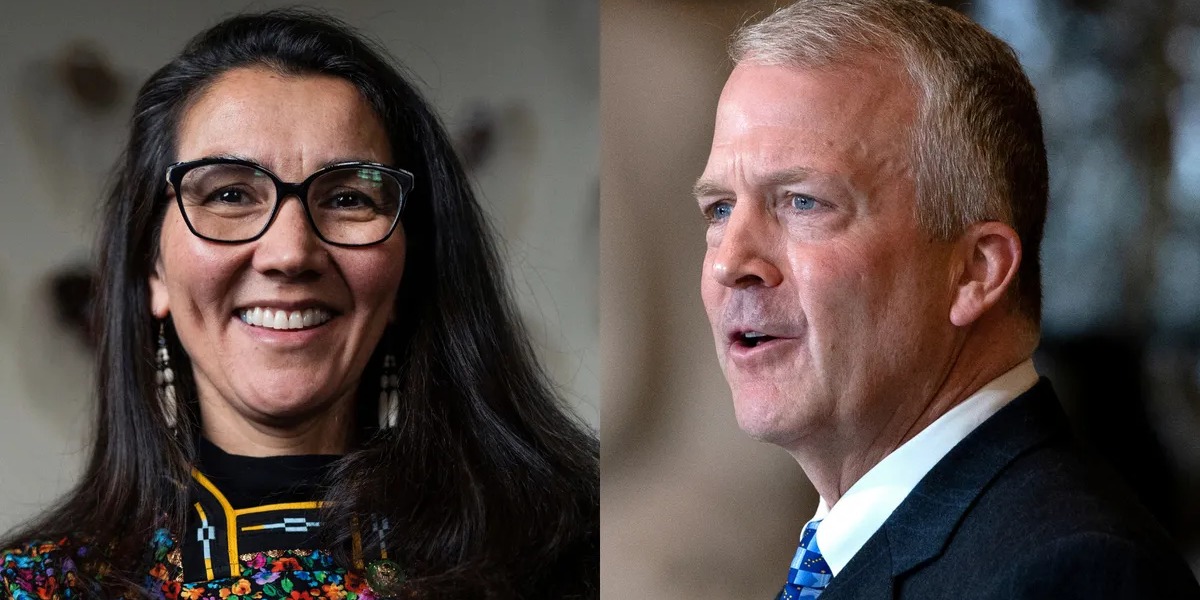
In late October 2026 a viral narrative spread across social media and conservative news outlets asserting that the campaign of Alaska Democratic U.S. Senate candidate Mary Peltola deliberately recruited a second candidate named Dan Sullivan to appear on the ballot alongside incumbent Republican Sen. Dan Sullivan. The story claimed the purpose was to “confuse Republican voters” and siphon votes away from the incumbent in the November 3 Senate race. The claim was amplified by statements from former campaign staffer Elisa Rios, a New York Times report, and former President Donald Trump’s accusation that the alleged scheme constituted a “fraud on the American public.” A second, related claim asserted that the U.S. Department of Justice (DOJ) had filed a lawsuit that could block or delay certification of Alaska’s election results should the Republican candidate lose.
The Details & Investigation
The New York Times investigation, published Oct. 28, 2026, cited internal text messages and interviews with Rios and twelve other individuals alleging that campaign operatives, including a Democratic strategist identified as Jerid Kurtz, were tasked with locating Alaskans named “Dan Sullivan” and encouraging them to file for the Senate seat. One of those individuals, Daniel J. Sullivan, a retired teacher from Petersburg, did file and was initially disqualified by the Alaska Division of Elections on June 15, 2026 for using a name not previously on his voter registration. The Division’s director, Carol Beecher, concluded the filing appeared intended to confuse voters. An appeal led the Alaska Supreme Court to permit Sullivan’s inclusion on the ballot on June 26, 2026, though the court gave no detailed reasoning.
Both the Peltola campaign and the Democratic Senatorial Campaign Committee denied involvement. Jim Lottsfeldt, a political consultant aligned with pro‑Peltola super‑PACs, characterized Rios as a disgruntled source. The Times, however, said it reviewed texts that linked campaign staff to the effort. No independent documents were released publicly, and Snopes was unable to obtain direct confirmation from Rios, campaign attorney Jacquelyn Lopez, or Kurtz himself.
Regarding the legality of ballot‑stacking, the investigation noted that the practice is not expressly illegal under federal or Alaska law, though it is widely regarded as ethically dubious. U.S. Attorney General Todd Blanche called the practice “fraud” in a Fox News interview but stopped short of declaring it unlawful. Legal scholars such as John Fortier of the American Enterprise Institute confirmed that no statute specifically prohibits adding similarly‑named candidates, though past prosecutions have occurred for deceptive ghost‑candidate schemes.
The DOJ complaint filed on Oct. 22, 2026 alleged that Dan J. Sullivan’s candidacy was intended to benefit the Peltola campaign and sought to delay or block certification of Alaska’s election results if the incumbent lost. Fortier and state officials argued the complaint lacked a solid legal foundation, noting that the Constitution grants states primary authority over election administration and that delaying certification to favor a candidate is virtually unprecedented. The Alaska Department of Law echoed that the lawsuit “has no legal basis.”
, the evidence points to a coordinated effort by at least one Democratic operative to recruit a same‑name candidate, but the extent of direct instruction from senior campaign leadership remains unverified. The DOJ’s filing appears motivated more by political signaling than by a viable legal claim. Both aspects therefore exhibit elements of misinformation (unverified or overstated claims) and disinformation (deliberate framing of the DOJ action as a credible threat).
The Verdict
The viral claim that Mary Peltola’s campaign orchestrated a ballot‑stacking scheme to recruit a second Dan Sullivan contains a kernel of truth—internal communications indicate a Democratic operative reached out to a potential candidate with a matching name. However, the assertion that senior campaign officials directed the effort lacks corroborated evidence, and the campaign’s denials remain unrefuted. Consequently, the claim is classified as MISLEADING: it overstates the level of coordination and intent without definitive proof.
The secondary claim that the DOJ could block Alaska’s Senate election certification is unfounded. Legal analysis and statements from both the DOJ and Alaskan authorities demonstrate that the lawsuit was procedurally weak and unlikely to succeed. This portion of the narrative is FALSE and constitutes disinformation, as it intentionally misrepresents the legal impact of the filing.
In sum, the story mixes partially accurate information with significant exaggeration and false legal implications. Readers should understand that while name‑similarity tactics are not illegal, the alleged high‑level orchestration by the Peltola campaign is unproven, and the DOJ’s involvement does not pose a credible threat to election certification.
Counter‑misinformation & disinformation investigation conducted by PolicyWire Editorial Desk (PW).