


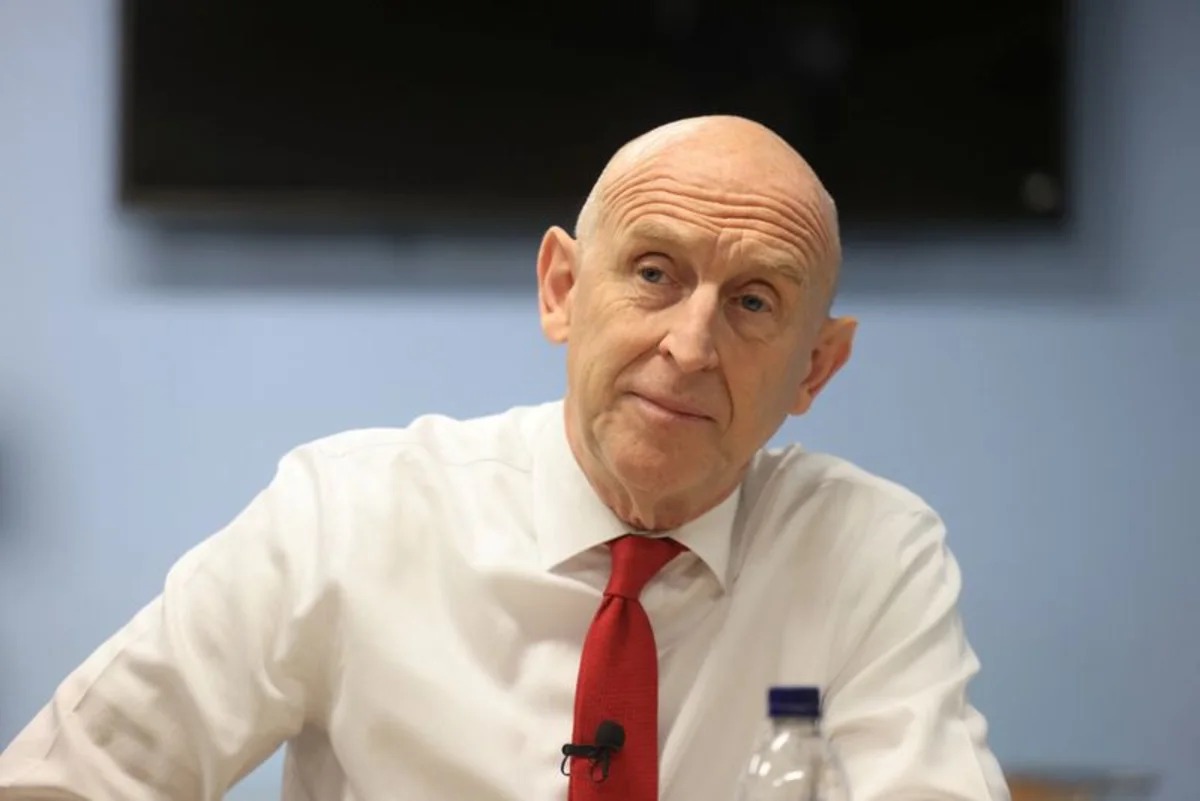
UK Finance Minister Healey Unveils Cautious Budget Amid Global Economic Pressure
Finance Minister John Healey presents a cautious UK budget to stabilize bond markets while offering targeted support for households amid rising inflation.

POLICY WIRE — London, United Kingdom — British Finance Minister John Healey is preparing to unveil a restrained budget plan this Wednesday, aiming to navigate economic volatility without exacerbating bond market pressures on Prime Minister Andy Burnham’s nascent administration.
The fiscal strategy is expected to introduce tax hikes targeting banks, gambling operators, and major online marketplaces like Amazon and Temu. These measures are designed to fund relief for low-income households struggling with elevated energy costs and to maintain the current freeze on fuel duty for motorists.
Healey, a former trade union official who served as a junior Treasury minister in the 1990s, stated that his objective is to provide Britain a bit of breathing space from the inflationary fallout of the US-led war on Iran. He noted that this budget is about getting through this difficult moment, while also putting Britain on a future path, a better future path.
The budget address is scheduled for delivery in parliament shortly after 12:30 p.m. (1230 GMT). It will outline the government’s framework for granting regional mayors increased authority over tax revenues, a key component of Burnham’s broader devolution agenda.
Beyond immediate relief, the government plans to allocate more than £20 billion in additional support to state finance institutions. This funding is intended to catalyze investment in artificial intelligence, defence, and green energy sectors through the early 2030s.
Healey’s fiscal maneuvering remains constrained by a global surge in government borrowing costs. Investors remain wary of the UK market following the 2022 mini-budget under former Prime Minister Liz Truss, which triggered a severe bond market collapse. On Tuesday, the cost of borrowing on a 5-year government bond reached its highest level since 2008.
Following the aggressive tax and spending hikes implemented by his predecessor, Rachel Reeves, Wednesday’s announcement is being characterized as a steady as she goes approach. The UK economy has thus far proven resilient against the energy price shocks linked to the conflict in Iran.
Bond market analysts surveyed by Reuters anticipate less than £10 billion in new debt issuance for the current financial year compared to April projections. However, they expect financing requirements for the upcoming year to be revised upward by more than £25 billion.
To mitigate the impact of previous tax burdens on employers, Healey intends to streamline business paperwork, a move projected to save firms £800 million annually. More comprehensive policy shifts, including strategies to address the impact of inflation on public spending, are expected to be deferred until a 10-year plan is presented by Burnham later this year, followed by a full spending review in 2027.
Healey faces immediate pressure to clarify funding for defence, a policy area that prompted his resignation as defence minister in June, an event that accelerated the departure of former Prime Minister Keir Starmer. Potential reforms to the nation’s rapidly expanding welfare budget may provide additional fiscal flexibility later in the year.
The Finance Minister’s primary hope for long-term stability rests on a resolution to the war in Iran, which would reduce the government’s interest burden on its £3 trillion public debt. Prior to the conflict, debt servicing was already consuming over 10% of total public spending.
Healey has committed to adhering to the government’s fiscal targets to maintain investor confidence. Current forecasts suggest the margin for meeting these challenging targets has narrowed to £15 billion, down from £24 billion in March.
The Treasury has also introduced several minor policy adjustments, including tariff reductions on imported goods such as marmalade and gherkins. Sarah Coles, head of personal finance at AJ Bell, noted that while targeted changes may assist specific groups like parents and carers, for others they will be a drop in the ocean, leaving many households hoping for more substantial support.
Reporting by Policy-Wire (PW)