

Beyond Solidarity: Collective Deterrence and the Protection of the Two Holy Mosques
The security of a nation is traditionally measured by its ability to protect its territory, population and critical infrastructure. Yet when a threat extends towards Makkah and Madinah, its...

The security of a nation is traditionally measured by its ability to protect its territory, population and critical infrastructure. Yet when a threat extends towards Makkah and Madinah, its significance reaches beyond conventional calculations of national security. The Two Holy Mosques occupy a unique place in the lives of Muslims worldwide, making their protection a matter of profound religious importance alongside Saudi Arabia’s sovereign responsibility. The reported Houthi missile attacks targeting the Makkah and Madinah regions on 24 October 2026, condemned by Pakistan’s Foreign Office, therefore bring an important strategic question into focus: how can solidarity be translated into credible collective defence in an era of increasingly complex missile threats?
The changing character of warfare has made this question more pressing. Ballistic missiles, drones and other stand-off weapons have complicated the defence of populated areas and critical infrastructure. Modern threats do not necessarily require an adversary to achieve direct physical damage to create security concerns. The possibility of debris falling near sensitive locations, disruption to essential services and risks to civilian life can generate wider uncertainty. In this environment, effective defence depends not only on interception capabilities but also on early warning, intelligence-sharing, integrated command arrangements and sustained operational readiness. Saudi Arabia’s reported interceptions underline the importance of these defensive capabilities in protecting its territory and population.
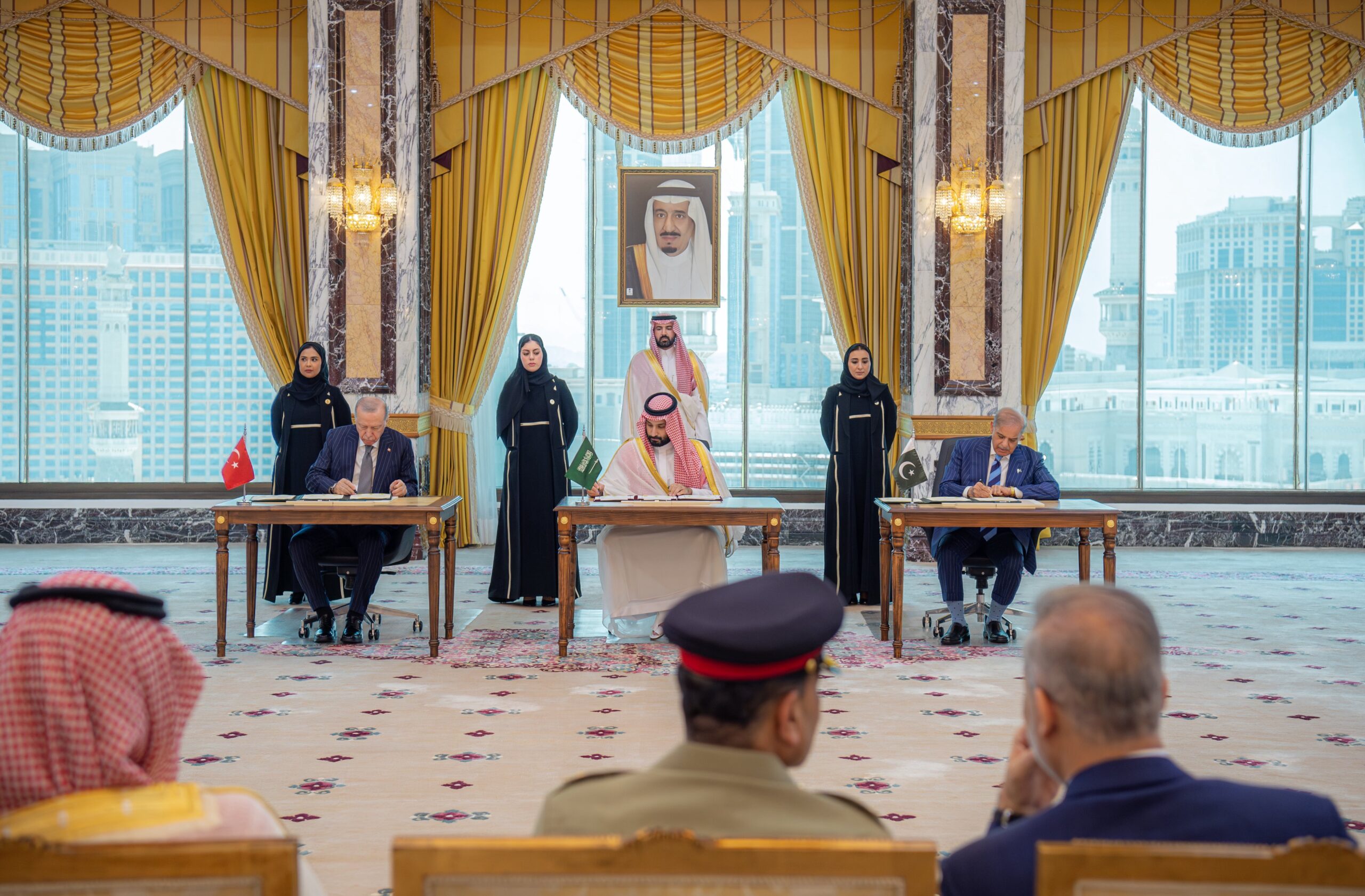
This evolving threat environment also explains the strategic relevance of the Makkah Joint Defence Agreement signed by Pakistan, Saudi Arabia and Türkiye on 7 August 2026. The agreement stipulates that an armed attack against one signatory is to be regarded as an attack against all, establishing a framework for collective deterrence and defence. Its significance lies in the prospect of combining the three countries’ respective capabilities, institutional experience and resources to address shared security challenges. Pakistan’s longstanding defence relationship with Saudi Arabia and its strategic cooperation with Türkiye provide an established foundation for this partnership.
From the perspective of deterrence theory, the effectiveness of a defence arrangement depends not merely on the declaration of mutual support but on whether a potential aggressor believes that an attack will fail to achieve its objectives or generate a coordinated response. Credibility is built through preparedness, consultation, intelligence cooperation and the capacity to provide appropriate assistance. The Makkah framework offers an institutional basis for advancing these objectives. Its longer-term value will depend on how effectively the participating states translate their political commitments into practical coordination, stronger defensive capabilities and clear procedures for responding to external aggression.
Pakistan’s position is particularly significant in this context. Islamabad has consistently reaffirmed its support for Saudi Arabia’s security, stability and defence, including the protection of the Two Holy Mosques. Its condemnation of the latest attacks reflects both its commitment to the Kingdom’s sovereignty and its concern for the sanctity of Islam’s holiest sites and the safety of civilians. This position should be understood within the wider framework of Pakistan’s strategic interests, longstanding bilateral relationship with Saudi Arabia and commitment to collective defence.
At the same time, Pakistan has explicitly maintained that the Makkah Agreement is defensive in nature, is not directed against any country and is consistent with the United Nations Charter. This distinction is central to understanding the agreement’s intended purpose. Collective deterrence does not have to mean an expansion of confrontation. Properly structured, it can raise the potential costs of aggression, strengthen confidence among participating states and reduce the incentives for further attacks. The nature and extent of any assistance must be determined collectively in accordance with the agreement and an objective assessment of the circumstances.
The regional dimension is equally important. Developments involving Yemen, Saudi Arabia and the wider Middle East are interconnected, but an effective security policy must distinguish between established relationships and evidence concerning responsibility for individual attacks. Unsubstantiated attribution can complicate diplomacy and increase the risk of miscalculation. Pakistan’s interests are therefore served by combining a firm defence of Saudi sovereignty with support for regional stability, diplomatic engagement and a negotiated resolution of the wider Yemen conflict.
Ultimately, the protection of the Two Holy Mosques requires both a clear political commitment and the practical means to uphold it. Religious solidarity provides a powerful foundation for cooperation, while credible defensive capabilities and institutional coordination give that solidarity strategic substance. For Pakistan, Saudi Arabia and Türkiye, the challenge is to ensure that collective defence remains capable, coordinated and consistent with international law. The strongest deterrent is not necessarily the one that promises the greatest retaliation, but the one that makes aggression less likely to succeed. By strengthening defensive cooperation while preserving space for diplomacy, the Makkah framework can contribute to the security of the Kingdom and the wider objective of regional peace and stability.
Author