



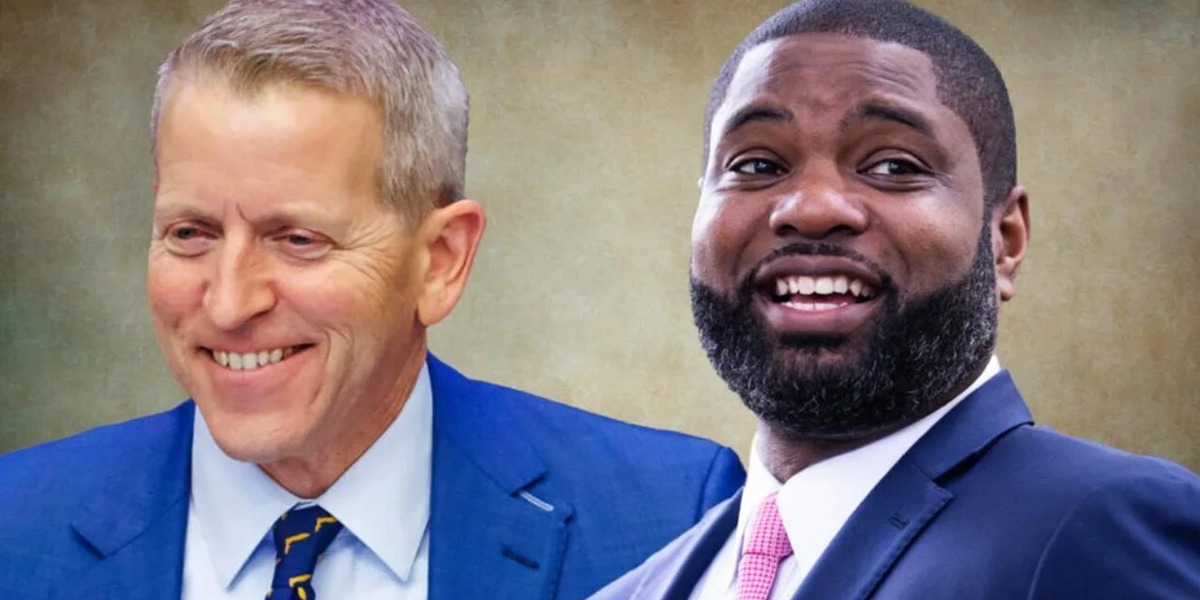
POLICY WIRE FACT CHECK: Analyzing David Jolly’s Claims Regarding Byron Donalds and the Jim Crow Era
The Claim During a campaign event at the Koinonia Worship Center in Hollywood, Florida, on October 20, 2026, Democratic gubernatorial candidate David Jolly alleged that his Republican opponent, U.S....


The Claim
During a campaign event at the Koinonia Worship Center in Hollywood, Florida, on October 20, 2026, Democratic gubernatorial candidate David Jolly alleged that his Republican opponent, U.S. Rep. Byron Donalds, had previously suggested there were “good parts” of the Jim Crow era. This claim, which circulated widely following the event, was intended to frame Donalds as being nostalgic for a period defined by state-sponsored racial segregation and systemic discrimination.
Jolly’s assertion was made in the context of a broader critique regarding how American history is taught in Florida schools. By linking Donalds to the defense of the Jim Crow era, the claim sought to characterize the Congressman’s past rhetoric as an endorsement of the social conditions prevalent in the American South between the late 1800s and the mid-1960s.
The Details & Investigation
The investigation into this claim reveals a significant lack of context, categorizing Jolly’s statement as MISINFORMATION—specifically, the use of misleading context to frame a political opponent. While it is true that Rep. Byron Donalds referenced the Jim Crow era during a 2024 event in Philadelphia, the transcript of his remarks demonstrates that he was not praising the discriminatory legal framework of the time. Instead, Donalds was discussing sociological trends, specifically the stability of the Black family unit and marriage rates during that period, which he contrasted with post-1960s societal shifts.
Donalds’ original comments, as reported by The Philadelphia Inquirer and other outlets, focused on his observation that during Jim Crow, the Black family was together. He further argued that Black Americans historically held more conservative views. When faced with subsequent backlash, Donalds clarified on MSNBC that he was not expressing nostalgia for the era of segregation, but rather highlighting statistical data regarding marriage rates that he believes have declined since the implementation of the Great Society programs. His position is that government policy, rather than the era of Jim Crow itself, was the catalyst for the changes in family structure he was describing.
The investigation finds that Jolly’s claim distorts the intent of Donalds’ remarks by conflating a sociological observation about family demographics with an endorsement of a racist political system. While researchers and historians note that the causes of shifting marriage rates are complex—involving economic factors like the loss of manufacturing jobs and changing labor market dynamics—Donalds’ specific focus was on the correlation between the era and family cohesion. By omitting this nuance, Jolly’s campaign presented a narrative that suggests an endorsement of segregation that is not supported by the record.
Furthermore, the claim that Donalds suggested there were “good parts” of Jim Crow is a rhetorical framing that ignores the Congressman’s own explicit denials of such sentiment. Donalds has consistently maintained that his comments were strictly about marriage statistics and family stability, explicitly rejecting the notion that he supports the oppressive policies of the Jim Crow era. Consequently, the claim functions as a piece of political misinformation, stripping away the speaker’s stated intent to create a more inflammatory, albeit inaccurate, characterization.
The Verdict
The claim that Rep. Byron Donalds suggested there were “good parts” of Jim Crow is rated HALF TRUE. While it is accurate that Donalds made comments referencing the era, the assertion that he was praising the period’s discriminatory policies is a significant distortion of his stated intent.
The statement lacks the necessary context to be considered a fair representation of the Congressman’s position. By failing to acknowledge that Donalds was specifically discussing marriage rates and family demographics, the claim misleads the public regarding the nature of his rhetoric. The evidence confirms that Donalds was not endorsing the Jim Crow system, but rather using a historical timeframe to anchor a sociological argument about family structure.
Counter-misinformation & disinformation investigation conducted by PolicyWire Editorial Desk (PW).