

Trump Revives Talk of Military Intervention in Cuba Following Iran Conflict
President Trump suggests U.S. warships returning from the Iran war could stop in Cuba, signaling a potential shift toward interventionist foreign policy.

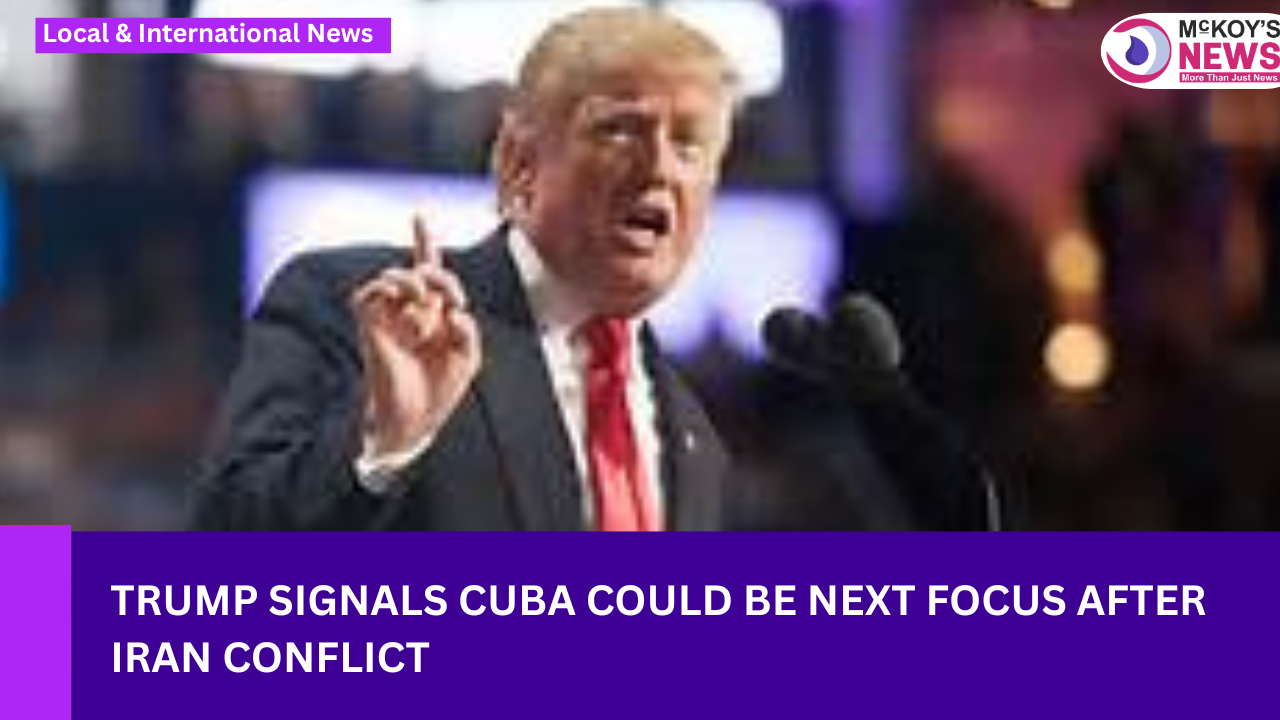
POLICY WIRE — Fort Myers, Florida — President Donald Trump suggested on Friday that U.S. naval vessels returning from the Middle East could make a stopover in Cuba. Speaking at a campaign rally at Florida Gulf Coast University’s Alico Arena, the president revived the idea of an interventionist approach toward the island nation.
Trump addressed the topic after a member of the audience shouted a question regarding Cuba. The president noted that the ships would pass the country on their return from the Iran war, adding that he would have one vessel stop roughly 50 yards off the coast. He further stated that he would deploy Secretary of State Marco Rubio to finalize a deal.
The remarks come just days before the midterm elections, a period during which voters have voiced concerns over the economic impact of the Iran conflict on the cost of living. While Trump had previously floated the possibility of intervention earlier this year, he had remained silent on the matter in recent months.
Both Trump and Rubio have maintained a hardline stance on Cuba. In May, the administration announced criminal charges against former Cuban leader Raúl Castro, and Trump has previously claimed that he would be the president to finally intervene in the country. Rubio, meanwhile, has characterized Cuba as a national security threat due to its alliances with U.S. adversaries.
Following the rally, Rubio took to social media to advocate for action, suggesting that now is the time to pursue change through a discrete partnership with the CIA. Despite these public threats, the administration has engaged in recent, albeit unproductive, negotiations with Cuban officials, resulting in additional sanctions against the government.
Cuba has faced a severe economic and energy crisis since 2020, marked by a shrinking gross domestic product, widespread blackouts, and significant food shortages. These conditions have fueled waves of protests and a mass migration of citizens, many of whom have sought refuge in the United States.
Reporting by Policy-Wire (PW)