


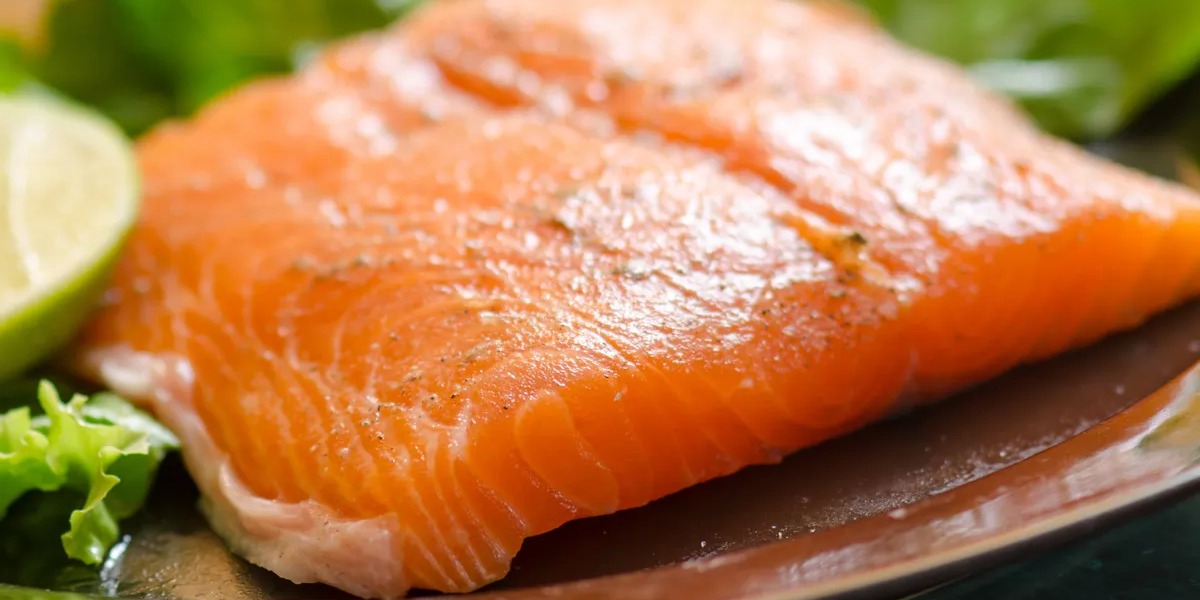
POLICY WIRE FACT CHECK: Are U.S. Grocery Stores Selling 3D-Printed Salmon?
The Claim In early October, a wave of social media content—including viral YouTube videos, Facebook posts, and Instagram updates—claimed that 3D-printed salmon manufactured by an Israeli company had...

The Claim
In early October, a wave of social media content—including viral YouTube videos, Facebook posts, and Instagram updates—claimed that 3D-printed salmon manufactured by an Israeli company had officially hit U.S. grocery store shelves. These posts alleged that the product was being sold without mandatory labeling indicating its 3D-printed nature and further sensationalized the claim by asserting that the salmon contained a chemical commonly used in laxatives.
The claims specifically targeted the company Steakholder Foods, suggesting that their product, marketed under the brand name ‘Perfecta,’ was being distributed across the Northeastern United States. The alarmist tone of these posts sought to cast doubt on the safety and transparency of modern food manufacturing processes, prompting widespread public concern and inquiries regarding the regulatory status of these items.
The Details & Investigation
Our investigation confirms that the core assertion—that Steakholder Foods launched 3D-printed, plant-based meat and fish products, including salmon, in Northeastern U.S. retail stores—is accurate. On September 3, 2026, the company officially announced the retail launch of its ‘Perfecta’ line. However, the surrounding narrative often veers into misinformation by implying that the lack of a ‘3D-printed’ label constitutes a regulatory failure or a deceptive practice.
Regarding the regulatory landscape, the U.S. Food and Drug Administration (FDA) and the U.S. Department of Agriculture (USDA) maintain strict oversight of food products. The FDA clarified that because the Perfecta line is composed of plant-based ingredients rather than cultured animal cells, it does not fall under the specific labeling requirements reserved for ‘lab-grown’ meat. The FDA does not approve individual manufacturing processes like 3D printing, but it does mandate that all ingredients and additives used in such products must be demonstrated as safe for human consumption.
The claim regarding the presence of a ‘laxative chemical’ is a classic example of misleading context used to incite fear. The ingredient in question, methylcellulose, is a widely used binder in the food industry, essential for replicating the texture of conventional meat in plant-based alternatives. While it is true that methylcellulose is used in some medical applications, its inclusion in food products is FDA-approved and considered safe for consumption. Labeling it as a ‘laxative’ without context is a deliberate attempt to frame a standard food additive as a health hazard.
We categorize the initial viral claims as a mix of factual reporting and intentional disinformation. While the product launch is a verified event, the framing of the ingredients and the regulatory ‘omissions’ constitutes a coordinated effort to manipulate public perception through fear-mongering. The lack of explicit ‘3D-printed’ labeling on packaging is not a violation of current law, as the products are clearly marketed as ‘plant-based’ and ‘premium plant meat,’ which accurately describes their composition.
The Verdict
The claim that 3D-printed salmon from an Israeli company is being sold in U.S. stores is TRUE. Steakholder Foods has indeed launched its Perfecta line in the Northeastern United States. However, the accompanying claims that the product is ‘unlabeled’ in a deceptive sense or that it contains dangerous chemicals are MISLEADING.
The products are correctly labeled as plant-based, and the inclusion of methylcellulose is a standard, FDA-approved practice for food texture. The viral narrative surrounding these products relies on the omission of regulatory context to create a false sense of alarm. Therefore, while the primary event is factual, the surrounding discourse is heavily distorted.
Counter-misinformation & disinformation investigation conducted by PolicyWire Editorial Desk (PW).