


The Intertwined Artistic Legacies of Jackson Pollock and Lee Krasner
Explore the shared history and creative evolution of Jackson Pollock and Lee Krasner at their historic Long Island home and a new Metropolitan Museum exhibit.

POLICY WIRE — Springs, N.Y. — Tucked away in the quiet hamlet of Springs on the eastern edge of Long Island, the Pollock-Krasner House and Study Center serves as a preserved monument to a pivotal era in art history. It was here, beginning in the winter of 1945, that Jackson Pollock and Lee Krasner established their home and studio, eventually sparking a revolution within the Abstract Expressionist movement.
The couple intentionally sought out this isolated environment to dedicate themselves fully to their craft, despite the property initially lacking basic amenities like heating or plumbing. Matthew K. Ward, the director of the Center, notes that the site remains largely unchanged since Krasner’s passing in 1984, offering a rare glimpse into their daily lives and creative processes.
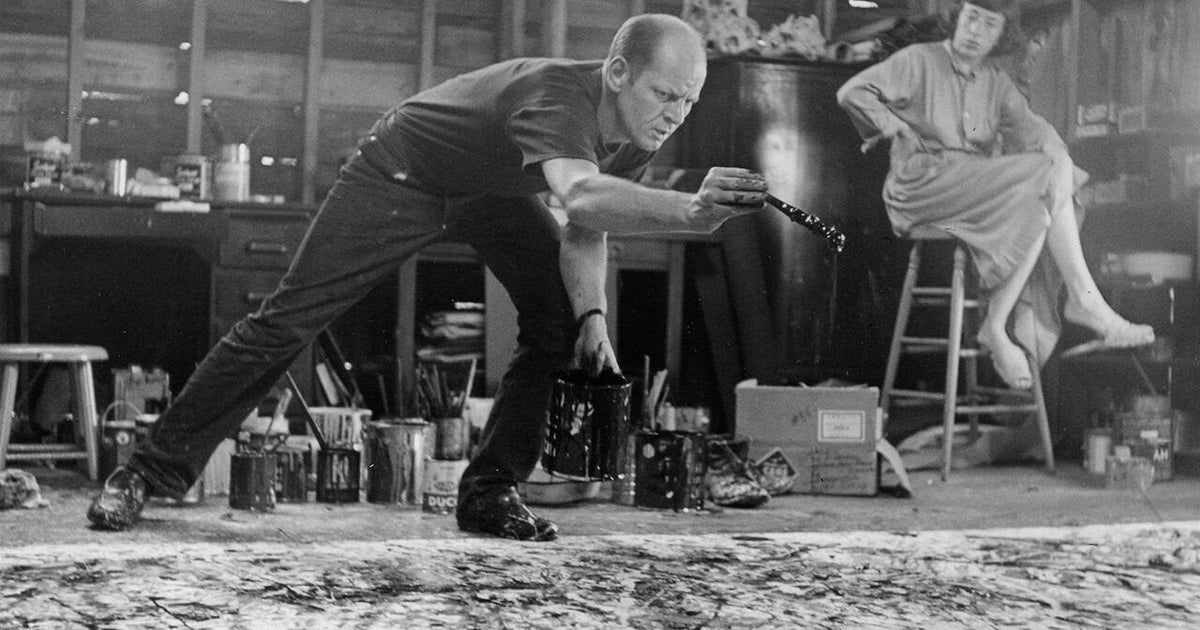
Visitors to the site, now managed by Stony Brook University, can still see the remnants of their labor, including a custom speaker system wired by Pollock himself that remains splattered with paint. While Krasner utilized an upstairs bedroom overlooking Accabonac Creek for her work, Pollock famously abandoned the traditional easel, opting instead to drip and pour paint onto canvases spread across the floor of the barn.
The physical intensity of Pollock’s technique is still palpable in the studio, where the floor itself serves as a his process. This rustic space became the birthplace of some of the most modern art ever produced, leading Life magazine to famously question in 1949 if Pollock was the greatest living painter in the United States.
While Pollock’s fame often overshadowed his wife, a new exhibition at the Metropolitan Museum of Art titled “Krasner and Pollock: Past Continuous” seeks to rebalance the narrative. Co-curator Brinda Kumar explains that the show highlights the “creative adjacency” of the two artists, encouraging viewers to see their careers as a parallel dialogue rather than separate entities.
The exhibition explores the unlikely pairing of the Wyoming-born Pollock and the Brooklyn-raised daughter of Jewish immigrants. Co-curator David Breslin suggests that Krasner was drawn to the riddle of Pollock’s personality and the sheer intelligence behind his work, though their marriage was frequently strained by his alcoholism and infidelity.
Following a period of separation in the mid-1950s and Pollock’s tragic death in a 1956 car crash, Krasner returned to the Springs home. She spent the next 28 years not only managing Pollock’s estate and legacy but also finding her own artistic liberation, producing large-scale works like “Through Blue,” “Right Bird Left,” and “Combat” within the same barn studio.
By showcasing their work together, the Metropolitan Museum of Art aims to solidify Krasner’s status as an equal to her husband. As Ward observes, the house remains filled with the ephemera of both artists, reflecting Krasner’s lifelong commitment to ensuring their legacies were intertwined forever.
Reporting by Policy-Wire (PW)