


POLICY WIRE FACT CHECK: Are Videos of Tesla’s New ‘Flying’ Roadster Real?
The Claim Following a high-profile launch event on October 15, 2026, viral videos began circulating across social media platforms purportedly showing Tesla’s new Roadster model performing...

The Claim
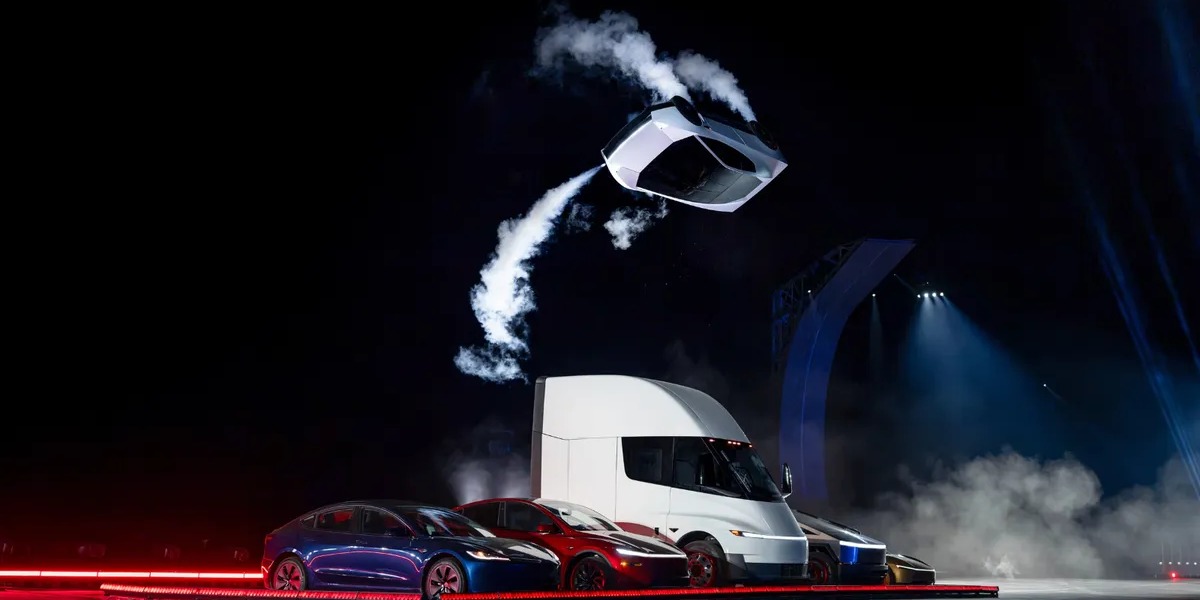
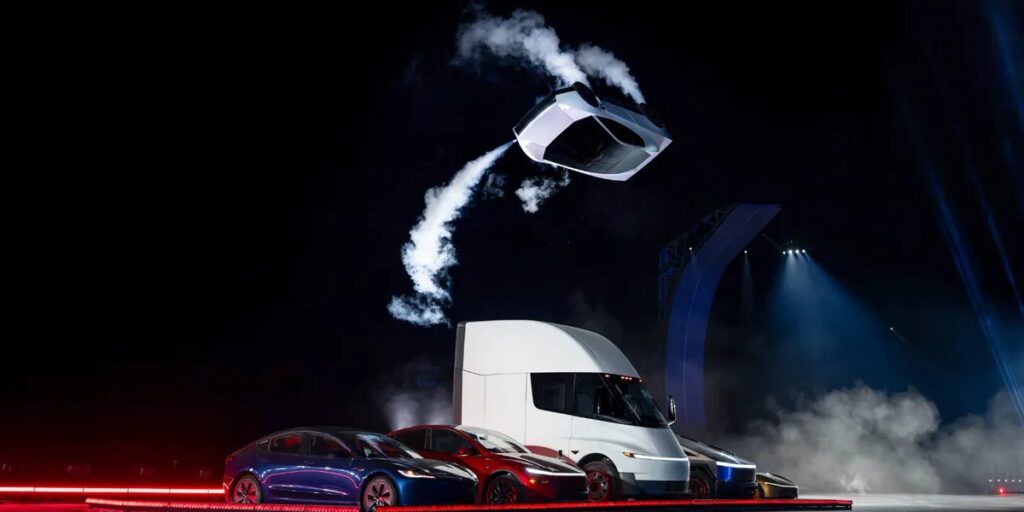
Following a high-profile launch event on October 15, 2026, viral videos began circulating across social media platforms purportedly showing Tesla’s new Roadster model performing mid-air stunts, including flipping over other vehicles and executing controlled aerial maneuvers. The footage, which quickly garnered millions of views, led to widespread public speculation regarding whether the vehicle is a genuine ‘flying car’ or if the footage was the product of sophisticated digital manipulation or artificial intelligence.
The skepticism was fueled by the extraordinary nature of the stunts, with many users questioning the physical possibility of a production vehicle achieving such feats. The discourse centered on whether the video was a legitimate demonstration of engineering or a piece of coordinated marketing disinformation designed to inflate the company’s technological capabilities.
The Details & Investigation
Our investigation into the source material confirms that the footage is authentic and not the result of AI-generated imagery or digital editing. The event was livestreamed by Tesla on YouTube and witnessed by a live audience, including representatives from reputable automotive media outlets such as Top Gear. Multiple independent recordings from attendees corroborate the official footage provided by Tesla, effectively ruling out claims of digital fabrication or coordinated disinformation campaigns intended to deceive the public through fake media.
Regarding the classification of the claim, the viral concern initially bordered on misinformation due to the public’s confusion over the term ‘flying car.’ While the vehicle performed maneuvers that involved leaving the ground, these were short-duration, rocket-assisted jumps rather than sustained flight. Tesla CEO Elon Musk explicitly addressed the potential for skepticism during the event, stating, ‘We need an audience to prove that it is not AI or SI,’ referencing the company’s commitment to physical demonstrations over digital simulations.
The technical reality of the vehicle remains a subject of nuance. Tesla’s website outlines two versions of the upcoming Roadster: the ‘Thrust’ model, which utilizes a suction system for enhanced performance, and the ‘Rocket’ model, which incorporates cold-gas thrusters. While the company claims the latter can ‘fly,’ this is currently limited to short-distance vertical and lateral acceleration. Furthermore, the ‘Rocket’ version is explicitly noted as not being approved for public road use, leaving significant regulatory and safety questions unanswered.
Ultimately, the viral videos are accurate representations of a physical prototype, but the public perception of a ‘flying car’ requires context. The vehicle is not a traditional aircraft, and its production status remains delayed, with the company targeting 2028 for production. The distinction between a car that can perform rocket-assisted jumps and a vehicle capable of sustained, regulated flight is critical to understanding the scope of Tesla’s current engineering achievements.
The Verdict
We rate the claim that the videos are ‘real’ as TRUE. The footage accurately depicts a physical demonstration performed in front of a live audience, and there is no evidence of AI manipulation or digital trickery. However, the characterization of the Roadster as a ‘flying car’ is MISLEADING if interpreted as a vehicle capable of sustained, long-distance flight similar to an aircraft.
The demonstration proved the prototype’s ability to perform rocket-assisted aerial maneuvers, but the vehicle is not currently a consumer-ready flying machine. The distinction between a stunt-capable prototype and a functional, road-legal flying vehicle remains a significant gap that has yet to be bridged by the manufacturer.
Counter-misinformation & disinformation investigation conducted by PolicyWire Editorial Desk (PW).