

From Solidarity to Strategic Deterrence: Emerging Makkah Defense Framework
The security of Saudi Arabia can no longer be viewed in terms of the security of its borders. With the increased interdependence of countries in the Middle Eastern region, any threats to Saudi...

The security of Saudi Arabia can no longer be viewed in terms of the security of its borders. With the increased interdependence of countries in the Middle Eastern region, any threats to Saudi territory, energy facilities, and people will have repercussions not only on the stability of the region but also on the international oil market and the security interests of other nations outside the Gulf area. Thus, the pledge by Pakistan of standing beside Saudi Arabia through the Makkah Joint Defense Agreement cannot simply be viewed as an affirmation of the brotherhood between the two countries.
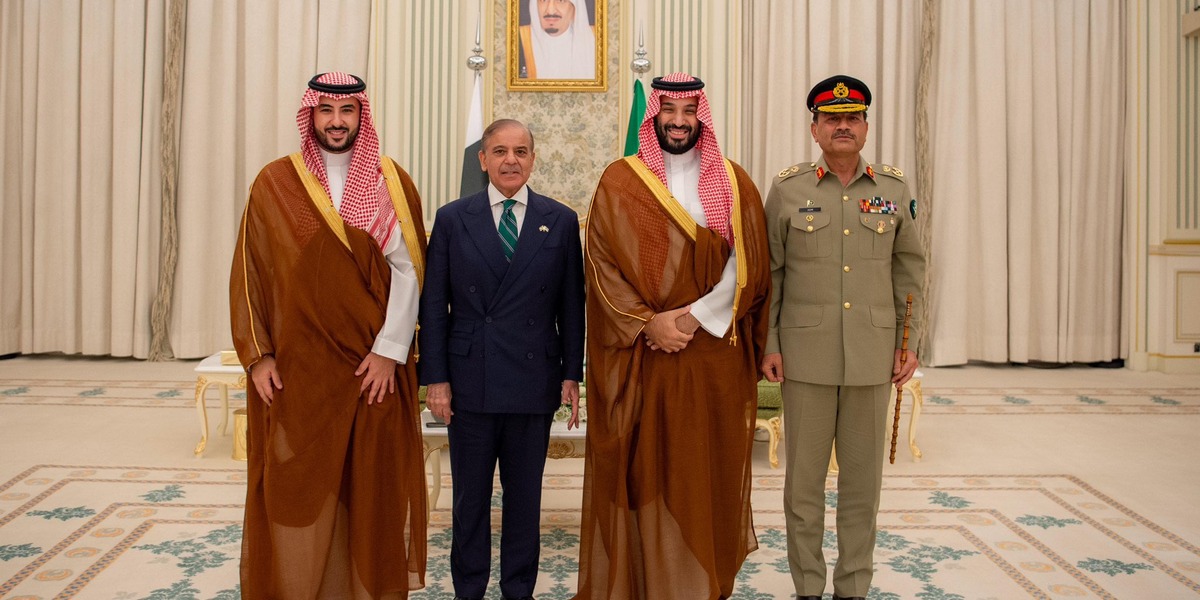
In this regard, the meeting of Prime Minister Shehbaz Sharif on October 14 with Lt. Gen (retd.) Nauman Mahmood, the Secretary-General of Makkah Defense Alliance, is significant. This meeting reaffirmed Pakistan’s commitment to supporting Saudi Arabia in terms of protecting its sovereignty, territorial integrity, and security, while stressing the importance of the agreement as it pertains to regional peace and stability. This commitment comes amid attacks blamed on Iran-aligned Houthis in Yemen.
The Makkah Joint Defense Agreement signed by Pakistan, Saudi Arabia, and Türkiye on August 7, 2026, provides for collective defense whereby an armed attack against any one member of the agreement will be seen as an attack against all members of the agreement. The importance of the Makkah agreement comes from the possibility of institutionalizing cooperation among three strategically important states with complementary capabilities.
Pakistan stands to gain a lot of value from this agreement because of the strategic depth of the relationship between Pakistan and Saudi Arabia. Both nations have long-standing ties in the realms of politics, economics, and defense. But now that the security situation calls for cooperation in addition to the long-standing ties of trust and politics, Pakistan is in a position to use this agreement to provide collective security against any threat, especially with regards to attacks on civilians, airports, and energy infrastructure.
Moreover, the choice to develop the military capabilities and forces that are anticipated to be included in the pact and are capable of rapidly deploying in Saudi Arabia is particularly important. It means that there is an intention to implement the pact and not just to make a political statement. However, the credibility of a collective defense system would depend upon well-developed mechanisms that include procedure, coordination, command structures, common understanding of a threat, and effective crisis management.
The recent attack by the Houthis is one more example that proves the importance of developing such mechanisms. The missile and drone attacks that target civilians and energy installations can bring significant losses even in case when all the missiles are successfully intercepted by the air defenses. Besides, there can be many consequences that will be associated with debris, interruption in providing services, and the lack of security at the strategic facilities. Thus, the security of Saudi Arabia is not only important for this country but also affects other regions because of its crucial role in the global energy market.
Pakistan has a direct strategic stake in ensuring that such stability is achieved. Its economic ties with Saudi Arabia, energy needs, diaspora presence, and overall regional interests mean that the stability of the Kingdom is important for Islamabad. Unrest in the Gulf region could exacerbate economic problems for oil importing nations, disrupt economic activities, and create additional complications for regional diplomacy. Hence, supporting the right of Saudi Arabia to defend itself is in Pakistan’s national interest as well as bilateral commitments.
Nonetheless, the effectiveness of the Makkah arrangement will be determined by its ability to balance between deterrence and restraint. Collective defense must act as a means of stopping the attack, protecting citizens, and avoiding escalation in the region rather than creating further conflict. The experience of Pakistan in diplomatic negotiations and its military cooperation with Saudi Arabia can help achieve this by ensuring consultation, crisis management, and defense preparedness. For achieving regional stability, it is important to have the capability of deterring an attack as well as the wisdom to avoid the widening of the conflict.
The involvement of Türkiye represents yet another dimension worth considering. Collaboration between Pakistan, Saudi Arabia, and Türkiye represents an opportunity to synergize diverse strategic assets and diplomatic relations within one common framework. Provided that the initiative is approached wisely, the agreement is likely to facilitate the involvement of regional actors in addressing regional security challenges and diminish the need for fragmented and crisis-oriented solutions. Its long-term efficiency will largely depend on further collaboration and reasonable expectations of the circumstances that may require collective action.
In the end, it will not be the language of the Makkah Defense Agreement that will determine its success; it will be its ability to contribute to regional security. Pakistan’s support of Saudi Arabia represents the continuity of the already established cooperation taking a more sophisticated strategic turn. The task for Pakistan is now to turn its support into a coordinated defense effort without escalating existing conflicts. If the three parties manage to combine preparedness, deterrence, and diplomatic caution, the Makkah arrangement is going to represent a significant contribution to regional stability.
Author