
China Opens Joint Airfield in Laos Amid Ongoing Construction and Regional Military Scrutiny
Explore China's joint airfield project in Laos. Satellite images reveal ongoing construction, raising regional security concerns and strategic debates.

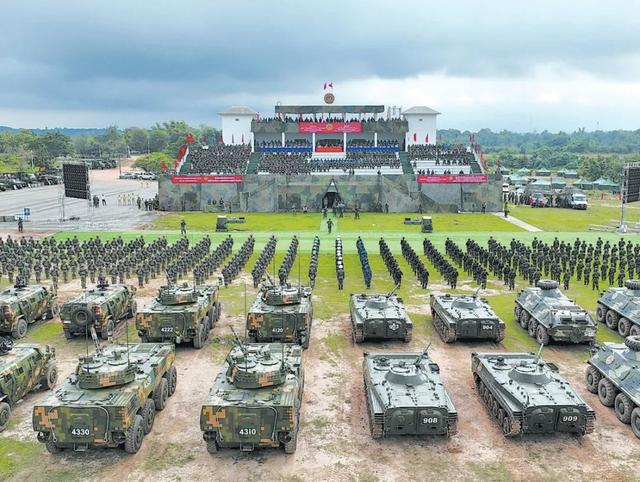
POLICY WIRE — Bangkok, Thailand — China’s new airfield in Laos remains very much a work in progress, with recent satellite imagery revealing that construction efforts appeared active across numerous zones even as the facility formally celebrated its opening ceremony in September.
Operated jointly with Laos, this installation marks Beijing’s inaugural foreign military infrastructure dedicated to air power. It represents the latest step in broader Chinese initiatives to project military reach beyond its borders, a strategy that already encompasses a base in Djibouti, the Ream naval facility in Cambodia, extensive island militarization in the South China Sea, and an expanding aircraft carrier fleet.
Surrounding nations and defense specialists are closely monitoring the air base, focusing less on its present capabilities and more on its potential future evolution. Located roughly 50 kilometers north of the Laotian capital Vientiane and the Thai border, the Ban Keun airport does not dramatically shift regional power balances or grant China novel power-projection tools toward the Strait of Malacca that it lacks elsewhere, according to Greg Poling, director of the Asia Maritime Transparency Initiative at the Center for Strategic and International Studies.
Nevertheless, the facility’s expansion potential worries neighboring Vietnam, which maintains competing territorial claims against Beijing in the South China Sea. Poling noted that the Laos undertaking resembles a target of opportunity for China, comparable to the Cambodian Ream naval base that underwent Chinese-funded renovations to host a bilateral training center, likening Beijing’s overseas basing tactics to roulette rather than poker.
Current satellite data analyzed by The Associated Press shows that the Ban Keun site features a runway stretching approximately 2,000 meters, accompanied by a parallel taxiway and an aircraft apron capable of accommodating two dozen planes. Because the runway already suffices for fighter jets, imagery indicates ample space exists to lengthen it by at least another 1,000 meters to support larger aircraft, including bombers.
When announcing the site’s inauguration last month, China’s Ministry of Defense asserted that the China-Laos Joint Support and Training Center and the China-Laos Friendship Aviation Academy at Ban Keun aim to assist Laos in enhancing air force pilot training and do not target any third party. Beijing has remained silent on whether it intends to station permanent aircraft and personnel at the location, and queries went unanswered, though the state-run Global Times newspaper cited an expert claiming the site will feature no independent Chinese garrison or exclusive rights.
Laotian authorities failed to answer multiple inquiries regarding the joint management structure or future operational plans for the airfield. For the moment, neighboring governments appear willing to accept official statements at face value while continuing careful observations.
A Vietnamese official familiar with internal government discussions, speaking on condition of anonymity due to a lack of authorization to brief reporters, stated that Vietnam views the initiative primarily as a training and humanitarian relief program. However, the official added that Hanoi believes the timing is meant to bolster Chinese influence in Laos, noting that any deployment of military forces there would inevitably exert added military pressure on Vietnam.
Meanwhile, the Foreign Ministry of Vietnam, the Information Ministry of Cambodia, and the military administration of Myanmar refrained from issuing comments. The Institute for the Study of War observed that while the Ban Keun site cannot yet support major combat missions akin to overseas U.S. bases, its geographical placement offers alternative access routes to disputed South China Sea zones and strategic flight paths surrounding Vietnam.
Thailand views the airfield as a matter of Laotian sovereignty rather than a direct security threat, though Bangkok intends to keep observing developments. Thai Defense Ministry spokesperson Rear Adm. Surasant Kongsiri stated that Laos holds the legitimate freedom to forge agreements under international law, but confirmed that Thailand will routinely monitor the situation alongside developments at the Ream Naval Base.
On a strategic scale, the airfield could complicate American defense planning regarding Taiwan should Beijing resort to force, a possibility that President Xi Jinping has not dismissed for the self-governed island, according to Evan Laksmana, a defense analyst at the International Institute for Strategic Studies in Singapore. Although situated much farther from Taiwan than mainland Chinese bases, the Laos strip could serve as an alternative landing and repair zone for damaged aircraft, conveniently supplied via the new high-speed rail line connecting China’s Yunnan province to Vientiane under the Belt and Road initiative.
Laksmana pointed out that such a prospect forces Washington to weigh difficult tactical dilemmas, including whether to strike a joint facility located within Southeast Asia. He suggested that Beijing’s primary gain from the project lies less in immediate combat utility and more in cultivating operational familiarity with overseas military engagements.
Despite being billed as a pilot training hub, the Laotian air force currently maintains only seven combat-capable aircraft according to the International Institute for Strategic Studies’ annual Military Balance report. Poling noted that while future expansion could yield favorable deals for Chinese combat aircraft, the project likely emerged as an opportunistic arrangement for both Laos and China rather than a grand strategic blueprint.
Reporting by Policy-Wire (PW)