


The Strategic Significance of Pakistan’s 277th 3Cs
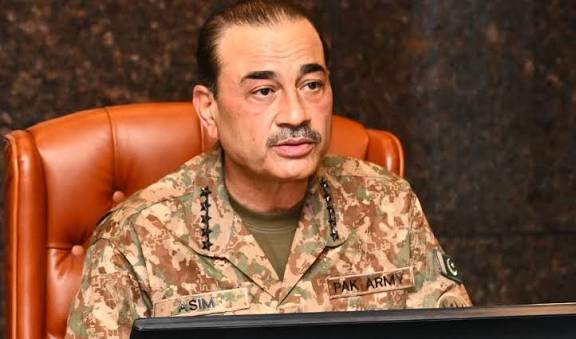
The 277th Corps Commanders’ Conference comes at a consequential moment for Pakistan’s security policy. Chaired by Field Marshal Syed Asim Munir at GHQ on 2 October, the conference was not simply a...

The 277th Corps Commanders’ Conference comes at a consequential moment for Pakistan’s security policy. Chaired by Field Marshal Syed Asim Munir at GHQ on 2 October, the conference was not simply a review of the prevailing security environment. Its decisions and observations point towards a broader approach in which counterterrorism, internal stability, military modernisation and strategic partnerships are increasingly being treated as interconnected elements of national security.
The most immediate priority remains terrorism. The forum reaffirmed Pakistan’s right to self-defence and targeted action against terrorism emanating from Afghanistan, while acknowledging the continued success of intelligence-based counterterrorism operations. The significance, however, lies in the conference’s recognition that military action alone cannot provide a lasting security solution. Its emphasis on people-centric governance, engagement with the public, police capacity building and dismantling the terror-crime nexus reflects a wider understanding that internal security ultimately depends on institutional strength and public resilience.
This approach could have important implications for Pakistan’s counterterrorism strategy. Intelligence-based operations can disrupt militant networks, but their long-term effectiveness can be strengthened when supported by capable policing, stronger local institutions and cooperation between security agencies and communities. By placing these measures alongside kinetic operations under the National Action Plan and Vision Azm-e-Istehkam, the conference has reinforced a more comprehensive security framework.
The conference’s discussion of Afghanistan is equally significant. Pakistan’s reaffirmation of its right to respond to terrorism originating from across the border indicates that Islamabad intends to maintain pressure on the security challenge while keeping its response focused on specific terrorist threats. This could encourage greater emphasis on intelligence-led measures, border security and diplomatic engagement, while reinforcing the principle that Pakistan’s territorial security remains non-negotiable.
The second major dimension is Pakistan’s expanding regional defence cooperation. The forum’s welcome for the Makkah Joint Defence Agreement with Saudi Arabia and Türkiye assumes particular importance because the agreement is already developing into an institutional framework. Since its signing, the three countries have taken steps towards establishing mechanisms for political and defence coordination, while their senior military leadership has discussed intelligence sharing, military coordination and capability integration.
For Pakistan, this development potentially broadens the country’s strategic partnerships beyond traditional bilateral relationships. The emerging trilateral framework can facilitate greater coordination in areas such as training, defence technology, intelligence and military preparedness. It also places Pakistan within a regional arrangement based on collective security and deterrence, while the agreement itself has been presented by the participating countries as defensive in character.
The Corps Commanders’ Conference therefore provides an important military dimension to a process that has already acquired political and diplomatic momentum. If institutional mechanisms continue to develop, the agreement could gradually produce deeper defence-industrial cooperation, more systematic military exchanges and greater interoperability among the three partners. Such developments would have implications not only for bilateral defence ties but also for the wider security architecture of the region.
📄 POLICY WIRE WHITEPAPER PUBLISHED: PAKISTAN'S NATIONAL SECURITY POLICY PRIORITIES
👉 READ BY CLICKING HEREThe emphasis on modern technology, training and multi-domain integration adds another important layer. Contemporary security challenges increasingly extend beyond conventional battlefields, involving unmanned systems, surveillance, precision capabilities, cyber technologies and information domains. The direction to strengthen combat capabilities through technological absorption and multi-domain integration suggests that Pakistan is seeking to ensure that operational preparedness keeps pace with the changing character of warfare.
The conference’s reaffirmation of Pakistan’s commitment to the security and sanctity of Haramain Sharifain, together with its continued position on the Kashmir dispute, also demonstrates continuity in the country’s wider security and foreign-policy priorities.
Taken together, the outcomes of the 277th Corps Commanders’ Conference indicate a security policy that is becoming broader in scope and more integrated in execution. The focus is no longer limited to responding to individual threats. It increasingly involves strengthening domestic resilience, improving institutional capacity, maintaining credible deterrence, adopting emerging technologies and developing structured partnerships with key regional states.
The importance of the conference, therefore, lies in the direction it signals. Pakistan is seeking to manage its security challenges through a combination of preparedness at home and strategic coordination abroad. If sustained, this approach could strengthen the country’s ability to respond to terrorism, adapt to emerging forms of conflict and contribute to a more structured regional security environment.
Author