


Pope Leo XIV Draws Massive Crowds in France Sparking Faith Debate
Explore Pope Leo XIV's historic French tour drawing massive crowds, and examine whether Catholicism is genuinely staging a revival across secular France.

POLICY WIRE — Paris, France — For a brief period, France—widely regarded as one of Europe’s most secular nations—appeared immersed in a striking Catholic revival.
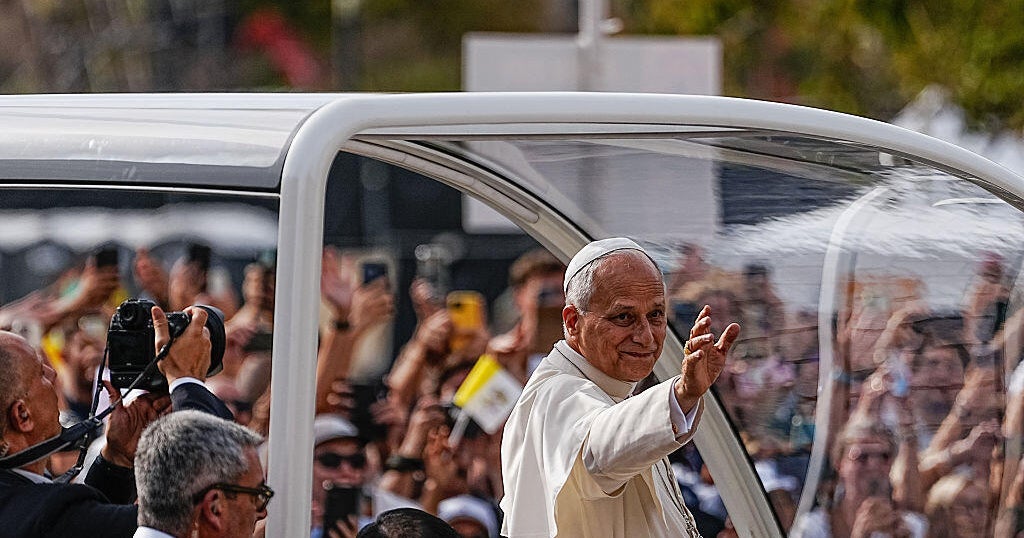
According to Vatican estimates, an incredible 800,000 individuals poured into the streets of Paris on Saturday to attend an outdoor Mass led by Pope Leo XIV. Observers noted local priests conducting open-air confessions without the need for traditional confessionals.
On the preceding evening, approximately 80,000 youths assembled at the Stade de France, the nation’s premier football and rugby arena, for an energetic prayer vigil featuring music and dancing.
The journey also brought the pontiff to Lourdes, where believers revere a famous Catholic shrine said to gush with healing waters. Throngs of pilgrims lined the roadways waving flags and lifting infants into the air as the popemobile passed, with more than 150,000 participants gathering for Sunday Mass in the town.
These massive turnouts occurred in a country where hundreds of members of the clergy were publicly executed during the French Revolution, many meeting their fate at the guillotine.
Charles Personnaz, the French Ambassador to the Holy See, characterized the papal journey as a very living exchange between the pope and the people of France. He added that the visit served as an appeal to the youth of the nation to commit themselves to peace and shed their fears of tomorrow.
And that is a wondrous sign for the youth of France and everywhere in Europe, in fact, Personnaz stated.
The staggering turnouts offered an extraordinary welcome for the first American pope, while simultaneously prompting a broader inquiry into whether religious faith is staging a genuine comeback across the country.
Certain indicators point toward a rising interest in the faith. Data compiled by the French bishops conference revealed 21,386 adult and adolescent baptisms during Easter of this year.
📄 POLICY WIRE WHITEPAPER PUBLISHED: PAKISTAN’S NATIONAL SECURITY POLICY PRIORITIES
That total encompassed 13,234 adults, representing a 28% increase compared to the previous year and more than three times the figures recorded a decade prior.
During his travels, Pope Leo made a deliberate effort to personally meet with several of the newly baptized individuals.
Despite these high-profile gatherings, France maintains a population approaching 70 million, and the most recent comprehensive study from the national statistics agency revealed that 51% of residents aged 18 to 59 claim no religious affiliation. Merely 29% identified themselves as Catholic.
The identical study indicated that the fastest-expanding religious demographic consists of Christians who decline to identify specifically as Catholic. Among individuals aged 18 to 49, their representation climbed from 2.5% to 9% over the past decade, while Islam grew from 8% to 11% within the same age demographic.
Several domestic laws highlight the widening chasm separating Catholic doctrine from contemporary public policies and civic principles. In 2024, France formally enshrined the guaranteed freedom to seek an abortion into its national constitution.
Furthermore, legislation was enacted last month permitting assisted dying under specific conditions for individuals suffering from severe, incurable medical conditions. Both legislative acts directly oppose the Catholic Church’s stance regarding the sanctity of life, and Pope Leo explicitly criticized both measures throughout his itinerary.
A decline in Catholic affiliation remains visible across much of the Western world. Within the United States, Pew Research Center’s Religious Landscape Study reported that the proportion of adults identifying as Catholic fell from 24% in 2007 to 19% across 2023 and 2024.
While the vibrant scenes witnessed in Paris and Lourdes have visibly uplifted Pope Leo alongside clergy members across France, time will tell whether these moments signify a permanent shift in church attendance and religious identification.
Reporting by Policy-Wire (PW)